


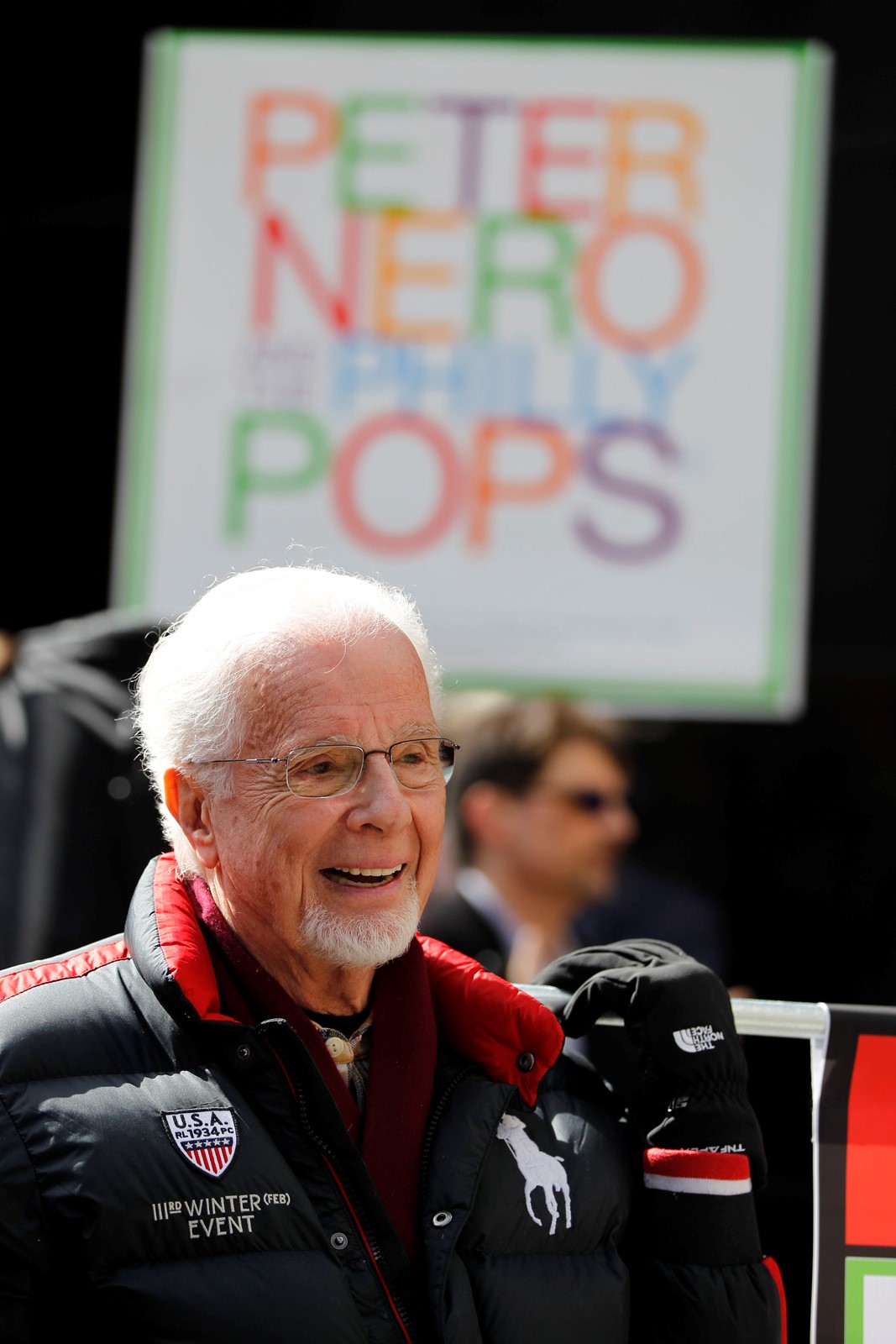


Peter Nero, the concert pianist who soared to popularity in the 1960s with a swinging hybrid of classics and jazz and kept the beat for nearly six decades with albums, club and television dates, and segues into conducting pops orchestras, died Thursday in Eustis, Florida. He was 89.
His daughter, Beverly Nero, said he died at the At Home Care Assisted Living Facility, where he had lived in recent months.
It was not quite accurate to say, as a New York newspaper, The World-Telegram and Sun, did in 1962, that Peter Nero played classical music with his left hand and pop-jazz with his right. But that was only a paraphrase of his own primer for audiences.
“We shall play ‘Tea for Two,’ ” he would say. “Since our arrangement is complex, we’d like to explain what we’ll be doing. My right hand will be playing ‘Tea for Two,’ while my left hand will play Tchaikovsky’s Fifth. My left foot will be fiercely tapping out the traditional rhythm to the Tahitian fertility dance. My right foot will not be doing too much. It will just be excited.”
To generations of fans, Nero was a national treasure. He appeared with Frank Sinatra, Mel Tormé, Andy Williams, Johnny Mathis and other headliners; released 72 albums; conducted the Philly Pops for 34 years, often with one hand while the other played a piano; and delivered a nostalgic mix of jazz and classics that let listeners reconnect with the soundtracks of their youth.
A remarkable interpreter of George Gershwin, he was also a natural showman — bantering with audiences, making up the program as he went along, tearing through medleys of Liszt, Prokofiev, the American songbook and mesmerizing variations of “I Got Rhythm,” and pounding home with a blowout finale of “An American in Paris.”
In midcareer, Nero quit smoky piano lounges for the concert stage and reinvented himself as a player-conductor of the Philly Pops and other orchestras. He wrote a cantata based on the diary of Anne Frank, marked national holidays with patriotic musicales in Philadelphia and for decades packed them in at symphony halls, college unions and small-town community centers.
“Still touring the country at 80, Nero presented a dazzling display of talent and showmanship,” The Times-Enterprise of Thomasville, Georgia (population 18,000), said in a 2015 review. “Nero’s stamina was incredible, his nimble fingers dancing gracefully, then racing madly, then dancing gracefully again across the keys to sublime effect.”
Child prodigy
A child prodigy from New York’s Brooklyn borough, he mastered the classical keyboard at 7 and at 11 performed Haydn concertos. He won a talent contest run by New York radio station WQXR, impressing Vladimir Horowitz, one of the judges. He made his national television debut at 17, playing “Rhapsody in Blue” on a special hosted by bandleader Paul Whiteman.
In 1955, uncertain if he wanted to be a classical pianist, he heard recordings by great jazz pianist Art Tatum. Hooked, he began performing at nightclubs in New York and Las Vegas, and gradually evolved the fluid Nero metier of classical and jazz.
His name was still Bernie Nierow at the time. But when he signed a recording contract in 1960, it was as Peter Nero.
He had a hit with his first RCA album, “Piano Forte” (1961), which showcased his stylistic range. “One was Mozartean, the next one was in the style of Rachmaninoff, the next was a straight ballad and another was a jazz approach,” he told The Daily Oklahoman of the selections on the album. “The idea was to see what came out of this, and the response was that everybody liked something different.”
He won Grammys in 1961 (best new artist) and 1962 (best performance with an orchestra, for “The Colorful Peter Nero”) and was nominated for eight more. He appeared often on “The Ed Sullivan Show” and “The Tonight Show Starring Johnny Carson.” In 1963, he wrote the score for the film “Sunday in New York,” a romantic comedy starring Jane Fonda, Rod Taylor and Cliff Robertson. (Nero appeared briefly as himself.)
 PREVIOUS ARTICLE

