


Officers speaking anonymously say problems remain at facility that was closed about 6 weeks for repairs
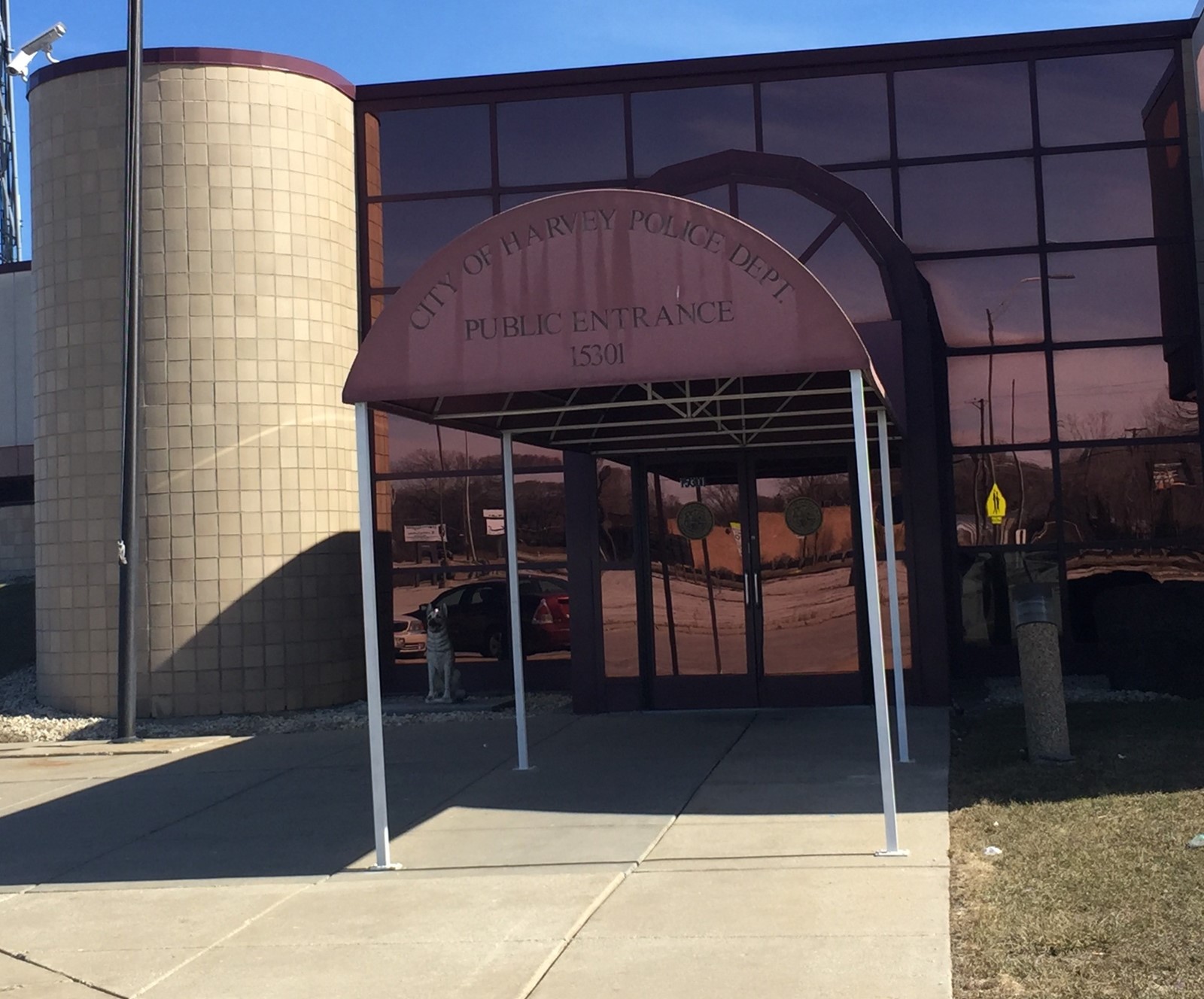


Harvey, which shuttered its dilapidated jail for repairs in March, reopened the facility last month after making a number of improvements, officers said.
Because neither Harvey’s chief of police nor a city spokesman responded to multiple requests for comment on the renovations, it’s unclear exactly what work was done on the facility or whether the repairs are up to code.
Officers interviewed about the repairs, speaking on the condition of anonymity for fear of retribution, said that while many things went unfixed, the work that was done — including replacement of the drop ceiling that escaped prisoners had fallen through — provided a major aesthetic improvement.
“I feel like it’s a better environment because that hole (in the ceiling) was huge,” one officer said. “Just by repairing that, it makes it look 1,000 times better.”
Dominique Randle-El, president of the American Federation of State, County and Municipal Employees Council 31 Local 2404, which represents the booking officers who work in Harvey’s lockup, said he was pleased with the repairs the city made.
“The hole (in the ceiling) was first and foremost, so now that that’s fixed I’m confident that they’ll continue to make the necessary repairs,” he said. “I do understand that it takes time, but I feel good that they’re addressing the issues as quickly as they can.”
A spokesman for the Illinois Department of Corrections, which inspects and oversees municipal lockups across the state, said the agency had not been aware that Harvey closed its jail for about six weeks in the spring to perform repairs.
While Illinois Municipal Jail and Lockup Standards require that all plans for jail remodeling and renovation be reviewed and approved by the Department of Corrections, department spokeswoman Lindsey Hess said those guidelines apply only to new construction, meaning Harvey was not required to inform the agency of its repair plans unless it changed the structural layout of the facility.
Ben Silver, a community lawyer with the Citizen Advocacy Center, an Illinois-based government watchdog group, said that even if Harvey is not legally bound to have the state vet its repairs, it should still disclose them in the interest of transparency.
“The security of a jail is a matter of strong public concern, so there’s absolutely a public interest in understanding that these problems were fixed and were actually adequately addressed,” he said.
When officials shuttered the jail in late March, they said the facility was “safe, effective and functional” and claimed the renovations were being performed as part of a citywide capital improvement project, not as the result of safety and security concerns.
Interviews with officers who worked in the jail, which were corroborated by court records, inspection reports and photographs, told a different story.
Court records show that two men escaped through the ceiling of the same cell about five months apart, apparently by peeling back the cell’s crumbling drywall ceiling and boosting themselves into the ceiling crawl space.
Both men were recaptured, but the evidence of their escape attempts — large holes in the jail’s drop ceiling where they eventually fell through — remained as reminders of the facility’s decrepitude.
Neither of the escape attempts was reported to the Department of Corrections, as is mandated, according to a state inspection of the facility performed in January.
The Jan. 11 inspection by a Department of Corrections criminal justice specialist, which lists a dozen areas of noncompliance, found cells with broken light fixtures; unsanitary mattresses and blankets; exposed wires, switches, outlets and vent covers; and no hot or cold water.
The report also noted the department’s nonfunctioning gun storage lockers, “unkempt and unsanitary” detention rooms and lockup walkways, and the facility’s lack of a fire inspection and pest control program.
When asked in March about the issues cited in the inspection, a city spokesman called the alleged violations “a lot of baloney.”
Silver said that in light of the city’s failure to initially be forthcoming about the jail’s condition, it was important for officials — as a matter of public trust — to be upfront about the repair process.
“When there’s an existing issue of public trust, it behooves officials to really promote strong transparency, to make sure they are informing the public and rebuilding that trust,” he said. “They should notify the public how they fixed the jail to assure the public they won’t have breakouts, that the safety of officers and detainees is going to be assured.”
Randle-El said it wasn’t clear if or when the city might make additional repairs to the jail, given the city’s precarious financial situation. Harvey laid off 40 police and fire department employees a couple of weeks after the jail was closed for repairs, blaming the cuts on the state’s garnishment of tax revenues at the request of the city’s underfunded public safety pension funds.
In addition to replacing the intake area’s ceiling and installing recessed lighting in the new ceiling as part of the recent repair process, the city also fixed the firearm lockboxes, which previously had not been functional, officers said.
But other issues — including a magnetic security gate and garage door that periodically malfunction, and problems with plumbing and water temperature — were not fixed, officers said.
The number of jail cells that remain “usable” for securing prisoners — four of 13 — remains the same as before the repairs were performed, and the cell from which both escapes occurred still is considered a liability, officers said.
“We were told we can use it if (the prisoner) is someone that’s not going to be there long,” an officer said. “But for a prisoner that’s going to be there for a period of time, we were told not to use it.”
Asked in late April whether the Department of Corrections intended to work with Harvey to correct any remaining issues with its lockup and ensure that any subsequent renovations were done by the book, Hess provided an emailed statement: “After an inspection of any municipal lockup, the IDOC gives the city the opportunity to correct noncompliances. A criminal justice specialist from the Department will likely revisit the Harvey lockup to evaluate the city’s progress.”
Hess confirmed last week the agency had not reinspected Harvey’s jail since the repairs were performed and had not made a date to perform a follow-up inspection.

