




DOHA, Qatar — Hamas’ response to the latest plan for a cease-fire in Gaza and the release of hostages was “generally positive,” key mediator Qatar said Tuesday, as the terrorist group reiterated its demand for an end to the war, something Israel has thus far ruled out.
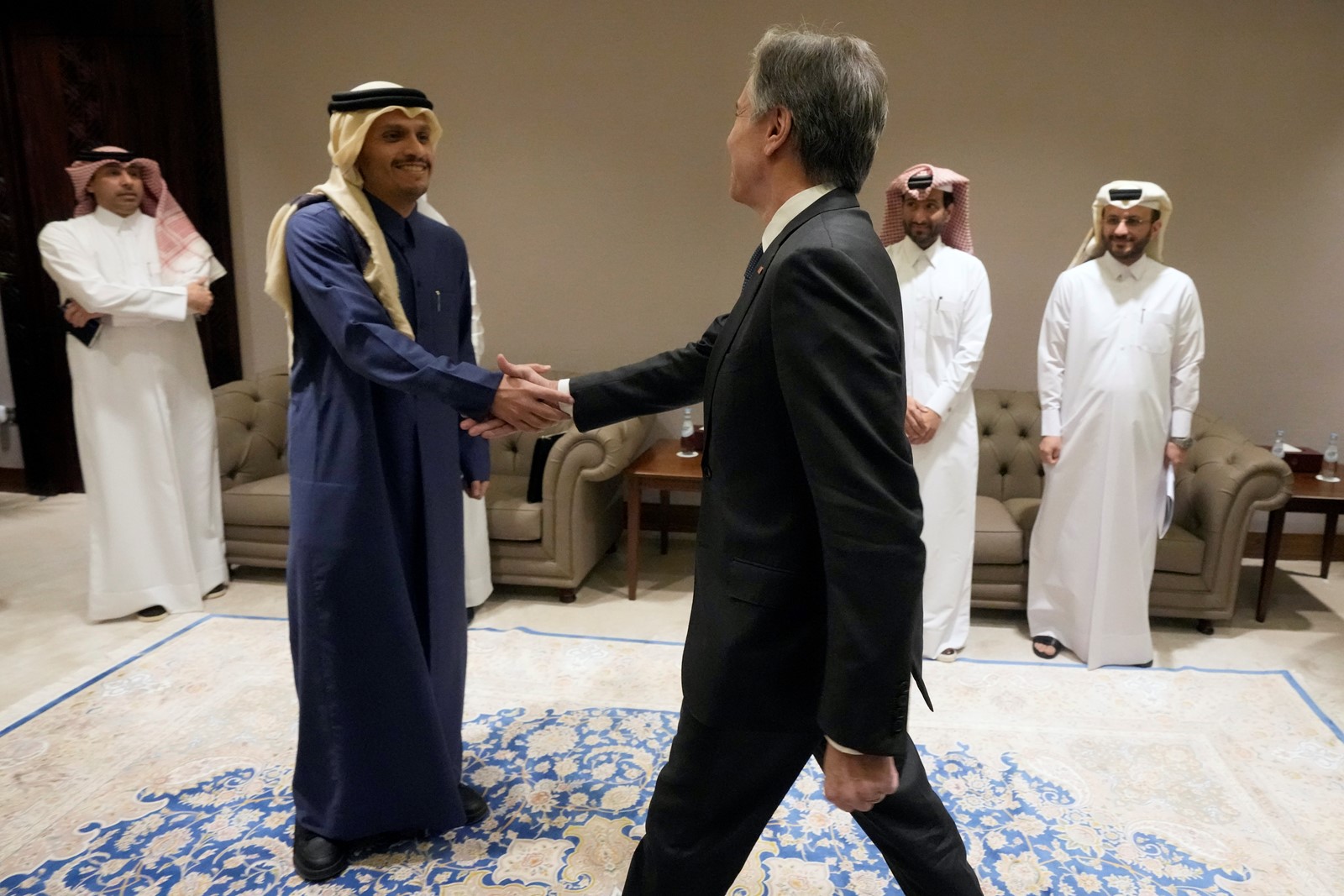
Qatari Prime Minister Sheikh Mohammed bin Abdurrahman Al Thani announced the response during a news conference with U.S. Secretary of State Antony Blinken, who said he would brief Israeli leaders on it during a meeting Wednesday.
Blinken, who met with Saudi Arabian Crown Prince Mohammed bin Salman the day before, said the Saudis still have a “strong interest” in normalizing relations with Israel but require an end to the war and a “clear, credible, time-bound path to the establishment of a Palestinian state.”
Qatar, which has long mediated with Hamas, has been working with the U.S. and Egypt to broker a cease-fire that would involve a halt in fighting for several weeks and the release of the over 100 hostages still held by Hamas after its Oct. 7 cross-border raid that ignited the war.
Hamas said in a statement that it responded in a “positive spirit” to the latest proposal. But the group said it still seeks “a comprehensive and complete” cease-fire to end “the aggression against our people.”
Hamas is also expected to demand the release of a large number of Palestinian prisoners in exchange for the hostages.
Israeli Prime Minister Benjamin Netanyahu has ruled out both demands, saying Israel is committed to continuing its offensive until “total victory” over Hamas and to returning all the hostages.
Netanyahu has also dismissed U.S. calls for the creation of a Palestinian state.
When asked by reporters, President Joe Biden said Hamas’ response “seems to be a little over the top” but that negotiations would go on.
Blinken said he still believed an agreement on the hostages was possible and that a pathway to more lasting peace and security in the region was “coming ever more sharply into focus.”
“We know the immense benefits that would come for everyone concerned with Israel’s further integration into the region, starting with the benefits for Israel,” Blinken said. “That’s something that Israelis will have to decide for themselves.”
The Palestinian death toll from nearly four months of war has reached 27,585, according to the Health Ministry in the Hamas-run territory. The ministry does not distinguish between civilians and combatants.
The war has leveled vast swaths of the tiny enclave and pushed a quarter of residents to starvation.
Hamas and other fighters killed some 1,200 people, mostly civilians, in the Oct. 7 attack and abducted roughly 250 others.
More than 100 captives, mostly women and children, were released during a weeklong cease-fire in November in exchange for the release of 240 Palestinians imprisoned by Israel.
 PREVIOUS ARTICLE
