


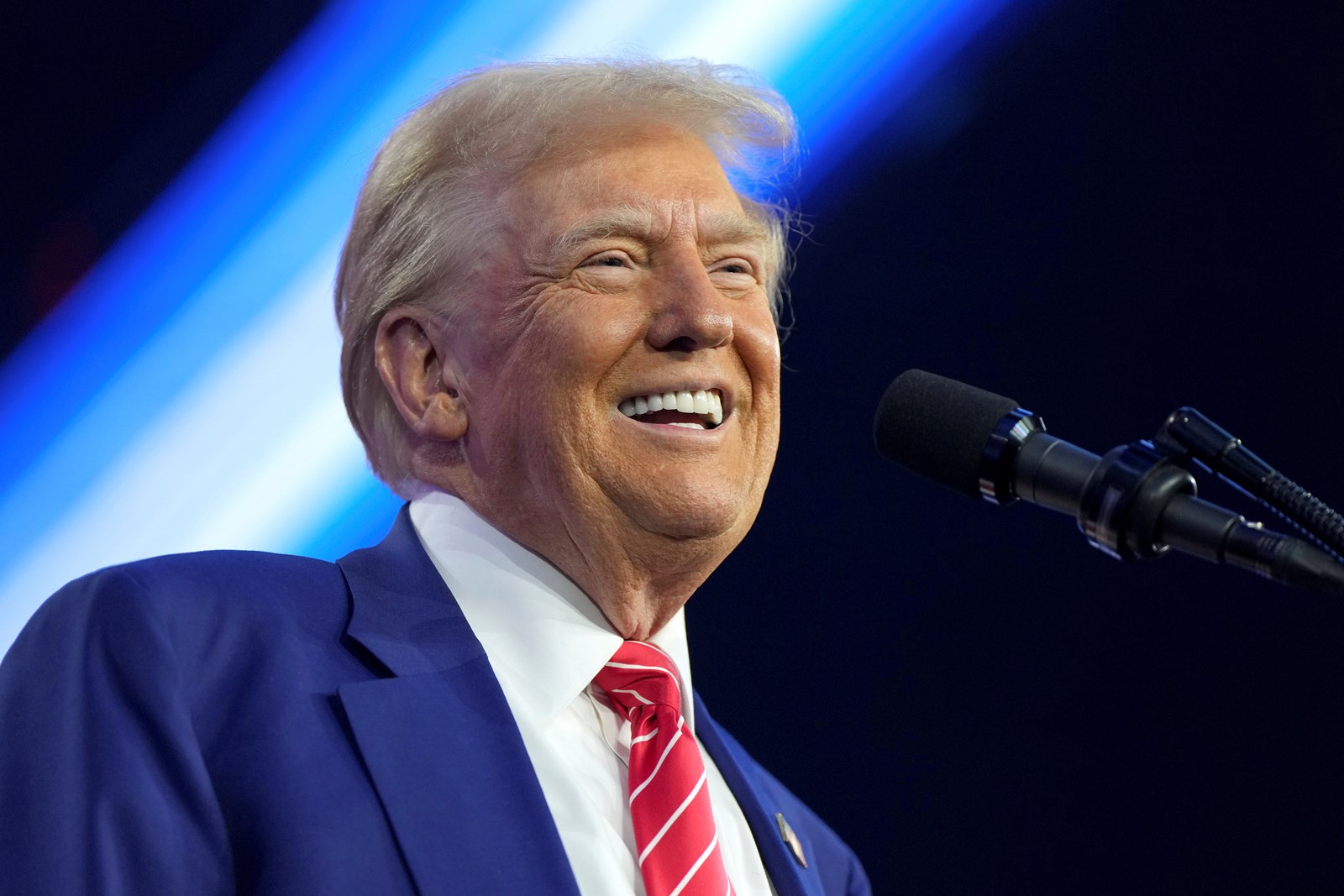


PHOENIX >> As Washington heaved over the possibility of a partial government shutdown, leading far-right figures gathered with thousands of Donald Trump’s most ardent supporters and, for the most part, gloried in splintering the president-elect’s party.
Speakers and attendees at Turning Point USA’s AmericaFest 2024 hailed Trump and billionaire Elon Musk for initially scuttling a bipartisan agreement to keep government open. They jeered House Speaker Mike Johnson and his willingness to engage with Democrats, disregarding Johnson’s close alliance with Trump and frequent appearances at his side.
“The political class is infected with a malignant cancer. The cancer is bipartisanship,” boomed Steve Bannon, the Trump adviser who perhaps more than any other reflects and stokes the president-elect’s pugilistic populism.
“We don’t need partisanship,” Bannon continued, as he called for Johnson’s ouster. “We need hyper-partisanship.”
The president-elect has wide latitude with his core supporters and is in turn responsive to their demands. That dynamic fuels the unpredictability put on display in last week’s budget fight and sets up inevitable future conflicts within Trump’s broadened Republican coalition.
That Trump failed to achieve his central goals — with 38 Republicans voting against a plan backed by Trump and Musk — seemed unimportant to Bannon and others who welcomed Trump to the conference’s Sunday finale. The fight itself, and the incoming president being at the center of it, was the point.
“Thank you, God, for sending us Donald Trump,” said Turning Point founder Charlie Kirk as Trump took the stage. Thousands roared and held their cell phones aloft to capture the moment.
Trump’s supporters differ on what they want
Interviews with people at AmericaFest and arguments from speakers illustrated that, beyond fealty to Trump, the new right in America is defined philosophically by anti-establishment sentiment, staunchly conservative social mores and vocal declarations of patriotism — not a uniform policy consensus.
“I just want everything Trump said he was going to do,” said Andrew Graves, a 39-year-old former Disney employee who now works as an Arizona organizer for Turning Point. “It doesn’t matter how as long as we get it done.”
Pressed on what “it” is, Graves mentioned “what’s going on in education” and “keeping women out of men’s sports.” He talked about Trump’s signature promises — tariffs on foreign imports, a hardline immigration crackdown — only when prompted.
That ethos permeated convention halls and meeting rooms awash in Trump paraphernalia — the “Make America Great Again” hats, T-shirts emblazoned with the bloodied candidate after Trump survived an assassination attempt in Butler, Pennsylvania. Among the throngs, there was the occasional fully costumed “Uncle Sam” or Revolutionary War figure.
Top speakers seized on the atmosphere, being greeted as celebrities and drawing roars of approval on everything from demanding confirmation of Trump’s Cabinet picks to imprisoning members of Congress who investigated the Jan. 6 attack on the U.S. Capitol.
“It feels good to win back our country,” Kirk told the opening assembly. But, he added, “the transformation of the Republican Party is not yet complete.” He threatened primaries against any GOP senator who votes against a Trump nominee, warnings that have already affected Capitol Hill.
During 75 minutes at the podium on Sunday, Trump ticked through many of his usual pledges and policy ideas. But he did not acknowledge his unsuccessful venture on Capitol Hill last week or continued questions about whether he will try to unseat Johnson. Summing up his intentions, Trump opted for politically fuzzy rhetoric.
“Last month, the American people voted for change,” he said, touting a “common-sense” agenda and promising a “golden age” for the country.
 PREVIOUS ARTICLE

