


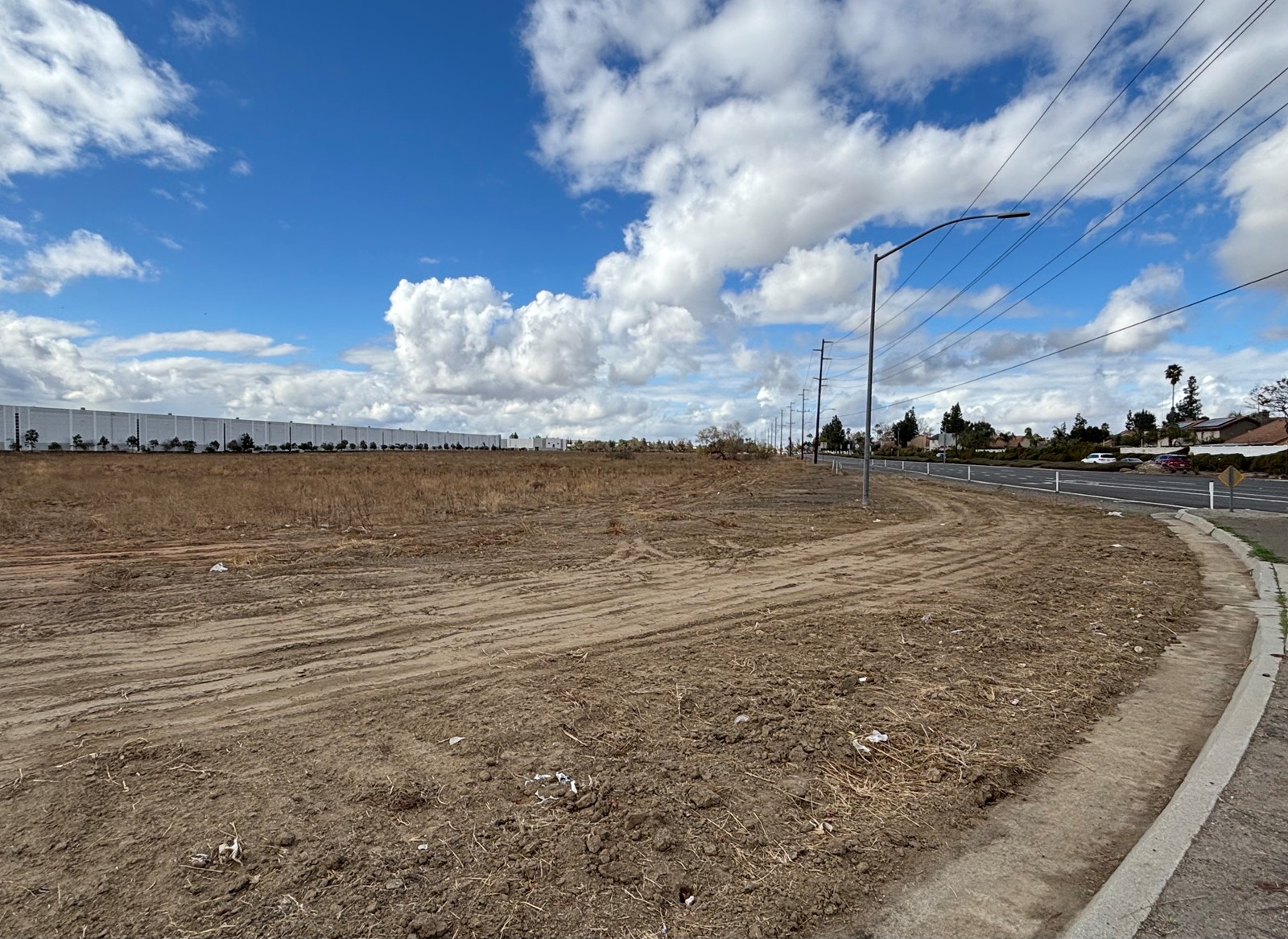


Two warehouses planned for land across the street from Moreno Valley City Hall will eventually need to have all-electric trucks and take other steps to curb pollution and be a good neighbor under the terms of a lawsuit settlement between the city and environmentalists.
The settlement paves the way for the 396,000-square-foot Compass Danbe Centerpointe project to be built on an 18-acre site south of Alessandro Boulevard between Frederick and Graham streets.
It also imposes rules to keep the project from becoming a neighborhood and environmental nuisance. These include clean energy requirements, limits on lighting and noise and a three-minute limit on how long trucks can idle their engines.
The Sierra Club and Jurupa Valley-based Center for Community Action and Environmental Justice, who sued to block the project, praised the agreement.
“This settlement is a huge win for the Inland Empire,” Marla Matime, the center’s board president, said in a news release. “Our lungs are not for sale and families deserve to live and thrive in their communities without constant pollutants that threaten our livelihoods. We hope that this new, groundbreaking standard is applied to all other warehouse projects moving forward.”
George Hague, conservation chair with the Sierra Club’s Moreno Valley Group, said in the release: “The residents of Moreno Valley can now breathe a bit easier.”
“Warehouse trucks and operations can have profound negative impacts on the community and the environment,” he said. “This settlement will save the lives of our children, our elderly and our other most vulnerable community members.”
Moreno Valley officials and the project’s developer, El Segundo-based Compass Danbe Real Estate Partners, did not respond to requests for comment.
The vacant project site is near the city hall complex and apartments. Project plans call for building two warehouses, one being 295,236 square feet and the other being 101,252 square feet.
Moreno Valley council members approved the project in February 2022. Shortly after, the Sierra Club and Matime’s center sued, arguing the project’s environmental reviews were lacking and warehouse operations could worsen air pollution in an area with already poor air quality.
A Riverside Superior Court judge sided with the plaintiffs in October 2023 and set aside Moreno Valley’s approval of environmental findings needed for construction to start. The developer appealed the ruling, but both sides signed off on the settlement in December.
The settlement sets a three- to five-year timeline for center’s fleet of heavy-duty trucks, vans and other vehicles to switch from combustion to electric engines. The condition “represents the strongest clean fleet requirements the Sierra Club has ever achieved in a warehouse settlement,” in the nation, the club’s news release states.
Also, all forklifts and other warehouse equipment must be electric. Energy for the warehouses can’t come from natural gas or propane, diesel-powered backup generators are banned and the project “shall install the maximum amount of on-site rooftop solar generation” permitted by city law.
Besides taking steps to curb emissions, the project also must take steps to limit noise and light pollution. For example, there are limits on the volume for forklift back-up beeping alarms and how high light poles can be, and there are dimming requirements for exterior lights if no motion is detected for eight minutes.
Truck routes to the warehouses must avoid residential areas, and the settlement imposes landscape buffering requirements to shield the buildings from public view. The buildings, which are limited to 50 feet in height, also must be constructed using guidelines from a worldwide green building certification program.
The settlement also aims to protect warehouse workers and truck drivers from sweltering temperatures. It requires an indoor, air-conditioned break area with cold drinking water.
 PREVIOUS ARTICLE

