


Aukiki River Festival boasts more than
30 historically accurate encampments


“All of our volunteers who participate in our re-enactments know that we want everything to be time-period accurate, so wristwatches do not fit the fashions,” Hodson said.
“Pocket watches were the means for time during these days.”
Now in the 11th year, the Aukiki River Festival on Saturday and Sunday attracts hundreds of families and guests from throughout the Midwest eager to step back into time for a weekend.
More than 30 historically accurate encampments populate the banks of the Kankakee River along Baums Bridge Road in Kouts, allowing a glimpse at community life spanning the mid-1700s to the 1930s.
“The Collier’s Lodge and General Store are a landmark anchor along this stretch of the Kankakee River, and we know the store’s gas station opened in the mid-1930s, so that’s the time period we decided to use as our cap for the Saturday and Sunday re-creation,” said Hodson, who is also president of the Kankakee Valley Historical Society.
“When I first started this event with my wife a decade ago, I never expected it to grow to this size and interest.”
Musical entertainment from the period, crafts and period-appropriate food are featured each year. Buffalo burgers, corn fritters, pumpkin scones and sassafras tea are some of the most popular menu items sold.
“We abide by strict guidelines for all of the vendors for what is sold and displayed, mostly homemade goods,” Hodson said.
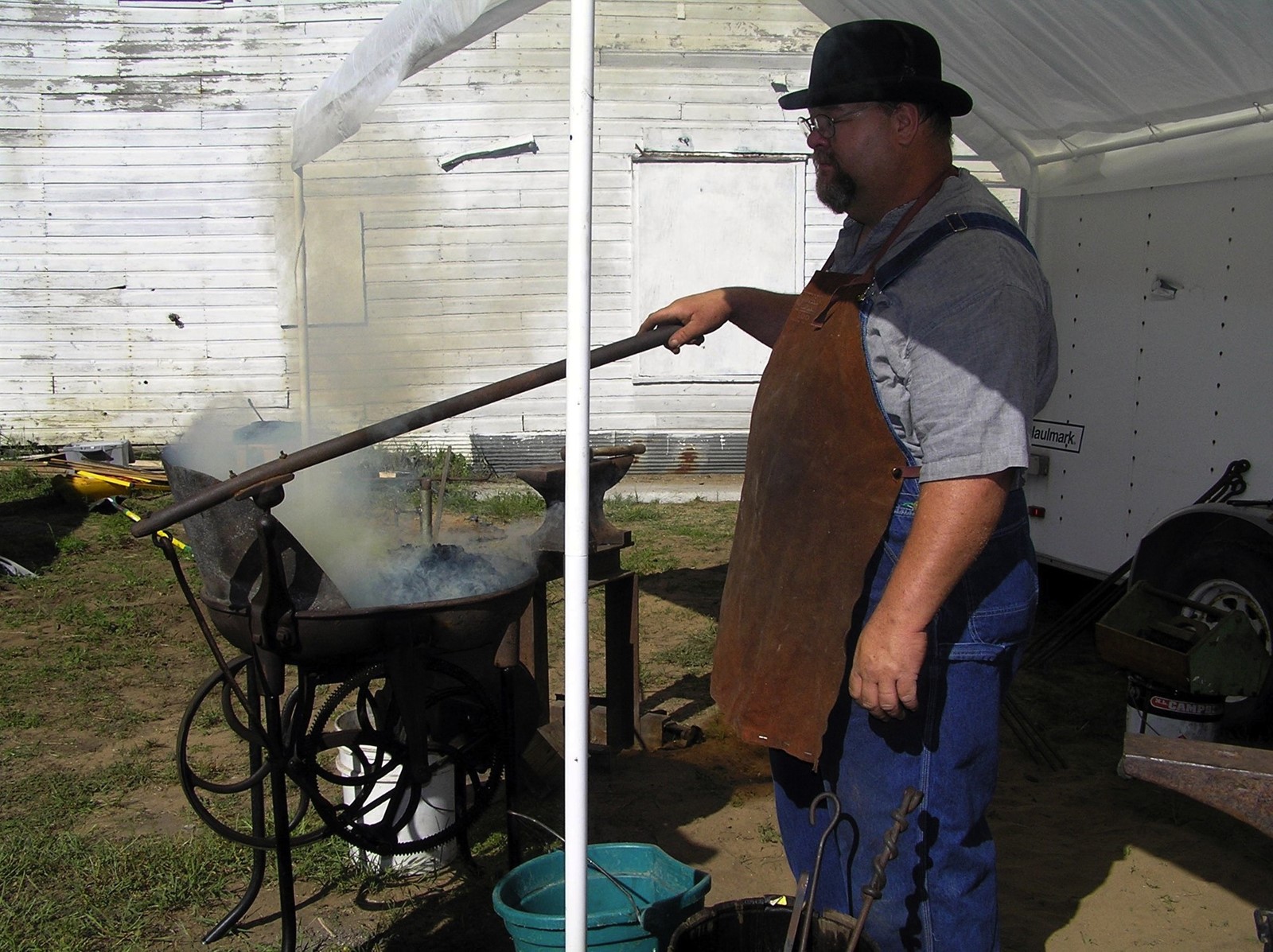
“You won’t see any plastic junk. One of the most popular demonstrations is the blacksmith, Seth Nichols, who is from Lowell, and he has the beard and look that you would expect a blacksmith to have.”
The festival’s name “Aukiki” is the Potawatomi term for “Kankakee” and was common as the identifying tag used for the Kankakee River in the early settlement days.
Hodson said the weekend is filled with fun and amusement but also serves a key purpose to educate about the Kankakee River’s vital impact on the economy and socialization in Indiana’s early days.
He said the encampment guests who will visit during the weekend represent fur trappers and French colonial settlers, among others.
“Any water source such as the Kankakee was a vital theme for transportation, commerce and attracting a population,” Hodson said. “Of course, some of the distances of the Kankakee River could be shallow, and it also would freeze during the winter, which caused some difficulty for travel.”
He said the biggest impact and transition for the river during those decades came at the turn of the century when government agencies decided to drain the Kankakee Marsh, natural wetlands terrain along the river, resulting in more than 500,000 acres of marshes and swamps drained along the 250-mile river. Hodson said the intent was to create more farming land, but the change in the landscape and ecology was soon recognized as a mistake.
Today, the Collier Lodge is the final structure still standing from the “sportsmen era,” the years from 1880 to 1910, and a time when even President Theodore Roosevelt journeyed to hunt and fish along the Hoosier river.
Hodson purchased the lodge property in 2000 after discovering it in a state of disrepair.
A decade later, he decided a festival event would help draw visitors to recall the former “glory days” of the Kankakee River as a famed destination.
Each year, new events are added, such as free archery lessons for children and a historical fashion show.
“Another new feature we have this year is a native garden which has the types of vegetable staples that homesteads of this time in Indiana history would have depended on for menus,” Hodson said. “We also have a new display showcasing the animals that have populated the river banks of the Kankakee throughout the decades.”
Even though Hodson and his festival organizers work hard to keep modern, out-of-place technology and accessories from infiltrating the weekend’s showcase events and activities, guests are invited to take photos and utilize today’s communication devices.
“We do allow our volunteers to have some required modern luxuries, such as coolers to keep water and snacks available since these are long days and the period costumes are heavy and layered,” Hodson said. “We just ask that any coolers our volunteers have at their encampments are carefully hidden under blankets and quilts.”
11th annual Aukiki River Festival
 PREVIOUS ARTICLE

