




By Ross Eric Gibson
In 1875, just 148 years ago, Santa Cruz High School was born as the first high school in the county. Since then it has had only three landmark buildings.
Prologue
The first American school in Santa Cruz was started in the home of Mary Amney Case in 1848 and 1849, overlooking Case’s Lagoon (now Neary Lagoon). Then “School Street” was named for the Methodist Academy at the bluff end of the road, run by H.S. Loveland. In December 1850, the school was moved to the Methodist Church sanctuary, with desks on the backs of the pews. But the growing congregation soon crowded out the desks, so a two-room public school was built in 1857 on the bluff above the dogleg on Mission Hill. Then in 1858, the school was closed due to debt, and not reopened until 1859. As the town grew, so did the student population, with the school expanded to three rooms, yet still too small.
There were no high schools in the county, so to attend college, one needed to leave the county for high school or college-prep courses. College prep was finally offered locally in 1871, with Mr. Beasley on humanities and Principal H.E. Makinney on math and science. But it only convinced them they needed an actual high school. The school grounds were enlarged with adjoining land, purchased with the bank interest and lease income from money and property donated by London Nelson in his 1860 will. Then a $20,000 bond was approved to build a magnificent four-story Mission Hill school in 1875.
A tall granite staircase led up the hill to the playground, followed by a half-story climb up the front steps of the schoolhouse, then inside came a long climb past several stories of grade school classes, bringing one to the highest of high schools tucked in the mansard attic. It was the first high school in the county, with three teachers, Miss Root, Mrs. Holbrook and Miss Pearl McCann, teaching three grades: Junior, Middle and Senior, under Principal W.W. Anderson. The first graduating class in 1878 was four students, one being Underwood McCann, who became a popular local judge, whose wife became the town’s first female lawyer. Joseph S. Francis was an 1880 graduate, who in 1894 became co-founder and lead editor of The Western Outlook, an African-American weekly published first in San Francisco, then in Oakland from 1914 to 1928.
In 1880, the state withheld high school funding, creating a crisis, with Principal Anderson resigning. Parents stepped in to keep the high school alive through fundraisers and volunteering, during the chaos of six principals in four years. Teacher Lillian Howard arrived in the fall of 1881, a brilliant artist, who developed a strict teaching style in all subjects, expecting the best from her students. Ernest Otto said at one time the high school had only one teacher, with students moving to the front of the class for instruction, while the other grades moved to the back to study quietly. At last in 1884, Principal D.C. Clark brought order and progress to the high school. In 1889, Clark got the high school accredited to meet University of California standards.
Grade school teachers didn’t require a college degree, so those training for that profession used the last five months of high school as a review of all grammar school courses. Those who passed the county teacher’s examination at the courthouse could begin teaching at age 17.
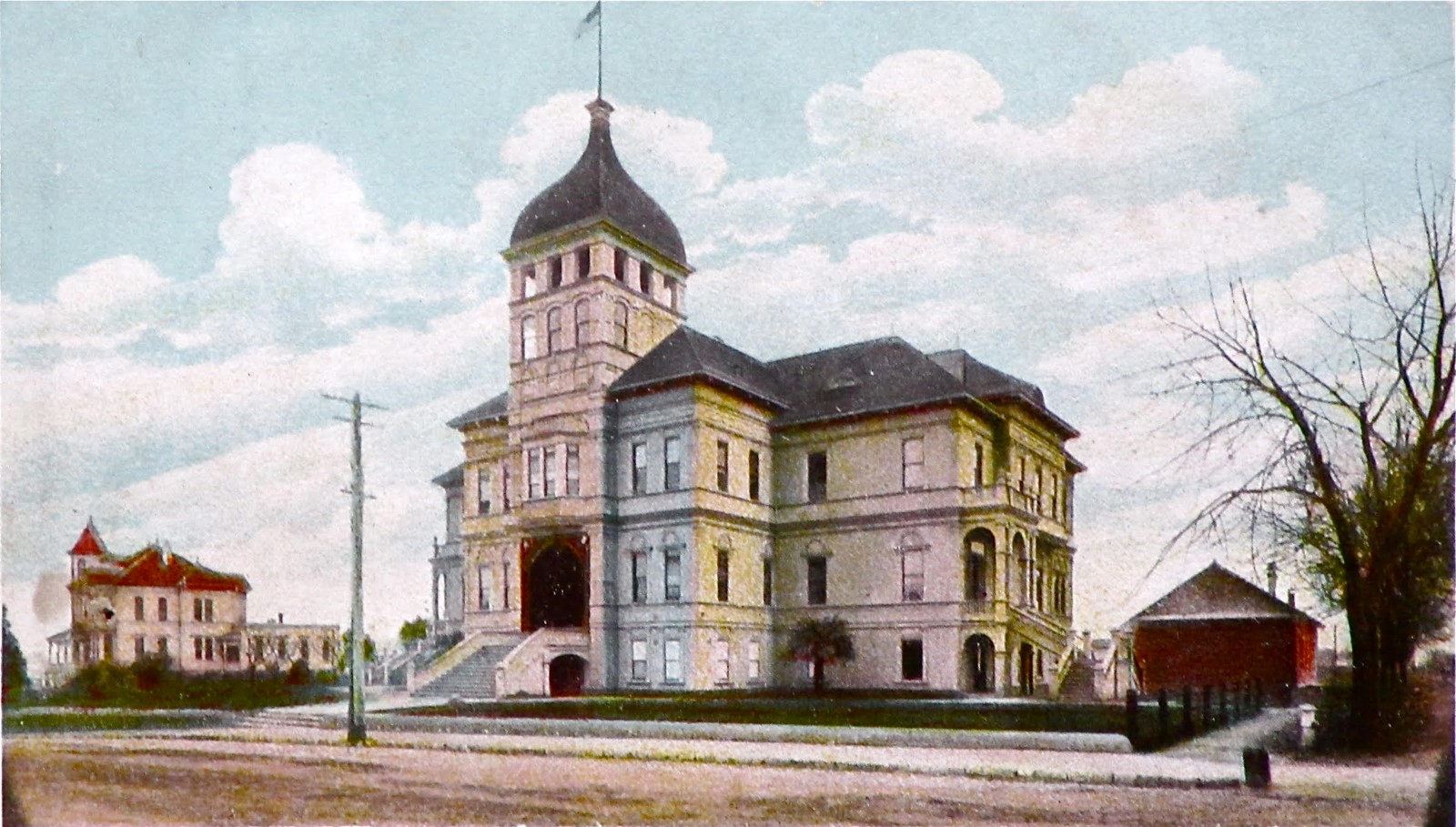
As the high school population grew, it was decided in 1891 to divide the students between Santa Cruz and Watsonville, where the county’s second high school opened. But when the total Mission Hill School population grew to over 1,000, it was decided Santa Cruz High School needed its own building. A lot at the corner of Walnut and California streets was purchased, and a $60,000 Moorish palace designed by Edward Van Cleeck was constructed in 1895.
Mr. Bond
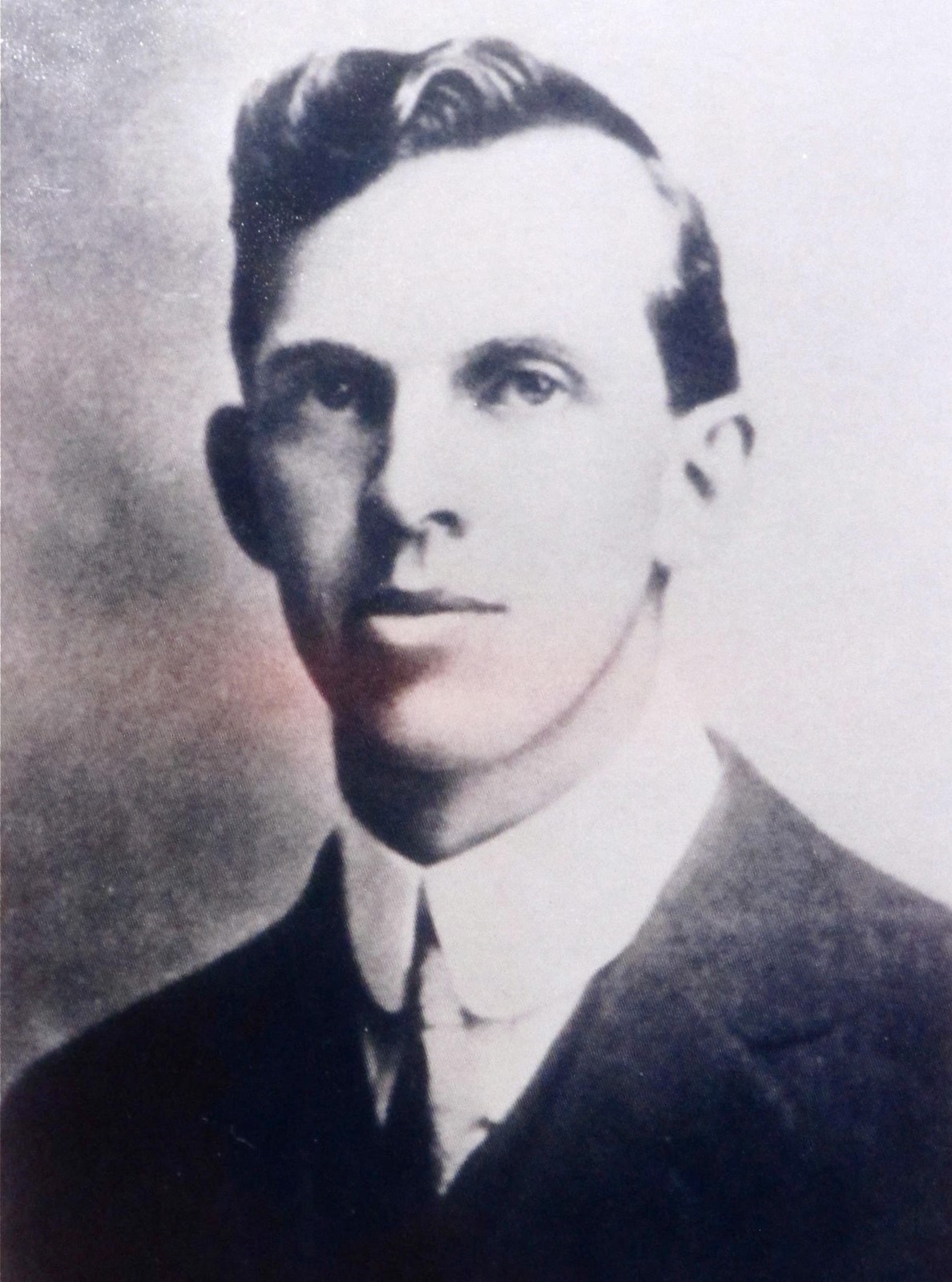
In 1903, one had to be careful not to confuse the slim George Bond for a student, as he was the new English teacher. Despite his youthful appearance, he already had a distinguished teaching career, being one of the first group of American teachers sent to the Philippines after the 1898 Spanish-American War.
In 1904 Bond helped organize the Coast County Athletic League to promote good sportsmanship and competition with other schools. Bond taught all boys sports until 1917, when the first paid coach was hired. In 1906 Bond founded the Trident school paper as an adjunct to his English class. That year Lillian Howard became vice principal, and in 1907 Bond became principal, taking over from J.W. Linscott, who went on to be superintendent of schools. With lumber a major industry, Bond established a woodworking and construction class in 1910. With agriculture one of the county’s top two economies, Bond established the agricultural department in 1911, which started off small, then gained a problem-solving aspect that drew the attention of professional farmers.
In 1907, Bond formed the Associated Students, to give them a democratic voice in school operations, and he instituted the secret ballot in school elections to prevent intimidation, or using your vote to be liked. Bond was trying to educate the students to be good citizens, show fair play with those with whom they disagreed, and trust democracy as the American way. The school’s GEKs and PI DELTs fraternities, and DELTA IOTA CHI sorority, were said to restrict membership to the town’s richer families. Those left out called themselves the “commoners,” and formed their own clubs, like the “Shovel Gang,” and the “A.B.C. Club” (for “All Bolshevik Company”).
Bond felt class consciousness promoted negative values, so in 1910 he banned high school fraternities and sororities for elitism and hazing. He offered scholastic clubs in their place, such as a men’s honor society. To distinguish from Greek letter fraternities, he chose Chinese characters, naming it “Hi Tow Tong” (“Hi” for High School, “Tow” for Tao meaning “the proper way,” and “Tong” for club). It embraced a cosmopolitan array of philosophers, including Plato, Confucius and Jesus, emphasizing scholarship, leadership and community service. Soon after, the ban on high school fraternities and sororities went statewide. Meanwhile, Bond got an education in equality when the girls wanted to form an honor society as well (and did).
Fearing kids were afraid to discuss their differences or use critical thinking, Bond established a debating society in 1910, open to men and women. In 1913, they hired skilled debater Knut Hegestad as coach, who brought about interclass and interschool debates, which started to become a popular spectator sport. Questions were as fresh as issues contested in the newspapers. Sometimes a debate was set up with people in agreement with their side of the question and then told to argue the opposite point of view. It was hoped to put people in someone else’s shoes and see the question through their eyes.
There was no drama class at the time, but that was another way of putting yourself in the skin of people from different walks of life. In 1912, the seniors took the initiative to present a class play at Knight’s Opera House, which was so popular with families and the general public, that the 1913 seniors did the same. As a result, Mrs. M.A. Aydelotte established a high school dramatics class. Bond advised a girl that she might get over her shyness if she took drama. Afraid of not fitting in, she brought homemade fudge to share with the class. They liked her so much that ZaSu Pitts starred in two of the three plays they staged in 1913 at the Opera House. Pitts not only overcame her shyness, but she also became the school’s tennis champion, thanks to Bond and his wife (also a teacher) who established girls athletics programs. ZaSu Pitts went on to Hollywood, becoming a popular character actor and comedienne.
Wilderness years
On Oct. 1, 1913, shortly after the school year began, the school burned down during the night, possibly started by chemicals in the basement laboratory. Without a school, classes were spread among homes and businesses throughout town, some even held after dark. The deserted Chestnutwood’s Business College (which had moved to new quarters across the street) accommodated many classes on the second and third floor at Pacific and Walnut, while other classes were held at the Opera House on Union Street, Oddfellows Hall on Pacific, and the Armory near the Soquel Avenue covered bridge. It was a peripatetic workout worthy of Aristotle, only by the time you made it to the athletic field, you were almost too tired to play. Rugby had been the school’s popular sport until 1914 when a student was killed in a rugby match. The game was banned, and later replaced with football, which was considered “a less violent sport.”
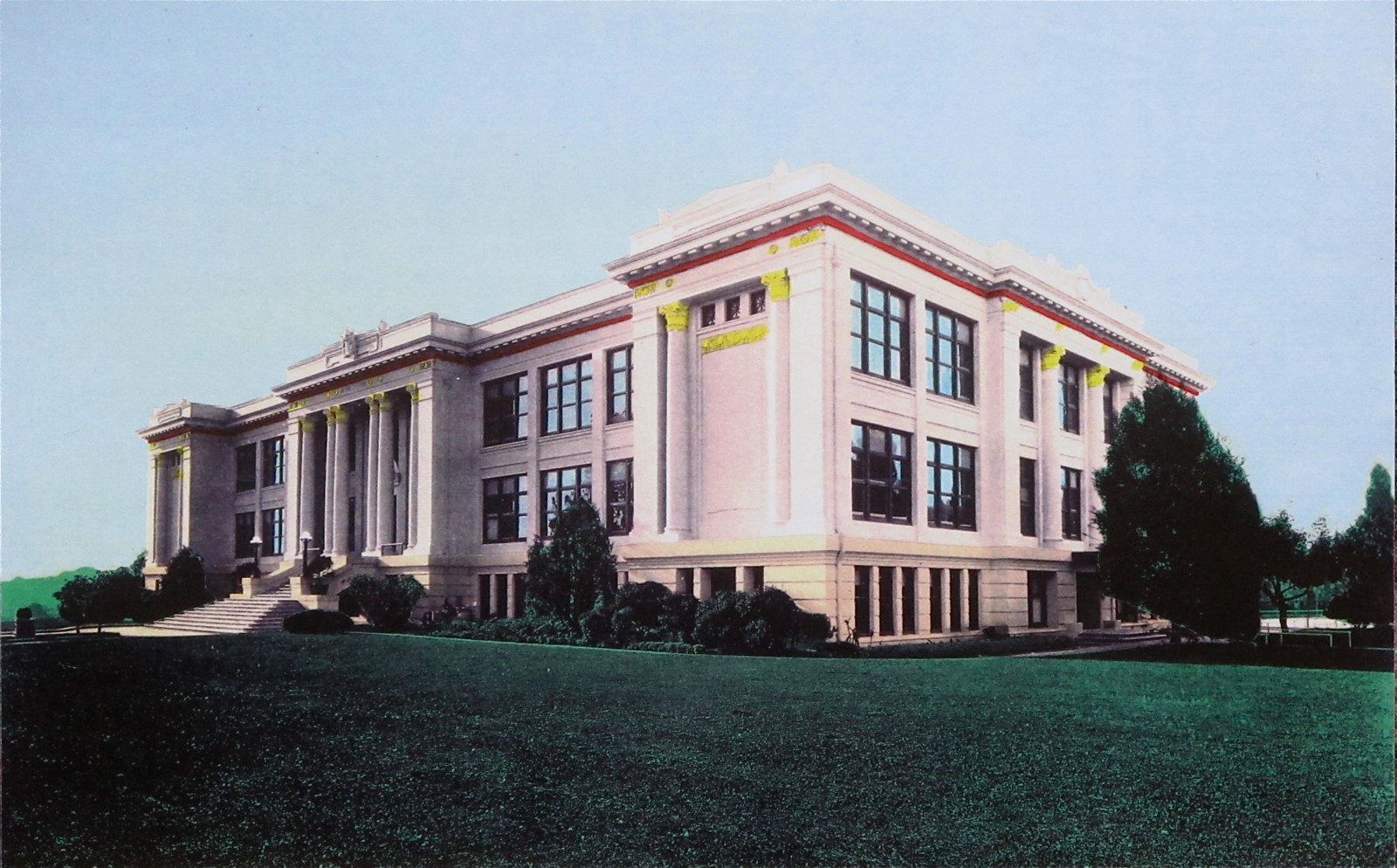
While people were sorry they lost a gem of a school, as long as they were rebuilding, they wanted something twice the size of the old one, with a large auditorium. It was decided to put the new school down the hill on the athletic field, which already had the space for it. However, most people preferred to leave the flats as open space, while accenting the promontory at the top of the hill. It was fortunate the school was able to purchase the neighboring lot, and moved the Thomas J. Weeks House around the corner to 724 California St. Thomas Weeks wasn’t a relative of Watsonville architect Wm. Weeks, hired to design the new high school in place of the Thomas Weeks house.
Wm. Weeks was gaining a national reputation for his schoolhouse designs. This was demonstrated in his commission at the Panama Pacific International Exposition in San Francisco, to design the “Model Schoolhouse” exhibit, showing the trend in schoolhouse design, for ease of student flow through the school, healthy air circulation, and naturally lighted classrooms. Santa Cruzan C.C. Moore was the president of the World’s Fair, and the fair’s classical “City Beautiful” vision may have inspired Weeks designs for the new Santa Cruz High School. The building has such classical grandeur at its hilltop location, some called the hilltop Mount Olympus. Both the San Francisco World’s Fair and Santa Cruz High School opened the same year, in 1915.
Bond left Santa Cruz in 1924 to be principal in Santa Paula, and died in 1944. His high school building is now 108 years old. Bond is remembered for his kindness, his long-lasting programs and innovations, and his dedication to turning out good citizens.
 PREVIOUS ARTICLE
