




Before Andrea Lucas joined the Equal Employment Opportunity Commission in 2020, she worked at a white-shoe law firm where she advised companies on the requirements of federal labor law, including in the growing area of diversity, equity and inclusion initiatives.
At the time, companies were eager to adopt such practices, some of which she considered “extremely legally risky,” Lucas, now the chair of the commission, said in a recent interview.
The legal landscape has changed. In the second Trump administration, with Lucas at the helm of the agency charged with enforcing federal labor laws, DEI has become not a goal but a target.
“That was a very bad gamble that many companies took,” Lucas said.
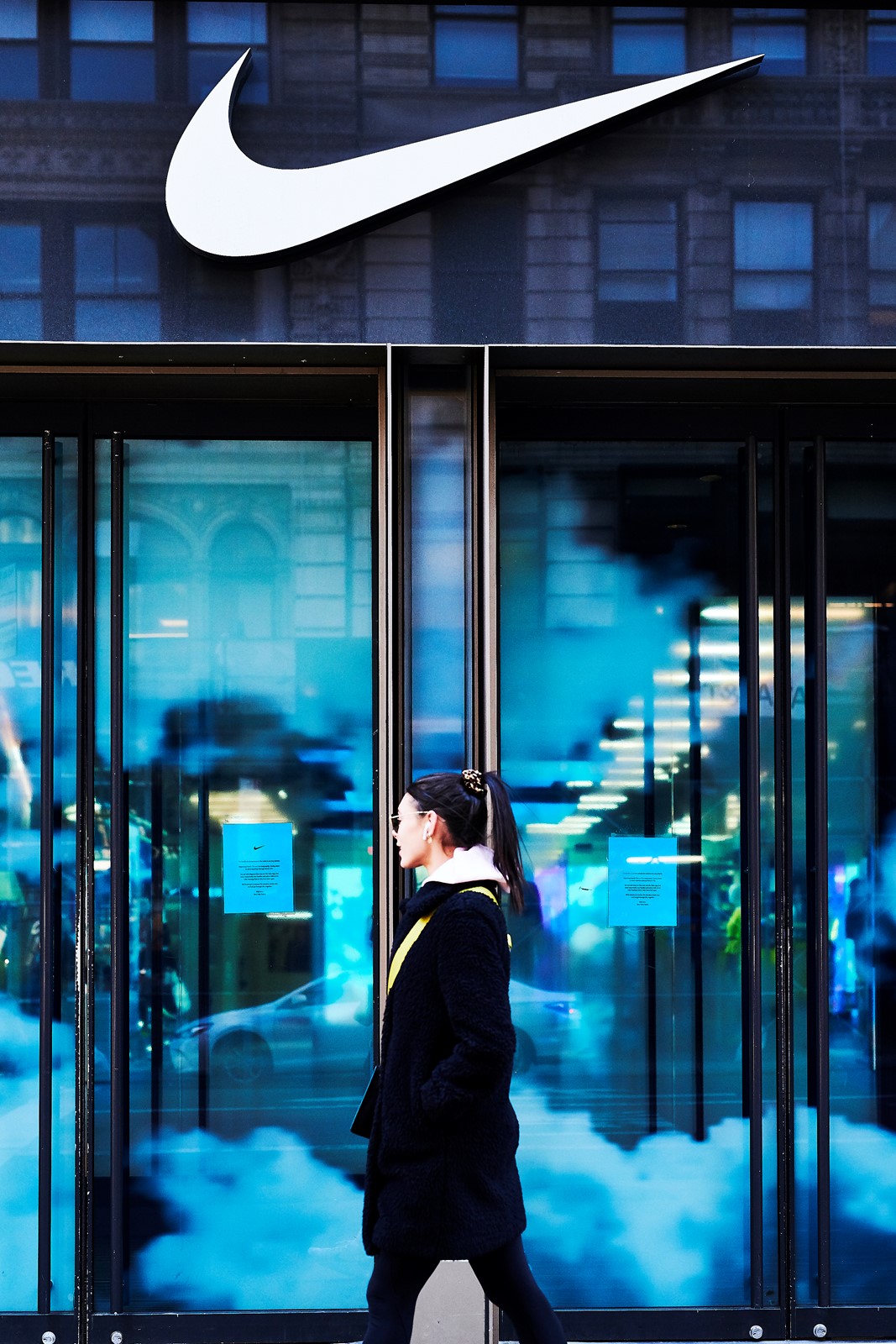
Nike, the world’s largest sportswear company, has learned this the hard way. On Feb. 4, the commission revealed in a statement and in filings in federal court that it had been investigating Nike’s efforts to increase racial diversity in its employee and leadership ranks. Lucas has said Nike may have violated civil rights laws by discriminating against white people.
The investigation has set up a showdown between the Trump administration and a prominent company over divergent interpretations of civil rights laws and, more fundamentally, over questions of race and fairness in the workplace.
Nike said it had responded to the commission’s subpoena and requests for information and was surprised by the public escalation. “We will continue our attempt to cooperate with the EEOC,” Nike said in a statement.
The investigation, made public through a filing in federal court, was opened by Lucas herself in May 2024, when she was the lone Republican on the commission. It is unusual for the commission to investigate a company proactively rather than in response to a complaint from an employee. The move puts Lucas and the EEOC at the vanguard of the Trump administration’s efforts to quash DEI initiatives and punish organizations that champion them.
In Nike, Lucas has singled out a globally recognized brand that has for decades been connected with issues of discrimination and social justice. Nike, named after the Greek goddess of victory, has nearly $50 billion in revenue and is a cultural force that courses through sports and style, fusing fashion and streetwear across pop culture.
Nike has a close relationship with the Black community that has, in many ways, driven its brand over the years. Michael Jordan’s Air Jordan shoes have been top sellers for 40 years. Jordan’s triumphs on the basketball court and his international stardom redefined Nike sneakers as an emblem of aspiration and an American cultural export.
Jordan has rarely taken public stances on political issues. “Republicans buy sneakers, too,” he once said.
Nike’s younger promoters have been less reticent. Tennis superstar Serena Williams fights for gender pay equity and maternal health matters, and basketball player Maya Moore leads a justice reform campaign. Nike’s biggest active star, LeBron James, has spoken out against voter suppression and racial inequality.
Nike has leaned into activism over the past decade as well. Mark Parker, who spent 14 years as the company’s chief executive before becoming executive chair in 2020, addressed employees during times of national distress, such as after the deadly white nationalist rally in Charlottesville, Va., in 2017.
Since Parker stepped aside, Nike has teamed up with civil rights organizations such as the NAACP Legal Defense and Educational Fund Inc. and the National Urban League. When George Floyd was killed by a police officer in Minneapolis in 2020 and protests spread across the country, Nike spoke out.
“We know Black lives matter,” Parker’s successor, John Donahoe, said while committing $40 million to support the Black community. “The Nike family can always do more but will never stop striving to role model how a diverse company acts.”
Under Donahoe, Nike embarked on a five-year plan to sculpt a more diverse workforce. The company tied some executive compensation to diversity goals and set representation targets in the United States for women and racial and ethnic minorities.
But last year, after Trump returned to office, Nike decided not to release an annual corporate sustainability report that was expected to provide updates on those diversity initiatives. The company said at the time that it was still committed to those objectives.
The commission’s investigation into Nike’s diversity initiatives is an early test for Elliott Hill, the company’s current chief executive, who came out of retirement to return to Nike’s headquarters in Beaverton, Ore., 15 months ago. He is trying to pull the business out of a sales slump. Hill has worked to refocus Nike on sports, speed up product development and get rid of old inventory to make way for new designs.
Jenny R. Yang, a Democrat and former chair of the EEOC, said the subpoena was broad and possibly exceeded the commission’s authority.
“Simply targeting practices that are designed to promote equal employment opportunity, like aspirational goals, raises concerns,” said Yang, who was on the commission from 2013 to 2018. She added that the investigation appeared to be an attempt to intimidate companies.
“Instead of helping employers comply” with federal civil rights laws, she said, “they just want to investigate them.”
 PREVIOUS ARTICLE

