


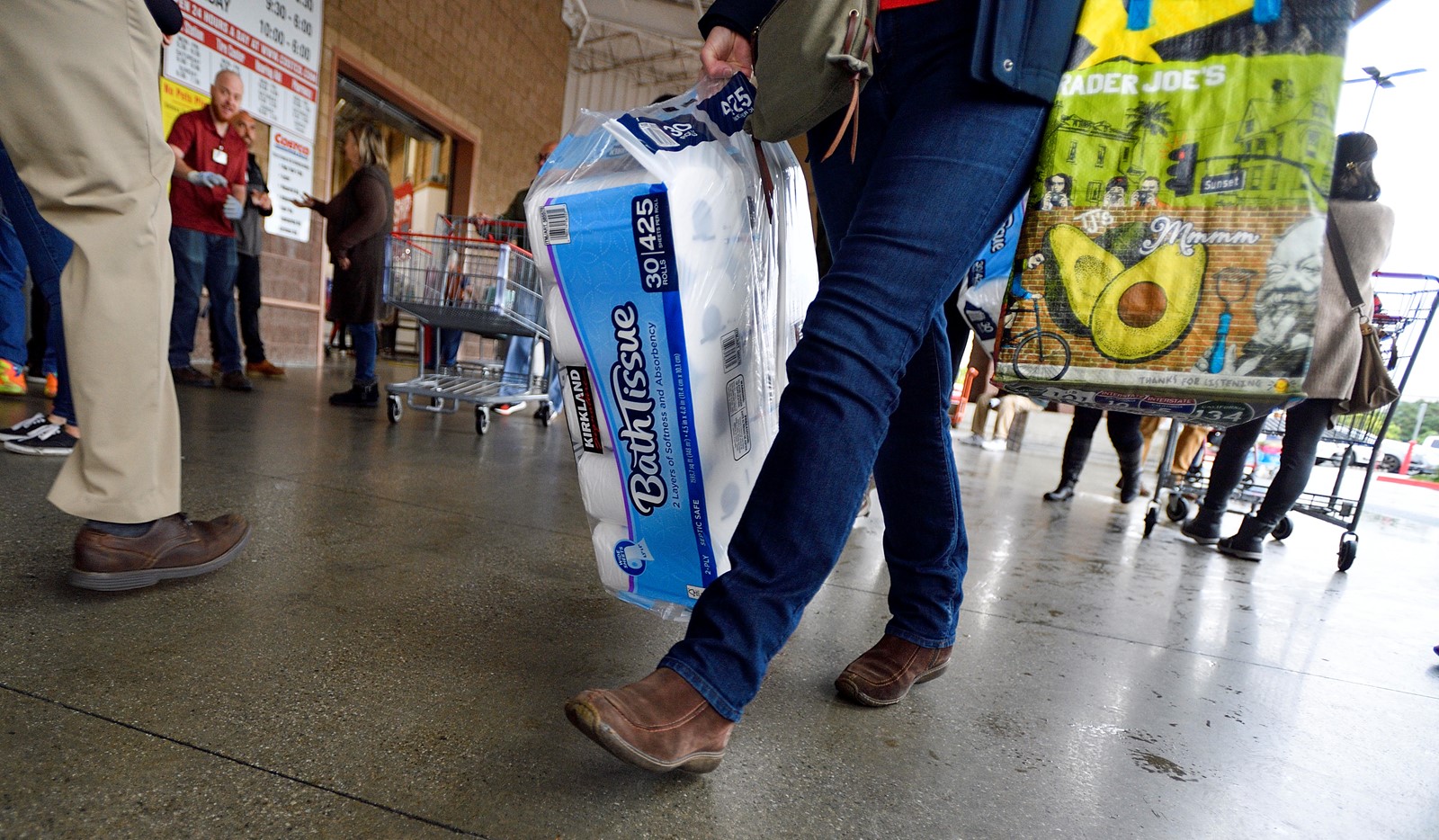


One in three Americans are stockpiling daily necessities like toilet paper and non-perishable food out of fear that President-elect Donald Trump’s pledge to add tariffs to imported goods will lead to higher prices, according to a new survey.
Some 34% of respondents said they are stockpiling items because they are “fearful or uncertain about the future,” according to a December report from CreditCards.com, which publishes information on credit cards and financial literacy. The organization in late November surveyed 2,000 U.S. residents.
Overall, the majority of respondents said they would use credit cards for some or most of their purchases this holiday season, with three in 10 planning to go into or take on additional debt.
Of the 30% of shoppers who said they plan to buy more than usual this holiday season, the top reason was fear of rising prices due to tariffs, cited by 39% of those spending more.
Trump has repeatedly said he will impose tariffs on foreign goods, vowing an additional 10% levy on products from China and 25% tariffs on all items from Mexico and Canada. Economists have warned that tariffs will likely raise prices on gasoline to lumber and send domestic inflation higher.
Albertsons-Kroger merger block angers one side
Albertsons walked away from merger plans with Kroger and it is now suing the grocery chain, saying it didn’t do enough to secure regulatory approval for the $24.6 billion agreement.
The move came the day after two judges halted the merger in separate court cases. U.S. District Court Judge Adrienne Nelson issued a preliminary injunction blocking the merger Tuesday after holding a three-week hearing in Portland, Oregon. An hour later, Judge Marshall Ferguson in Seattle issued a permanent injunction barring the merger in Washington after concluding it would lessen competition in the state and violate consumer-protection laws.
Kroger and Albertsons in 2022 proposed what would be the largest grocery store merger in U.S. history. The companies said a merger would help them better compete with big retailers like Walmart, Costco and Amazon.
On Wednesday, Albertsons said that Kroger failed to exercise “best efforts” and to take “any and all actions” to secure regulatory approval of the companies’ agreed merger transaction.
Albertsons said Kroger refused to divest the assets necessary for antitrust approval, ignored regulators’ feedback and rejected stronger investment buyers.
Boeing resumes production of company’s troubled 737 Max
Boeing is resuming production of its best-selling plane, the 737 Max, for the first time since 33,000 workers began a seven-week strike that ended in early November.
The company said Tuesday that plan-building resumed at its plant in Renton, Washington, after going through a process of identifying and fixing potential problems.
Production and deliveries of Max jets and another airline plane, the 787 Dreamliner, have been stopped several times in recent years to fix manufacturing flaws.
Separately, the company said it took orders for 49 planes in November but lost an order by UK carrier TUI for 14 Max jets.
Ever since a panel called a door plug blew off a Max operated by Alaska Airlines in January, the Federal Aviation Administration has capped Boeing’s production of Max jets to 38 per month. Boeing hopes to convince regulators that it has corrected quality and safety issues and can raise that number to 56 planes per month.
Certain Fortnite players getting refunds after being ‘tricked’
U.S. consumers who were “tricked” into purchases they didn’t want from Fortnite maker Epic Games are now starting to receive refund checks, the Federal Trade Commission said last week.
Back in 2022, Epic agreed to pay a total of $520 million to settle complaints revolving around children’s privacy and payment methods on its popular Fortnite game. The FTC alleged the video game giant used deceptive online design tactics to trick Fortnite players, including children, into making unintended purchases “based on the press of a single button.”
Consumers could be charged while doing something as simple as attempting to wake the game from sleep mode, for example, or by pressing a nearby button when trying to preview an item, the agency said. The FTC also accused Epic of blocking some users who disputed the charges from accessing the content they purchased.
Compiled from Bloomberg and Associated Press reports.
 PREVIOUS ARTICLE
