


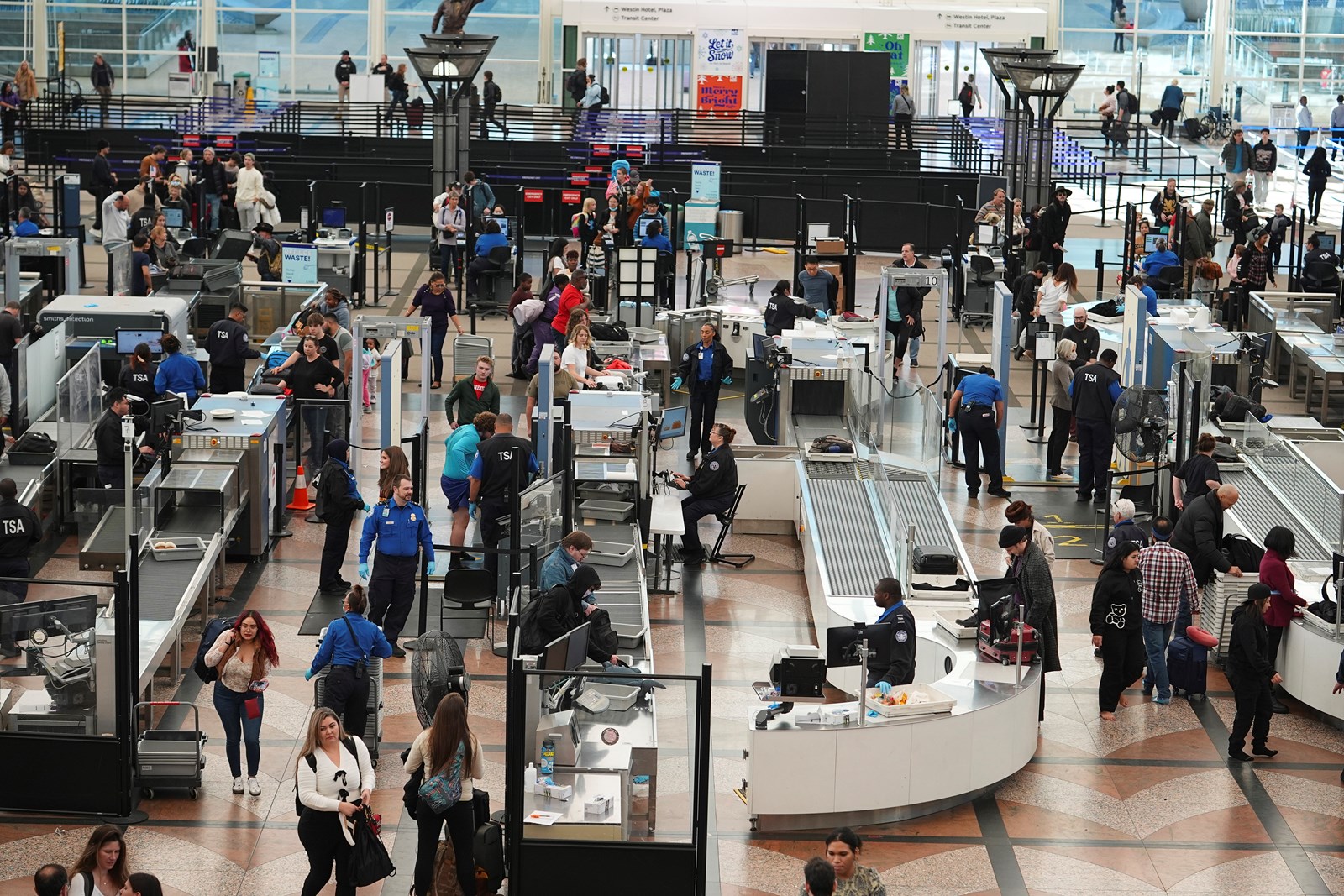
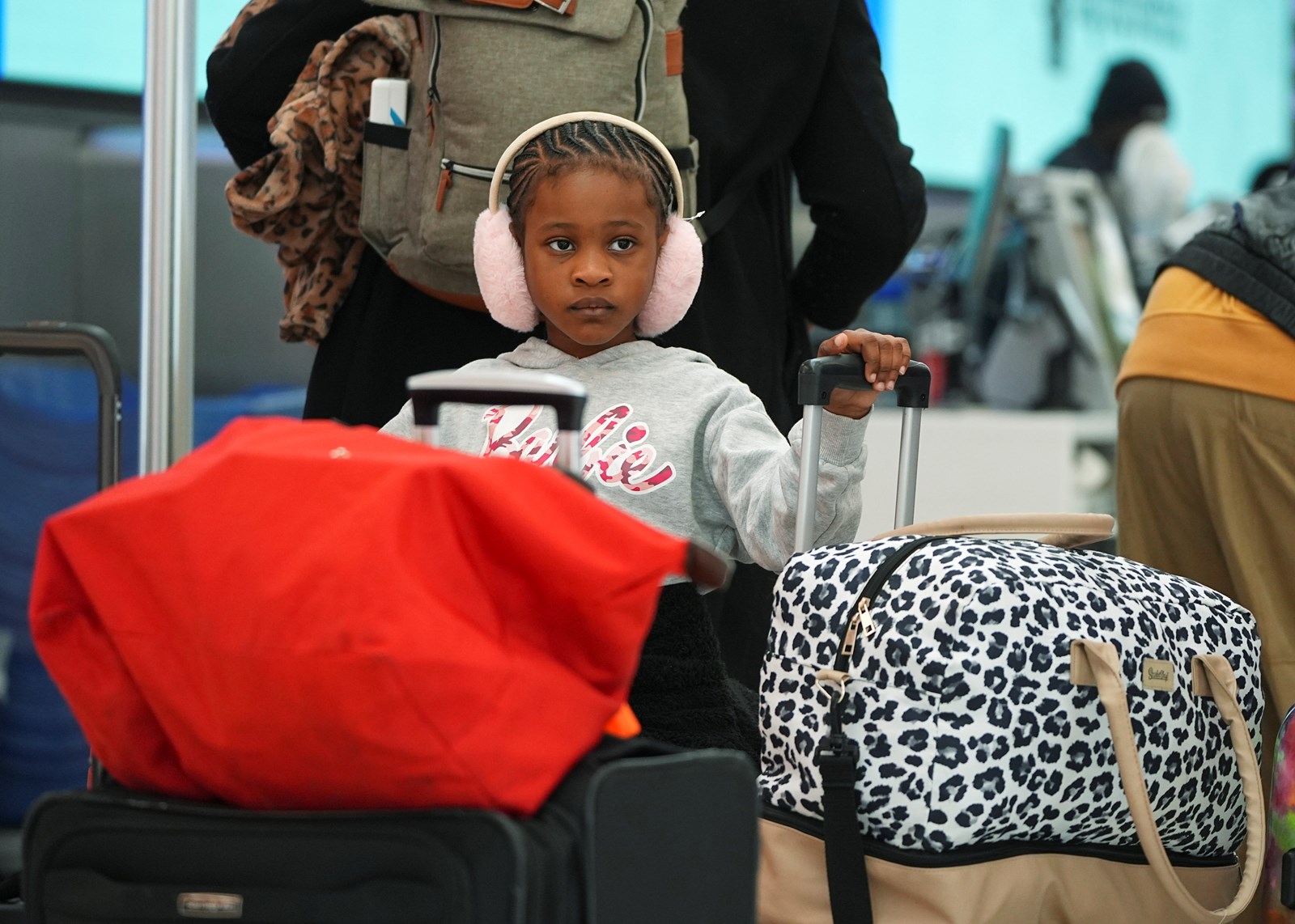


WASHINGTON – American Airlines briefly grounded flights nationwide Tuesday because of a technical problem just as the Christmas travel season kicked into overdrive and winter weather threatened more potential problems for those planning to fly or drive.
Government regulators cleared American flights to get airborne about an hour after the Federal Aviation Administration ordered a national ground stop for the airline. The order, which prevented planes from taking off, was issued at the airline’s request after it experienced trouble with its flight operating system, or FOS. The airline blamed technology from one of its vendors.
As a result, flights were delayed across American’s major hubs, with only 37% of the airline’s 3,901 domestic and international flights leaving on time, according to Cirium, an aviation analytics company. Nineteen flights were canceled.
Dennis Tajer, a spokesperson for the Allied Pilots Association, a union representing American Airlines pilots, said the airline told pilots at 7 a.m. Eastern that there was an outage affecting the FOS system. It handles different types of airline operations, including dispatch, flight planning, passenger boarding, as well as an airplane’s weight and balance data, he said.
Some components of FOS have gone down in the past, but a systemwide outage is rare, Tajer said.
Hours after the ground stop was lifted, Tajer said the union had not heard about any “chaos out there beyond just the normal heavy travel day.” He said officials were watching for any cascading effects, such as staffing problems.
On social media, however, customers expressed frustrations about delays that caused them or their family members to miss connecting flights. One person asked if American planned to hold flights for passengers to make connections, while others complained about the lack of assistance they said they received from the airline or gate agents.
Cirium noted that the vast majority of flights were departing within two hours of their scheduled departure time. A similar percentage — 36% — were arriving at their destinations as scheduled.
Dallas-Fort Worth, New York’s Kennedy Airport and Charlotte, North Carolina, saw the greatest number of delays, Cirium said. Washington, Chicago and Miami experienced considerably fewer delays.
Amid the travel problems, significant rain and snow were expected in the Pacific Northwest at least into Christmas Day. Showers and thunderstorms were developing in the South. Freezing rain was reported in the Mid-Atlantic region near Baltimore and Washington, and snow fell in New York.
Because the holiday travel period lasts weeks, airports and airlines typically have smaller peak days than they do during the rush around Thanksgiving, but the grind of one hectic day followed by another takes a toll on flight crews. And any hiccups — a winter storm or a computer outage — can snowball into massive disruptions.
That is how Southwest Airlines stranded 2 million travelers in December 2022, and Delta Air Lines suffered a smaller but significant meltdown after a worldwide technology outage in July caused by a faulty software update from cybersecurity company CrowdStrike.
Many flights during the holidays are sold out, which makes cancellations even more disruptive than during slower periods. That is especially true for smaller budget airlines that have fewer flights and fewer options for rebooking passengers. Only the largest airlines, including American, Delta and United, have “interline agreements” that let them put stranded customers on another carrier’s flights.
This will be the first holiday season since a Transportation Department rule took effect that requires airlines to give customers an automatic cash refund for a canceled or significantly delayed flight. Most air travelers were already eligible for refunds, but they often had to request them.
About 90% of Americans traveling far from home over the holidays will be in cars, according to AAA.
“Airline travel is just really high right now, but most people do drive to their destinations, and that is true for every holiday,” AAA spokesperson Aixa Diaz said.
Gasoline prices are similar to last year. The nationwide average Thursday was $3.04 a gallon, down from $3.13 a year ago, according to AAA. Charging an electric vehicle averages just under 35 cents per per kilowatt hour, but varies by state.
 PREVIOUS ARTICLE

