


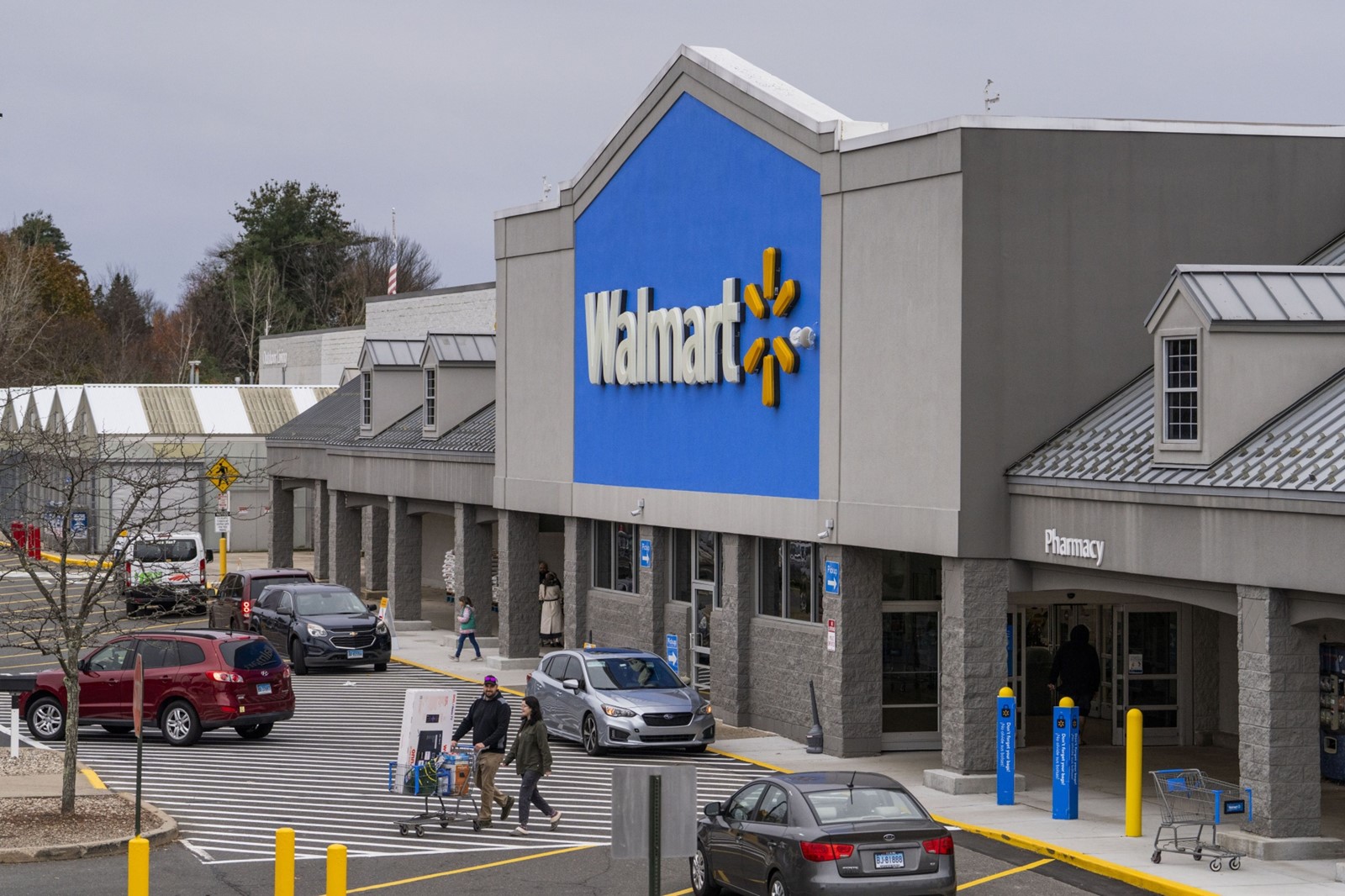


The head of the world’s largest retailer just used the D word on an earnings call: deflation.
“In the U.S., we may be managing through a period of deflation in the months to come,” Walmart Inc. Chief Executive Officer Doug McMillon told analysts on an earnings call Thursday.
Granted, prices of Walmart’s U.S. groceries and general merchandise are higher than a year ago, and sharply up on a two-year basis. But McMillon said the increases are slowing and could even begin to reverse.
If that happens, Walmart shoppers could start to see deflation — or a decrease in prices — in dry groceries and consumables in the coming months, he said. General merchandise prices “came down a little more aggressively in the last few weeks or months,” he added.
Even if overall prices don’t fall on an annual basis, McMillon’s comments underscore the slowdown in U.S. inflation after the Federal Reserve ramped up interest rates. That’s a big change from the decades-high inflation that hammered shoppers in the wake of the pandemic.
McMillon, who gets a close-up view of US shoppers on a daily basis, now has to convince Wall Street that Walmart can continue to drive sales and market-share growth as inflation wanes. Potential deflation in basic goods would free up shoppers’ budgets to spend more on general merchandise, he argued — a win for Walmart since those products tend to be more profitable.
Jobless claims continue to rise
Continuing applications for US unemployment benefits rose to the highest level in almost two years, underscoring the increasing challenges unemployed workers are facing in finding new jobs.
Recurring jobless claims, a proxy for the number of people continuously receiving unemployment benefits, jumped to 1.87 million in the week ended Nov. 4, according to Labor Department data out Thursday. That marked an eighth straight week of increases.
Initial jobless claims also rose, to 231,000 in the week ending Nov. 11. That was the highest since August.
Although it’s difficult to draw conclusions from volatile weekly numbers, the rise in jobless claims, combined other data out this week, indicate some cooling in the labor market, in price pressures and in consumer spending.
A separate report Thursday showed that U.S. factory production fell in October by more than expected, reflecting a strike-related pullback in activity at automakers and parts suppliers. And homebuilder sentiment dropped to the lowest level this year in November as high mortgage rates kept a lid on housing demand.
The reports reinforced speculation among traders that the Federal Reserve is done with raising interest rates.
Hyundai to sell on Amazon.com
Amazon is launching vehicle sales in the U.S. next year and allow local car dealers to sell directly to customers on its site.
In a joint announcement with car manufacturer Hyundai on Thursday, the two companies said Amazon will begin by offering Hyundai vehicles. In turn, Hyundai will name Amazon’s cloud computing unit AWS as its preferred cloud provider and integrate its next-generation vehicles with Alexa, Amazon’s popular voice assistant.
The idea, according to Amazon, is to have customers purchase a new car online and pick it up — or have it delivered — from their local dealer.
Amazon did not say how many dealers would be participating in the program or if customers across the U.S. would be able to make purchases. An Amazon spokesperson said the company would release more details as it builds the program, which is expected to begin with Hyundai franchised dealers and launch during the later part of next year.
Currently, Amazon sells vehicle equipment online and offers a showroom for consumers who want to research different types of cars they may want to buy. However, consumers can not directly purchase a vehicle on its platform.
Compiled from Bloomberg and Associated Press reports.
 PREVIOUS ARTICLE
