


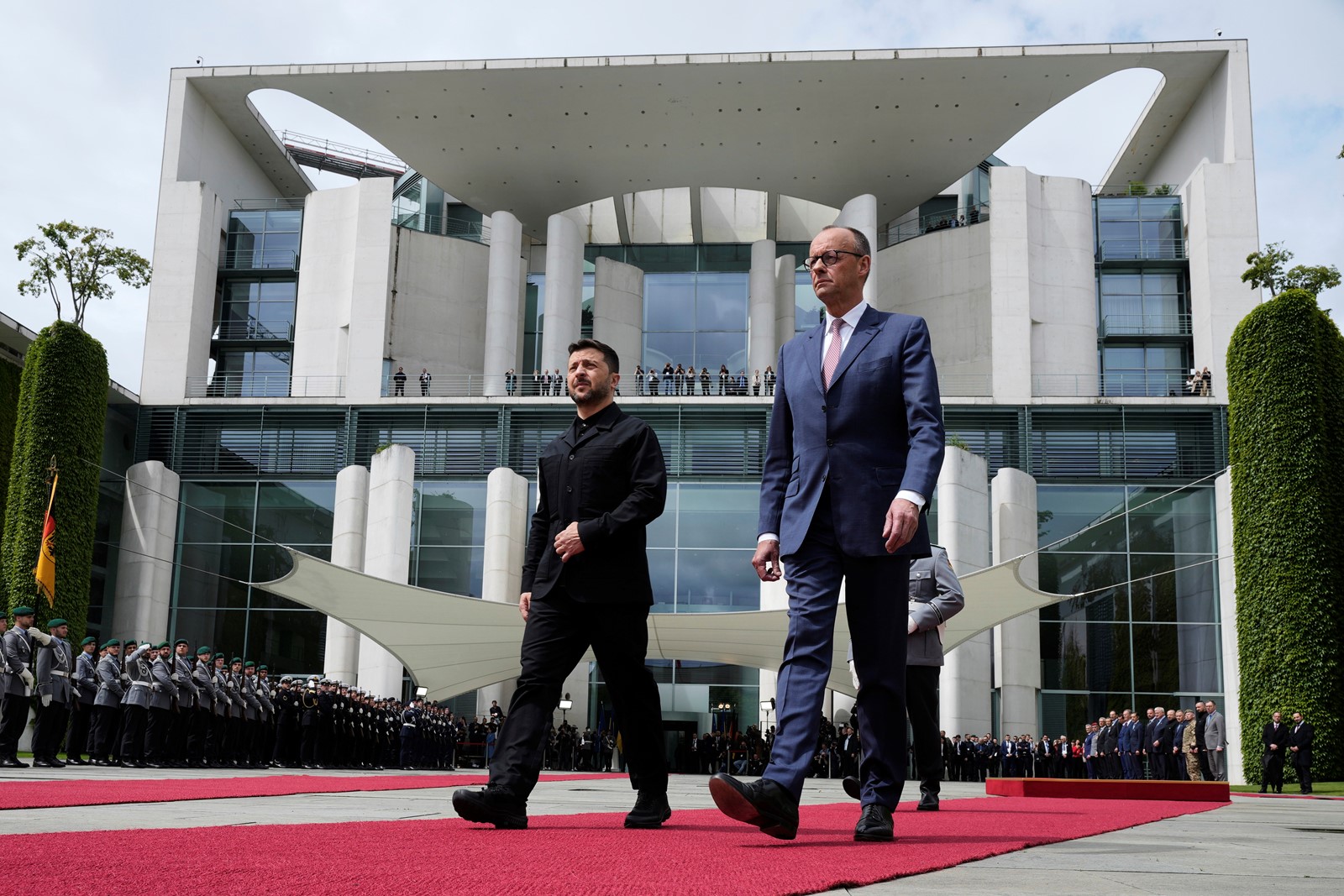


BERLIN — German Chancellor Friedrich Merz pledged Wednesday to help Ukraine develop its own long-range missile systems that would be free of any Western-imposed limitations on their use and targets as the Kyiv government fights to repel Russia’s invasion.
Some of the advanced weapon systems that allies have supplied to Ukraine during the 3-year war were subject to range and target restrictions — a fraught political issue stemming from fears that if the weapons struck deep inside Russia, the Kremlin might retaliate against the country that provided them and draw NATO into Europe’s biggest conflict since World War II.
Standing beside visiting Ukrainian President Volodymyr Zelenskyy, Merz said that under an intensified cooperation agreement, Germany “will strive to equip the Ukrainian army with all the capabilities that truly enable it to successfully defend the country,” including upgraded domestic missile production.
After the United States, Germany has been the biggest individual supplier of military aid to Ukraine.
“Ukraine will be able to fully defend itself, including against military targets outside its own territory” with its own missiles, Merz said at a joint news conference.
Hours after Merz’s pledge, Russian Foreign Minister Sergey Lavrov publicly invited Ukraine to hold direct peace talks with Moscow in Istanbul on June 2.
In a video statement, he said that Russia would use the meeting to deliver a memorandum setting out Moscow’s position on “reliably overcoming the root causes of the crisis.” He also said any Russian delegation would again be headed by presidential aide Vladimir Medinsky.
“We hope that all those who are sincerely interested in the success of the peace process in more than just words will support a new round of direct Russian-Ukrainian negotiations in Istanbul,” Lavrov said.
Ukrainian Defense Minister Rustem Umerov said his country isn’t opposed to such direct peace talks but it still hasn’t seen the memorandum promised by Russia and that further meetings would be “empty” without it.
“We call on them to fulfill that promise without delay and stop trying to turn the meeting into a destructive one,” Umerov wrote on X. He said he had handed such a document with the Ukrainian position to the Russian side.
Low-level delegations from Russia and Ukraine held their first direct peace talks in three years in Istanbul on May 16. The talks, which lasted two hours, brought no significant breakthrough, although both sides agreed to the largest prisoner exchange of the war. It was carried out last weekend and freed 1,000 captives on each side.
Merz declined to say whether Germany will supply its advanced Taurus long-range cruise missile to Ukraine — long a request by Kyiv and a step that Berlin has resisted.
The decision not to commit to giving Taurus missiles to Ukraine was a “big disappointment,” said lawmaker Roderich Kiesewetter, a senior member of Merz’s party, the Christian Democratic Union.
 PREVIOUS ARTICLE
