


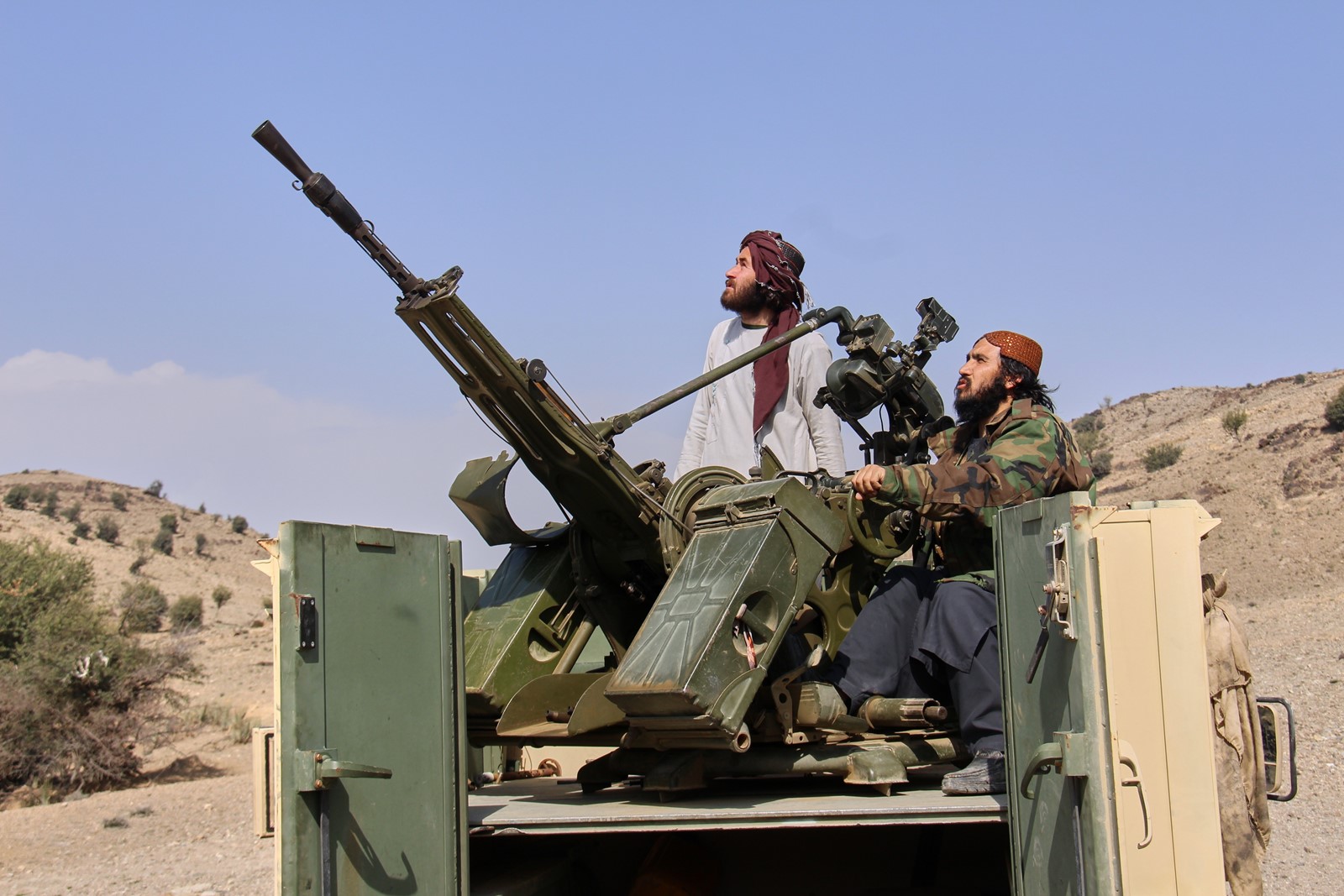


ISLAMABAD — Pakistan and Afghanistan exchanged cross-border attacks overnight in a dramatic escalation of tensions that led Pakistan’s defense minister to say on Friday that the two countries are in a state of “open war.”
Afghanistan launched an attack on Pakistan late Thursday, saying it was in retaliation for deadly Pakistani airstrikes on Afghan border areas Sunday. Pakistan then carried out airstrikes in Kabul and two other Afghan provinces early Friday, saying it targeted military installations.
Tensions have been high for months. Border clashes in October killed dozens of soldiers, civilians and suspected militants. Pakistan accuses Afghanistan’s Taliban government of harboring militant groups that stage attacks against it and also of allying with its archrival India.
A Qatari-mediated ceasefire ended the intense fighting in October, but several rounds of peace talks in Turkey in November failed to produce a lasting agreement. The two sides have occasionally traded fire since then.
Qatar once again appears to be mediating. Its minister of state, Mohammed bin Abdulaziz al-Khulaifi, spoke Friday with the foreign ministers of Afghanistan and Pakistan in an effort to de-escalate tensions, Qatar’s Ministry of Foreign Affairs posted on X.
Cross-border attack
Afghanistan’s attacks against Pakistani military targets was meant as “a message that our hands can reach their throats and that we will respond to every evil act of Pakistan,” Afghan government spokesman Zabiullah Mujahid said. “Pakistan has never sought to resolve problems through dialogue,” he said.
After the Afghan strikes, Pakistan’s Defense Minister Khawaja Mohammad Asif posted on X: “Our patience has now run out. Now it is open war between us.”
Asif said Pakistan had hoped for peace in Afghanistan after the withdrawal of NATO forces in 2021 and expected the Taliban, which seized power in the country, to focus on the welfare of the Afghan people and regional stability.
Instead, he said the Taliban had turned Afghanistan “into a colony of India” — a reference to recently improving ties between India and Afghanistan, including offers of enhanced bilateral trade. Pakistan and neighboring India, both nuclear armed powers, have periodically engaged in wars, clashes and skirmishes since gaining independence from British colonial rule in 1947.
‘Exporting terrorism’
Asif also accused Afghanistan of “exporting terrorism,” an allegation Pakistan frequently levies at its neighbor as militant violence in the country surges. Specifically, Pakistan accuses Afghanistan of supporting the Pakistani Taliban, or TTP, as well as outlawed Baloch separatist groups.
Pakistan accuses the TTP, which is separate from but closely allied with Afghanistan’s Taliban, of operating from inside Afghanistan. Both the group and Kabul deny that charge.
“Pakistan’s internal conflict is a purely domestic issue and is not a new one,” Mujahid said Friday, noting the TTP had been active for nearly two decades.
Pakistan also has frequently accused neighboring India of backing the outlawed Baloch Liberation Army and the Pakistani Taliban, allegations New Delhi denies.
Retaliatory strikes
Afghanistan said its attack Thursday was in retaliation for deadly Pakistani airstrikes on Afghan border areas Sunday.
The governments have issued sharply differing casualty claims.
Pakistan army spokesperson Lt. Gen. Ahmed Sharif Chaudhry said Pakistani air and ground operations killed at least 274 members of Afghan forces and affiliated militants and wounded more than 400, while 12 Pakistani soldiers were killed and 27 others were wounded. One Pakistani soldier was missing in action.
Mujahid rejected the claims of the high number of Afghan casualties as “false.” He said that 55 Pakistani soldiers were killed with the bodies of 23 of them taken to Afghanistan. He also said “many” Pakistani soldiers were captured. Thirteen Afghan soldiers had been killed, he said, and another 22 wounded, while 13 civilians were also wounded.
Later Friday, the Afghan government said that 19 civilians were killed and 26 others injured when Pakistan struck the provinces of Khost and Paktika in southeastern Afghanistan. Deputy spokesman Hamdullah Fitrat accused Pakistan of having “deliberately targeted the residences of ordinary civilians” and said most of the dead and wounded were women and children.
The Afghan government had reported earlier that a religious school in Paktika province was bombed without providing details of casualties.
The claims of either side could not be independently verified.
Pakistan’s air force carried out airstrikes Friday night targeting military installations in Afghanistan’s Laghman province, two senior Pakistani security officials said. They said an arms depot and two key military installations were destroyed. The officials spoke on condition of anonymity as they were not authorized to speak to the media on the record.
Pakistan’s Information Minister Attaullah Tarar said Pakistan’s anti-drone systems shot down several small drones over the northwestern cities of Abbottabad, Swabi, and Nowshera Friday. He said they appeared to be part of a failed attack by the Pakistani Taliban, and there were no casualties. Tarar claimed the drone attacks “once again exposed direct linkages between the Afghan Taliban regime and terrorism in Pakistan.”
 PREVIOUS ARTICLE
