


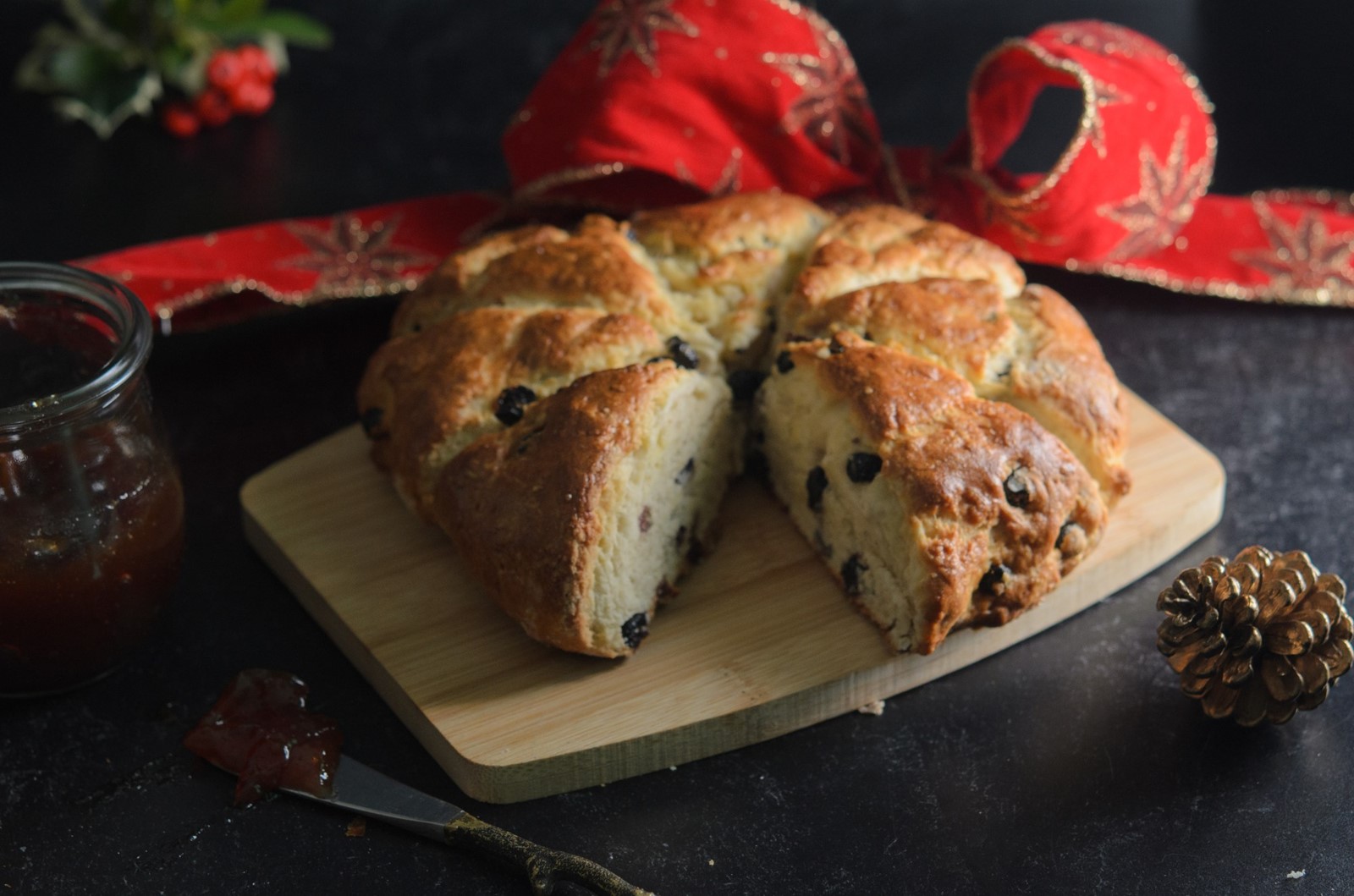


Whether you pronounce it “skohn” (rhymes with gone), or “scone” (rhymes with shown), this quick bread’s origins are most definitely Scottish. One theory is that the name is derived from the Stone of Destiny located in the town of Scone, the traditional site of Scottish coronations.
Another theory is that the word comes from the Gaelic word “sgonn,” meaning a shapeless mass. In Scotland, wheat wasn’t as accessible as barley and oats, and it was easier to shape oats and barley into pancakes and other similar-sized flatbreads to cook over the fire on griddles or baking stones. These quick breads became even more popular in the early 19th century when baking powder was invented. Today, you will find scones on the menu at a restaurant serving high tea, as well as savory ones alongside a bowl of soup.
Round or triangular, baked in the oven or on a griddle, scones are not just for breakfast or teatime. Besides the fact that you can use practically any fresh or dried fruit, or cheese to make scones, they have the added advantage of being easy to make. They can be on the table in 30 minutes with the cleanup already done by the time the scones come out of the oven.
The following recipe is made with bread flour rather than all-purpose flour, which gives the scone ring a sturdier texture and shape. The scone ring comes out of the oven with the wedges shaped like a crown, reminding us again of their long history with coronations.
This recipe comes from Paul Hollywood’s cookbook “British Baking.” You may recognize his name from “The Great British Bake Off.” He’s one of the judges on the show and it’s considered an honor to get a handshake from him for a job well done. In his recipe, he calls for sultanas (golden raisins), but I used dried wild blueberries from Trader Joe’s, which give a burst of sweetness in every bite. They are best eaten the day they are made.
Claudia Alexander, a resident of Marin County, has been happily cooking for family and friends for more than three decades. She has a weekly food blog, sweetbynurture.com. You can contact her at sweetbynurture@gmail.com.
Blueberry Scone Ring
Ingredients
1 cup bread flour plus ¼ cup flour, divided
4 tablespoons unsalted butter, cold, diced
¼ teaspoon salt
¼ cup caster sugar
½ cup dried wild blueberries, or other similar-sized fruit
2 teaspoons baking powder
2 eggs room temp
½ cup milk
Directions
Preheat oven to 350 degrees.
In a medium bowl, add the flour, salt and butter. Incorporate the butter into the flour with your fingers until the mixture resembles breadcrumbs. Add the sugar, baking powder and dried fruit. In a measuring cup, whisk one egg with the milk and slowly pour it over the flour mixture.
Using your hands, sweep the flour from the side of the bowl into the center while simultaneously turning the bowl until the dough comes together in a wet sticky ball. Spread the remaining ¼ cup of flour onto your counter and lay the ball on top. With floured hands, fold the dough over itself, incorporating the flour as you go. Continue until you have picked up most of the flour — just a couple more folds and don’t overwork the dough.
Shape the dough into a disk about 1 inch high and place on a parchment-lined baking sheet. Using a wet, sharp knife, cut the dough in half down to the baking sheet but don’t separate the wedges. Repeat until you have eight wedges, like a pie. Whisk the remaining egg and brush it over the top of the scone ring. Bake for 20 minutes until the scones are golden.
— Adapted from “Paul Hollywood’s British Baking”
 PREVIOUS ARTICLE

