




Saudi Arabia on Saturday confirmed that Yemen’s Houthi rebels tried to attack its capital with a ballistic missile, the first targeting of Riyadh since the escalation in fighting with the Iran-backed rebels.
The statement by the Saudi-led coalition fighting the Houthis came long after the morning attempt, which the coalition said was intercepted. It also said the Houthis tried to attack civilian infrastructure in the Red Sea port city of Yanbu and in Taif, Baysh and Farasan but they were thwarted, giving no further details.
The Houthis earlier claimed, without providing evidence, they had targeted “sensitive sites” in Riyadh and facilities of Saudi oil giant Aramco in Yanbu, causing “massive fires.” Aramco, the world’s largest oil company, did not respond to a request for comment.
The fighting between Saudi Arabia and the Houthis is the latest front to erupt as a result of the Iran war. The growing conflict near another important global shipping corridor has brought new pressures for markets.
Houthi military spokesperson Brig. Gen. Yahya Saree claimed they attacked Saturday with cruise and ballistic missiles as well as drones. He also said Saudi Arabia had attempted to target the rebel-held city of Sanaa in Yemen, without giving details. The Associated Press couldn’t independently verify the claims.
On Thursday, the first civilian casualty was reported as the Saudi civil defense said debris from an intercepted Houthi drone killed a Yemeni resident of Saudi Arabia.
Regional officials have told the Associated Press that Saudi Arabia is running low on missile interceptors.
Iran awaits U.S. response
The head of Iran’s Supreme National Security Council, Mohsen Rezaei, told Al Jazeera in an interview that Iran is waiting for President Donald Trump’s response after Tehran conveyed its conditions for ending the war via Qatar.
It was not clear when the conditions were shared. Rezaei said they include ending the war on all fronts, releasing assets seized from Iran and ending the U.S. naval blockade of Iranian ports. Earlier U.S.-Iran negotiations fell apart.
He also said Iran wants the fighting involving Yemen and Saudi Arabia to end.
Iran executes man accused of spying
Iran’s state TV said a man identified as Hossein Pedram was executed after being convicted on charges of spying for Israel’s intelligence agency Mossad.
The report said Pedram shared classified information on “sensitive military sites” in Iran’s Isfahan province. It didn’t say how he accessed the information. He was reportedly arrested after those sites, which included missile bases, were targeted in last year’s 12-day air war by the U.S. and Israel.
A recent surge of executions in Iran prompted an international outcry by rights groups.
U.S.: Oil is flowing through strait
The head of U.S. Central Command said the military has supported the transit of 1 billion barrels of oil through the Strait of Hormuz over the past two months and claimed that Iran has “exported zero barrels” because of a U.S. blockade.
Adm. Brad Cooper said the strait’s primary transit lanes have been cleared of mines, and the volume of oil, natural gas and cargo transiting over the past two weeks is the highest it has been in six months — or shortly after the war began with U.S. and Israeli strikes.
But monitors say shipping traffic remains well below prewar levels. Iran continues to attack ships as it asserts control over the waterway through which about one-fifth of the world’s traded oil and natural gas passed before the war.
Three in Gaza are killed by strikes
Gaza’s Health Ministry and Shifa Hospital officials said one man was killed in the Shijaiyah neighborhood of Gaza City. Another man, identified as the son of the ministry’s director general, was killed as he walked in the Jabaliya refugee camp in northern Gaza.
The Israeli military said it struck “several military operatives” and that it would provide more details later.
Later, officials at Shifa Hospital said an Israeli strike on a civilian vehicle in Gaza City killed one person and wounded at least four others. “The body was completely charred,” managing director Rami Mhanna said. Israel’s military said it “struck a Hamas military operative.”
The heaviest fighting between Israel and Hamas has subsided since a ceasefire last October, but Israeli fire has killed more than 13,780 Palestinians in Gaza since then, according to Gaza’s Health Ministry.
Israeli strikes hit southern Lebanon
Israel’s military said it struck targets of the Hezbollah militant group across several areas in southern Lebanon.
The strikes took place after two soldiers were wounded when their vehicle drove over a Hezbollah explosive device in an area of southern Lebanon occupied by Israeli troops, the military said.
Lebanon’s state-run National News Agency reported three Israeli airstrikes on the southern town of Nabatiyeh al-Fawqa. It said the third strike almost hit paramedics heading to the area. It said no one was hurt.
Iran race managers are charged
Iran’s state TV said the Tehran prosecutor’s office filed charges against race organizers after women participated without covering their hair because “legal and Islamic Sharia” wasn’t observed.
The country’s ruling theocracy requires women to wear scarves that cover their hair and loose-fitting clothes that hide their bodies.
Footage circulated online showing women running the 6-mile race without the hair covering. Habib Sotoudehnejad, head of Tehran’s sports department, said about 5% of participants violated race rules.
The race was run separately for men and women.
Blast at Syrian arms depot kills 11
Syria’s Defense Ministry held a funeral for 11 soldiers killed a day earlier during an explosion in the village of Ayash in the eastern province of Deir el-Zour.
The ministry did not give a reason for the blast that also wounded several other military personnel. The Britain-based Syrian Observatory for Human Rights said the blast occurred in an arms depot at a military post.
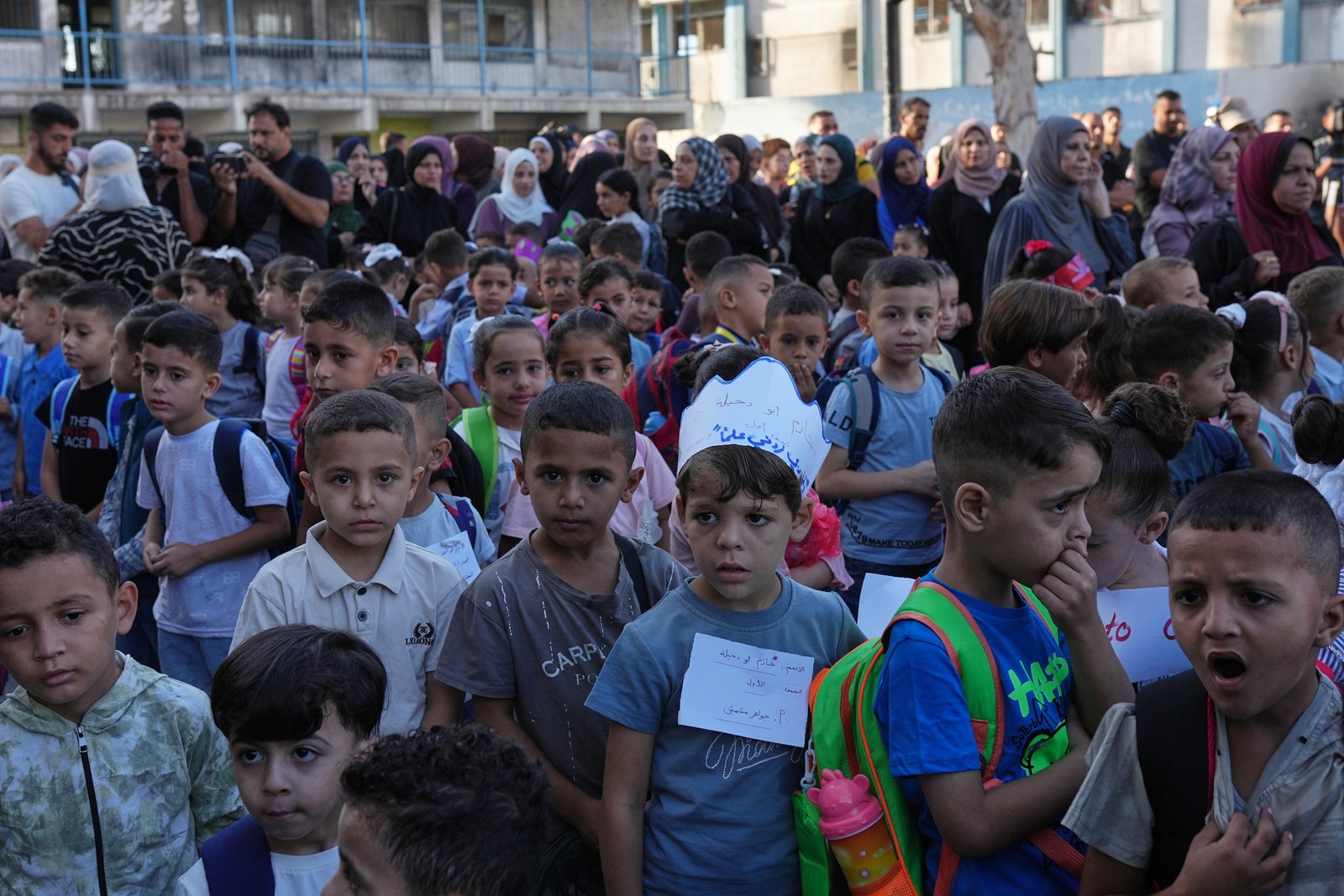
Kids return to school in Gaza
The U.N. agency for Palestinian refugees said more than 280,000 children in Gaza are attending school in tents and heavily damaged classrooms.
At one school in Nuseirat, some classrooms have no desks, leaving children to sit on blankets on the floor. Still, some families said a return to school brings back a familiar sense of routine that was upended by war.
UNRWA education program chief Tawfiq al-Hourani said the agency three years ago operated 182 fully equipped schools. He said 95% of them have since been lost.
 PREVIOUS ARTICLE
