


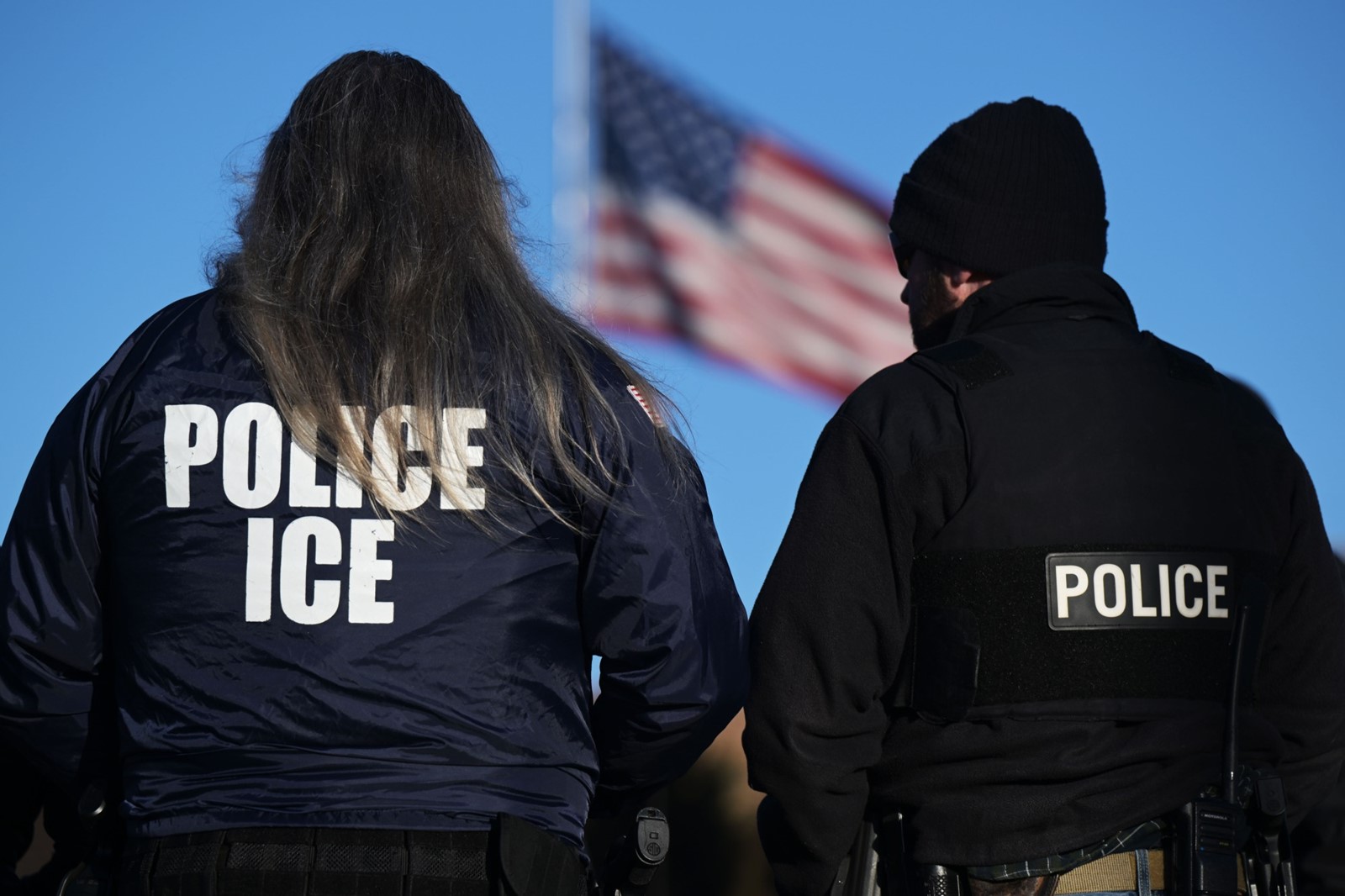


Boulder County Sheriff Curtis Johnson hasn’t worked with U.S. Immigration and Customs Enforcement agents to detain or deport undocumented immigrants in Boulder County and has no plans to in the future.
The elected official said Wednesday that deputies have not and will not notify ICE of someone’s immigration status, hold people in jail on immigration detainers, or ask victims about their immigration status if they report a crime. “We don’t provide information to ICE, but we are responsive when they ask questions if the questions pertain to information that is publicly available,” Johnson said.
A rise in public concern regarding the detention and deportation of undocumented immigrants led thousands to protest in Denver earlier this week. On Wednesday, the Federal Bureau of Investigations announced it was targeting over 100 members of the Venezuelan gang Tren De Aragua in Aurora.
‘We can’t pick and choose’
Deputies do have to honor criminal warrants, but legally county jails in Colorado are not allowed to hold people in custody on a detainer alone, according to Johnson.
In addition, jails are required to provide a public record of everyone being held in their jail.
Due to this public record, Johnson explained that ICE can check the jail records of individuals they know to be undocumented.“If you had a friend in jail and you reached out to the jail and said, ‘When is my friend getting out of jail?’, we would tell you because that’s public information,” Johnson said. “The challenge for me is that transparency piece. … We want to make sure everyone in our community has access to information that is publicly available regarding people who are incarcerated in the Boulder County Jail and we can’t pick and choose who we want to be transparent with.
“We’re either transparent or not and this community expects transparency.”
When ICE is aware that an inmate is undocumented, they can come to the jail to ask to speak to the person in custody.
“We are required then to notify the individual in our custody that ICE is at the facility and wanting to interview them. We have to inform them of their rights, that they have the right to say, ‘No thank you, I don’t want to talk to them,’” Johnson said. “Only after we go through a procedure, if they want to or are willing to talk to ICE, can we allow that interaction to happen. And I’m sure you can imagine, most of the time someone would say, ‘I have no interest in talking to them.’ At that point, the visit is over.”
ICE is unable to take anyone in jail awaiting trial or anyone serving a sentence. However, ICE is able to ask the jail when the individual’s release time and date is, and then show up outside the jail and wait for the inmate to be released, according to Johnson.
On Wednesday, Johnson said there are about 12 people in the jail whose immigration status has been questioned by ICE. Johnson said most of them are pre-trial.
“It is highly likely, if they get convicted, they will end up going to the Department of Corrections from our jail and serving a prison sentence and that detainer will mean nothing because they’ll end up in the state prison system,” Johnson said. “Should they get released from there, that’s between the Department of Corrections and ICE, not me.”
Johnson said when someone is booked into the Boulder County Jail they are not asked for their birth place or legal immigration status, but this is not the case for all jails across Colorado.
“There are 62 elected county sheriffs in the state of Colorado and there are some counties that are more interested in immigration enforcement than others,” Johnson said. “In Boulder County we are not interested in immigration enforcement. I have not been encouraged to participate in immigration enforcement, because I don’t believe that is consistent with the values or expectations of the Boulder County community.”
‘People in our community are concerned about that’
Johnson said ICE agents were recently in Lafayette looking for an individual to detain. Lafayette police said it had not assisted ICE with any search or arrest warrants recently and directed the Daily Camera to ICE for more information. The ICE Denver Field Office could not be reached by the Daily Camera.
Johnson said oftentimes when the federal government is working in the community, they don’t inform local law enforcement.
“I understand that the federal government and the immigration authorities have a job to do,” Johnson said. “It would be appreciated if we knew when they were operating in our area because people in our community are concerned about that. But at the same time, I also appreciate that they’re not wanting to get us involved in work we have no business being involved in.”
Other law enforcement agencies in the county, including Boulder police, have said they have also not contacted ICE or assisted their efforts.
“The Boulder Police Department is responsible for enforcing local and state laws,” Boulder spokeswoman Jenn Ciplet wrote in an email. “Federal immigration policy is not within its purview. Our officers recognize the importance of cultivating and maintaining trust, especially in communities that might be more hesitant to report concerns or crimes. While the department can’t prevent federal officials from conducting immigration-related enforcement within city limits, Boulder Police does not provide local resources or assistance in support of these efforts.”
Amber Luttrell, public information manager for the Erie Police Department, pointed to Colorado Statute 24-76.6-101, which prohibits local law enforcement from detaining individuals on the basis of immigration unless supported by a judicial warrant.
“We remain committed to working closely with our stakeholders and community leaders to ensure the safety and security of our community,” Luttrell said.
Louisville Police Chief Rafael Gutierrez said that Louisville officers are there to serve all residents, regardless of immigration status, and do not want residents to hesitate reaching out to police for services.
“We recognize the potential fear many people may have while interacting with police and government officials, and we want people to feel secure when interacting with us. We do not want the current situation to dissuade people from reaching out to us in their time of need or to report crimes when they are victimized,” Gutierrez said in an email.
According to Longmont’s webpage, Longmont Public Safety does not participate in the Homeland Security 287(G) program which trains local police officers to assist in the identification and detention of undocumented immigrants. However, Longmont police will cooperate with ICE with the identification and arrest of people who are considered a danger to the community.
‘Our job is to make sure people … are safe’
Ciplet wrote that the city wants all residents and visitors to feel comfortable reporting crimes without fears relating to their immigration status. Johnson shared similar sentiments.
“We spend a lot of time and energy trying to build positive connections with people in our community regardless of their immigration status,” Johnson said.
“That is certainly a fear of mine that people will not report being a victim of a crime because they’re afraid it will lead to some immigration related enforcement against them, and I’m not sure how I can reiterate more strongly that that is not our job and not our concern.”
He added, “Our job is to make sure people in our community are safe and our interests are in making sure we provide public safety and enforce the law with regards to local laws and supporting victims of crime, not enforcing immigration law.”
The Boulder County District Attorney’s Office can certify U Visas — a federal immigration benefit for victims of certain crimes who assist law enforcement or government officials in an investigation or prosecution.
Boulder has a variety of resources for immigrant families linked on their website, including a “Know Your Rights” booklet, Boulder Valley School District Resources for immigrants and website for the University of Colorado Boulder Immigration Defense Clinic.

