




For over a year, Canada’s Conservative Party seemed on track to win a decisive victory in the next election as Justin Trudeau’s governing coalition crumbled. Now, nothing seems guaranteed — and the reason is Donald Trump.
The national mood has changed and with it the landscape for this year’s vote. Trudeau’s Liberal Party is making gains in public opinion surveys, even though its members haven’t chosen his successor yet.
Polls by Nanos Research Group and Leger Marketing show the Conservatives eight or nine points ahead of the Liberals, a significant shift from previous leads of as much as 27 points. A separate poll released this week by Abacus Data gives the Conservatives a much wider edge, but it also found that voters most worried about Trump tend to believe the Liberals are best to handle him.
The U.S. president has shocked Canada with threats to use “economic force,” including tariffs, as a strategy to coerce the country into becoming a U.S. state. Trump’s repeated taunts have upended decades of assumptions about national security and created seething resentment across Canada, realigning the country’s politics in the process.
Conservative Leader Pierre Poilievre built his profile by relentlessly targeting Trudeau as the culprit for Canadians’ affordability struggles, using slogans like “Axe the Tax,” a criticism of the prime minister’s unpopular carbon tax. Now that Trudeau is leaving and Canadians face an alarming threat from their southern neighbor, the Conservatives are rebranding. Poilievre planned a major speech with a nationalist motto — “Canada First” — that mimics Trump’s own.
“Now all of a sudden the enemy is not in Ottawa, the enemy is in Washington. It completely changes the political dynamic,” said Sebastien Dallaire, executive vice president with polling firm Leger. “It’s much more difficult to keep using the same language as before, to keep talking about the same opponents as before, because that’s not what Canadians want to hear right now.”
Poilievre’s messages about domestic issues including inflation, housing, taxes and crime captured the popular mood. Trudeau’s standing had been plummeting since 2023, but it was the accusation that he was ill-prepared for a trade war — made by Chrystia Freeland, his longtime finance minister — that finally finished him. Now, Freeland and Mark Carney, the former Bank of Canada and Bank of England governor, are the front-runners to replace him.
“I think Trudeau’s reputation and his popularity was so low that anybody else is going to see an increase” in the polls, said Lisa Raitt, a former Conservative Cabinet minister. “The Liberals who said that they could never vote for Trudeau again are taking another look at their leaders.”
Freeland has put forward the most aggressive policy ideas in reaction to Trump — proposing, for instance, that countries form a united front against the U.S. and place 100% tariffs on vehicles made by Elon Musk’s Tesla Inc. Carney described Trump’s protectionism as a “fever that has gripped our southern neighbor” and argued that Canada’s best option is to retaliate against the U.S. and seek out other trading partners.
The Leger poll found that Carney is the preferred candidate among Liberal supporters, and that if he becomes Liberal leader, the party would enjoy about the same level of support as the Conservatives.
“I think there’s an inflection point when you have Donald Trump actually present an existential threat to Canada,” said Sabrina Grover, a Liberal strategist and senior adviser at NorthStar Public Affairs. “In the face of that, Canadians are turning away from what has been an unserious time in Canadian politics, led a lot by the Conservative bumper-sticker slogan approach.”
A protracted trade war between Canada and the U.S. would likely plunge Canada into a recession and cause hundreds of thousands of job losses. Trump’s planned 25% tariffs on steel and aluminum, along with potential levies on cars and other items, would hurt key sectors in vote-rich Ontario and Quebec.
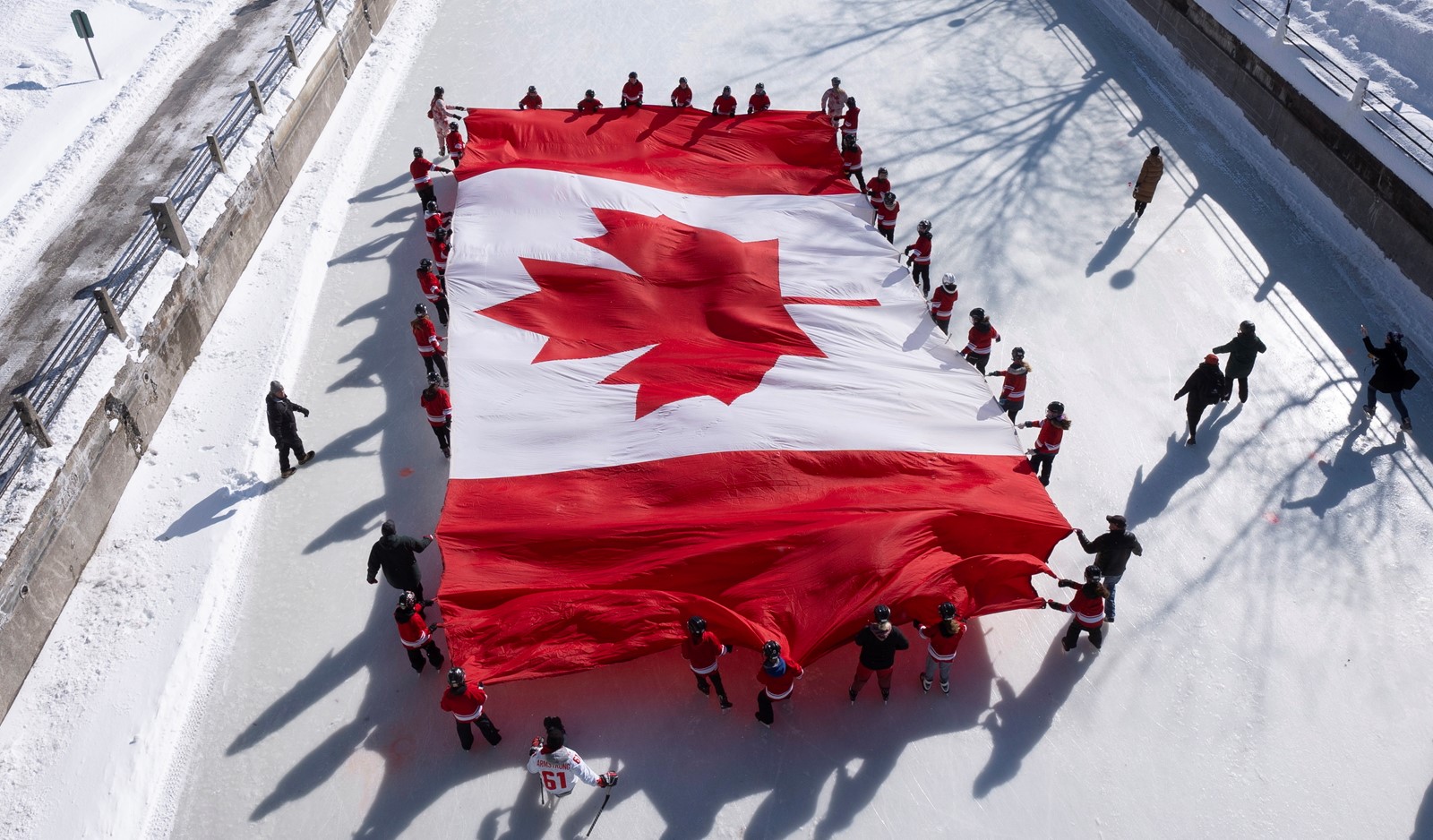
The threats from Washington have unleashed a wave of patriotism that Liberals argue runs contrary to Poilievre’s earlier refrain that Canada is “broken.”
“You can’t spend two years telling Canadians that Canada’s broken and then all of a sudden decide that Canada’s great and it’s Canada first,” Grover said.
To Conservatives, however, Poilievre’s messaging matches the moment. If the economy is the No. 1 issue, they say, their leader enjoys more credibility than anyone.
“I think the question in the election is who is going to make life more affordable for Canadians,” said Laura Kurkimaki, vice president at McMillan Vantage and former principal secretary to Erin O’Toole, Poilievre’s predecessor. “I think that Pierre has always put Canada first and Canadians first in all of his policy ideas.”
Carney and Freeland have both used Trump as justification for ditching some unpopular Trudeau-era policies — the consumer carbon tax and a hike in the capital gains tax rate. Liberals are also publicly reconsidering ideas they’ve long resisted, such as building more pipelines to move crude west to east or to coastlines, to lessen Canada’s reliance on the US as the main buyer of its oil.
Conservatives scoff at the change in the Liberals’ tone.
“It’s honestly laughable at this point that they think anyone would believe they aren’t going to bring in a carbon tax, and that they suddenly woke up and care about the oil and gas sector in this country,” Kurkimaki said.
 PREVIOUS ARTICLE
