


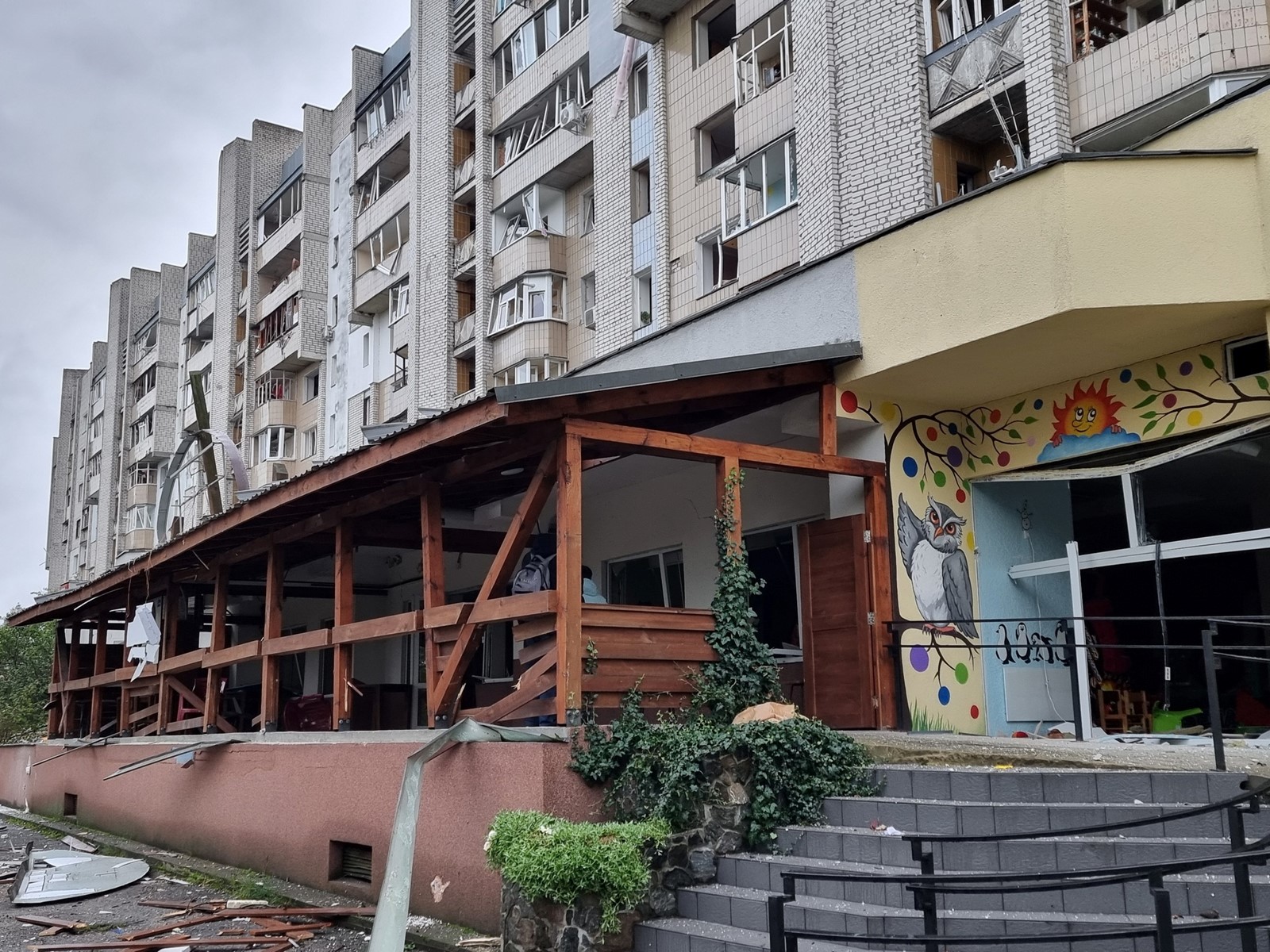
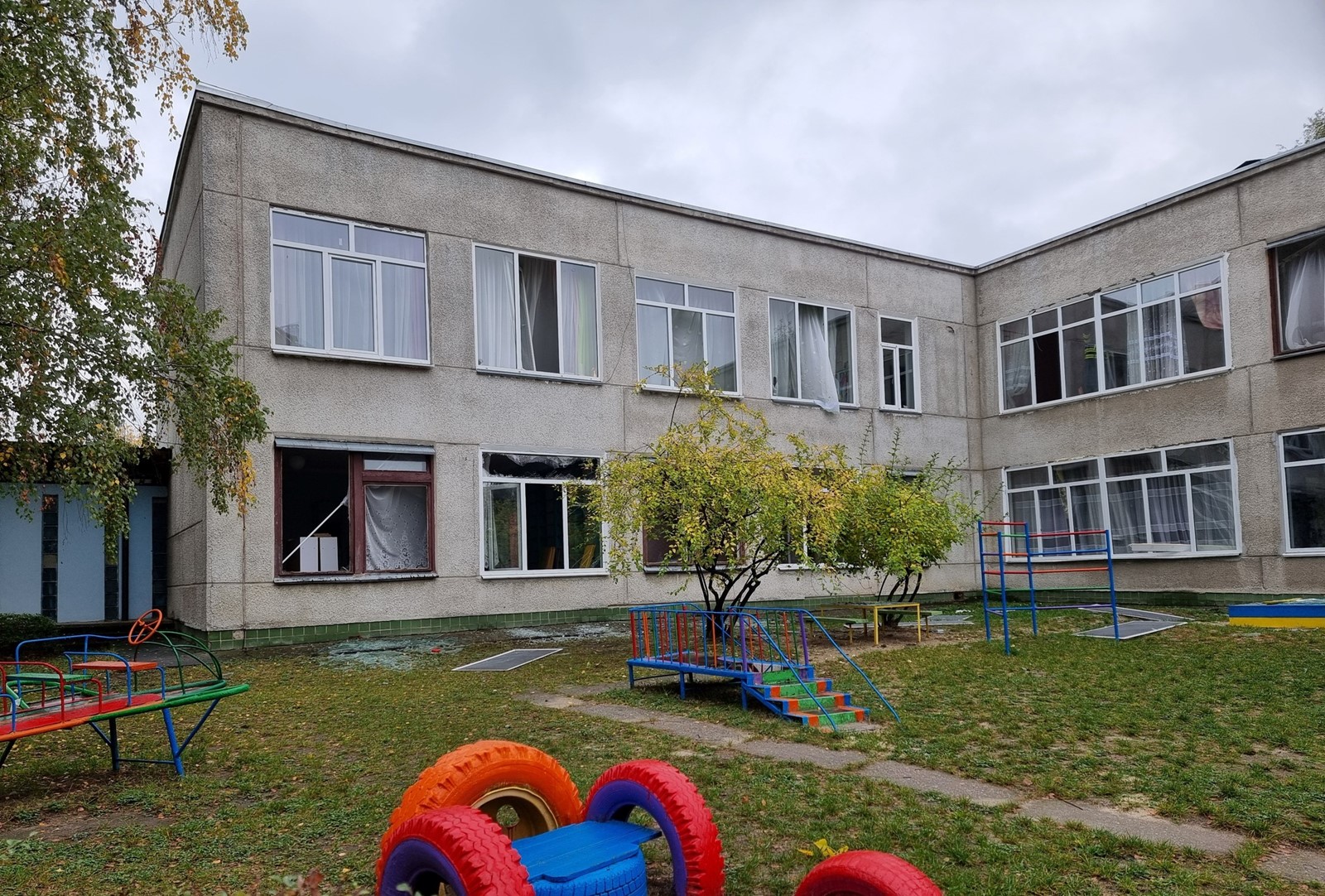


A Sonoma Sister Cities Association committee is seeking donations to help Sonoma’s sister city of Kaniv, Ukraine, and its residents as they prepare for the winter and recover from Russian bombings this month that injured 11 people and damaged an estimated 2,340 windows.
Financial donations can be made at givebutter.com/4madOh. Warm winter clothing and sleeping bags can be contributed by contacting Sonoma resident Kaeti Bailie, president of the Sister Cities Association Sonoma-Kaniv committee, at kaetibailie@gmail.com.
The bombings occurred on the night of Oct. 9 and 10 and lasted for several hours, said Kaniv resident Anatoliy Leontyev, president of the Kaniv Friendship Association.
Kaniv, a city of around 29,000 people, is about 90 miles south of Kyiv, the capital of Ukraine, on the Dnieper River.
“There was a massive shelling of Kaniv,” he wrote in an email. “For the first time, our city was systematically bombed. It was very loud and bright. Fortunately, the Kaniv hydroelectric power station did not suffer significant damage.”
He said that at around 3 a.m. on Oct. 10, drones were launched to attack the hydroelectric power station. Some were shot down, while one caused a fire that was quickly extinguished.
At approximately 6:30 a.m., two missiles approaching the power station were shot down but they detonated near a high-rise urban development along the Dnieper (also known as Dnypro) River.
Several shops and buildings were damaged, including a kindergarten school which sustained broken windows and doors and other significant damages, he said.
“According to the city’s emergency commission, a total of about 2,340 windows and several dozen doors in apartments, shops and educational institutions in Kaniv were damaged by the shockwave from the explosions,” Leontyev said. “Some apartments caught fire, and furniture and even brick partitions were damaged.”
He said on Friday, Oct. 17, that there had no been subsequent Russian attacks on Kaniv.
“But given the fact that Russia is systematically disabling energy infrastructure, I am almost certain that there will be more attempts to seriously damage the hydroelectric power plant,” he added.
Leontyev said Ukraine has historically had a sufficient gas supply, but that 40% of its gas production has been destroyed and there is now a shortage of gas in the country’s storage facilities.
He said this winter “promises to be very difficult as Russia is disabling all of Ukraine’s infrastructure, both gas and electricity.”
During the war with Russia, electricity cuts have become a regular, scheduled occurrence during cold months, and Kaniv’s residents have adapted to them. Leontyev said that emergency power outages — when electricity is lost for several hours, without being scheduled or anticipated — began last week due to the overload of power grids.
“In such conditions, the simultaneous absence of gas and electricity can very likely have serious consequences, especially in large cities,” Leontyev said. “Although the deliberate destruction of Ukraine’s energy infrastructure has all the signs of genocide, this is clearly what (Russian President Vladimir) Putin wants.”
The SSCA’s Sonoma-Kaniv committee has been helping the city of Kaniv to address its energy problems by applying for grants from the U.S. Agency for International Developmnent (USAID), including a $1 million grant to purchase and install a large backup generator.
“Thanks to the initiative and influence of the residents of Sonoma, in Kaniv, the generator was installed on the territory of the Kaniv heating plant,” Leontyev said.
He said it can supply power to the city’s heating network if a complete blackout occurs.
“At such a moment, it is necessary to ensure the uninterrupted operation of circulation pumps and other system components to prevent water from freezing in the heating pipes during frosts,” he said. “Therefore, this backup generator can play a decisive role in maintaining the integrity and stability of our city’s heating system as its most important link.”
Leontyev said as winter approaches, the residents of Kaniv need gas and kerosene heaters, electric generators, power banks, warm clothes and warm sleeping bags among other things.
“During war years, the residents have a certain stock of all this,” he said. “But in the worst-case scenario, all of this may be needed in large quantities. Of course, we are not sitting idly by, and are actively preparing ourselves. Nevertheless, we would be extremely grateful for any possible help.”
Bailie added, “Kaniv needs money. Winter is coming soon, and many people received widespread damage in the residential area overlooking the river near the hydroelectric plant.”
She said Kaniv’s and its residents’ greatest need, currently, is money to help with repairs of the buildings damaged in the recent bombings.
Bailie said many people, organizations and foundations have contributed to the Sonoma-Kaniv committee’s Kaniv projects.
The city of Sonoma provided an ambulance and the Sonoma-Kaniv committee raised money to ship it to Ukraine.
“We also solicited medical supplies from several sources, including Sonoma Valley Hospital, which gave us machinery to be use in a Kaniv hospital,” Bailie said. “And we raised $20,000 to purchase large, commercial, rechargeable backup batteries to be placed in schools and public spaces.”
The SSCA Sonoma-Kaniv committee also wired money to support the Kaniv volunteer center’s efforts to purchase hemostatic tourniquets to be placed in first-aid backpacks for soldiers on the front lines.
For the past three years, the committee has provided cash to the volunteer center to aid with its ongoing efforts to support the refugees that are now housed in Kaniv and those passing through to safer regions.
“This was especially important during the initial invasion, but even now, three years later, our cash provides support,” Bailie said.
The Sonoma-Kaniv committee also has sent thousands of pairs of Bombas socks and underwear that was donated by the Bombas company giving program
“Sonoma is an amazingly generous community of people who care about their fellow Sonomans as well as people in other lands,” Bailie said.
Bailie noted that Sonoma has had a 40-year relationship with Kaniv that started as a citizen initiative during the Cold War in response to the threat of an escalating nuclear arms race and the possibility of a nuclear war.
“I think because we have seen Ukraine move from a Soviet republic to a successful, independent country, people here do not want to see it again swallowed up into a Soviet-era relationship with Russia,” she said.
 PREVIOUS ARTICLE
