




With a series of executive orders, President Donald Trump has demonstrated that he has the appetite for an audacious fight to remake public education in the image of his “anti-woke,” populist political movement.
But in a country unique among nations for its hyperlocal control of schools, the effort is likely to run into legal, logistical and funding trouble as it tests the limits of federal power over K-12 education.
On Wednesday evening, Trump signed two executive orders. One was a 2,400-word behemoth focused mainly on race, gender and American history. It seeks to prevent schools from recognizing transgender identities or teaching about concepts such as structural racism, “White privilege” and “unconscious bias,” by threatening their federal funding.
The order also promotes “patriotic” education that depicts the American founding as “unifying, inspiring and ennobling” while explaining how the United States “has admirably grown closer to its noble principles throughout its history.”
The second order directs a swath of federal agencies to look for ways to expand access to private school vouchers.
Both orders echo energetic conservative lawmaking in the states. Over the past five years, the number of children using taxpayer dollars for private education or home-schooling costs has doubled, to 1 million. More than 20 states have restricted how race, gender and American history can be discussed in schools. States and school boards have banned thousands of books.
It is not clear what real-world effect the new federal orders might have in places where shifts are not already underway. States and localities provide 90% of the funding for public education — and have the sole power to set curriculums, tests, teaching methods and school-choice policies.
The orders are likely to strain against the limits of the federal government’s role in K-12 education, a role that Trump has said should be reduced.
That paradox is a “confounding” one, said Derrell Bradford, president of 50CAN, a nonpartisan group that supports private school choice. He applauded the executive order on vouchers and said that taken together, the two orders mark a major moment in the centuries-old debate over what values the nation’s schools should impart.
“You can like it or not, but we’re not going to have values-neutral schools,” he said.
Still, there are many legal questions about the administration’s ability to restrict federal funding in order to pressure schools.
The major funding stream that supports public schools, known as Title I, goes out to states in a formula set by Congress, and the president has little power to restrict its flow.
“It seems like a significant part of the strategy is to set priorities through executive order and make the Congress or the Supreme Court respond — as they are supposed to in a system of checks and balances,” Bradford said.
The executive branch does control smaller tranches of discretionary funding, but they may not be enough to persuade school districts to change their practices.
In Los Angeles, Alberto Carvalho, superintendent of the nation’s second-largest school district, said last fall that regardless of who won the presidential election, his system would not change the way it handles gender identity.
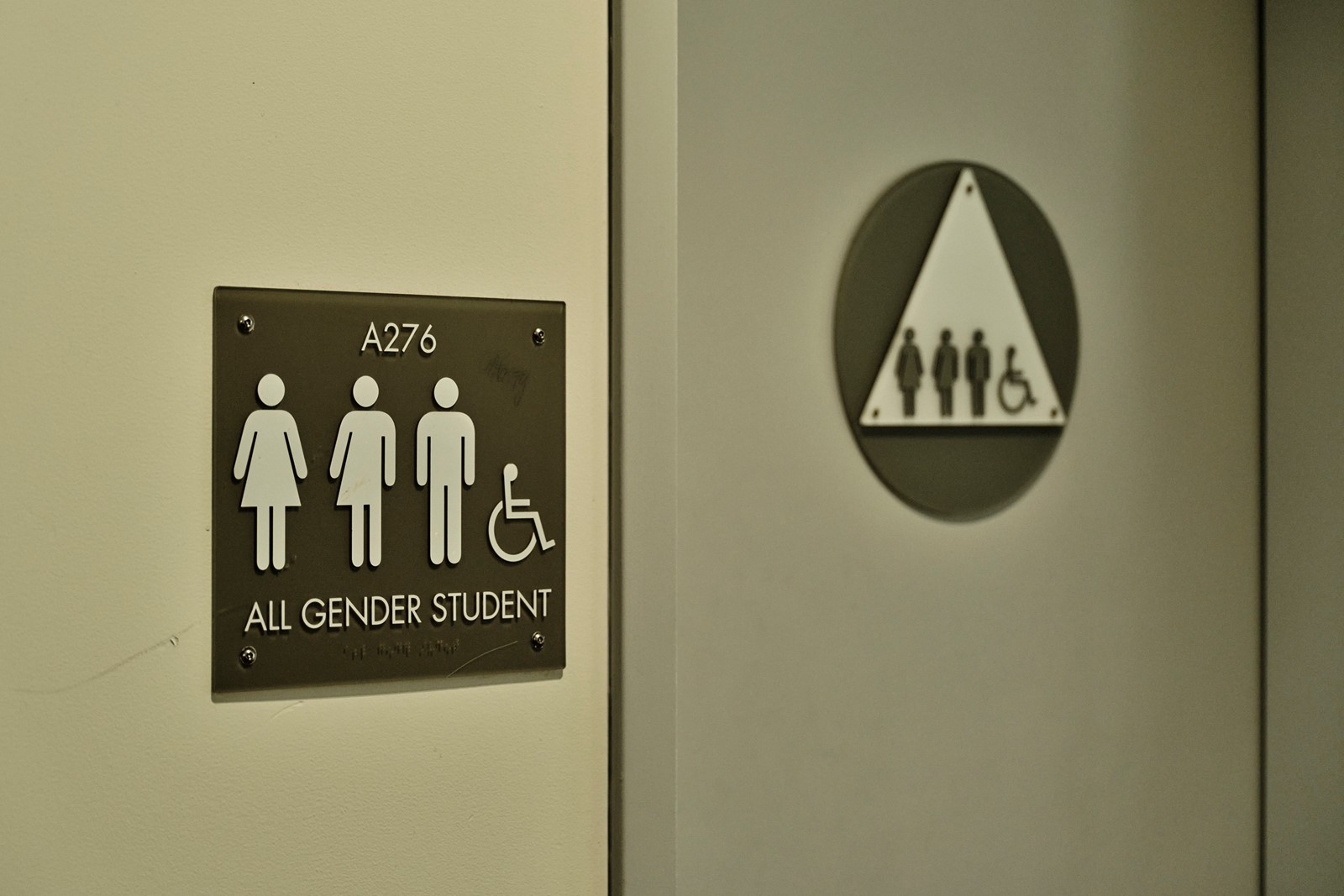
Transgender students are allowed to play on sports teams and use bathrooms that align with their gender identities, policies the Trump order is trying to end.
On Wednesday, after it became clear that Trump would attempt to cut funding, a spokesperson for the Los Angeles public school district released a more guarded statement, saying, “Our academic standards are aligned with all state and federal mandates and we remain committed to creating and maintaining a safe and inclusive learning environment for all students.”
One big limit to Trump’s agenda is that despite official federal, state and district policies, individual teachers have significant say over what gets taught and how.
Even in conservative regions of Republican-run states, efforts to control the curriculum have sometimes sputtered.
Nationally, surveys of teachers show that the majority did not change their classroom materials or methods in response to conservative laws. Some educators have reported that they are able to subtly resist attempts to control how subjects like racism are talked about, for example, by teaching students about the debate for and against restrictive curriculum policies.
 PREVIOUS ARTICLE
