


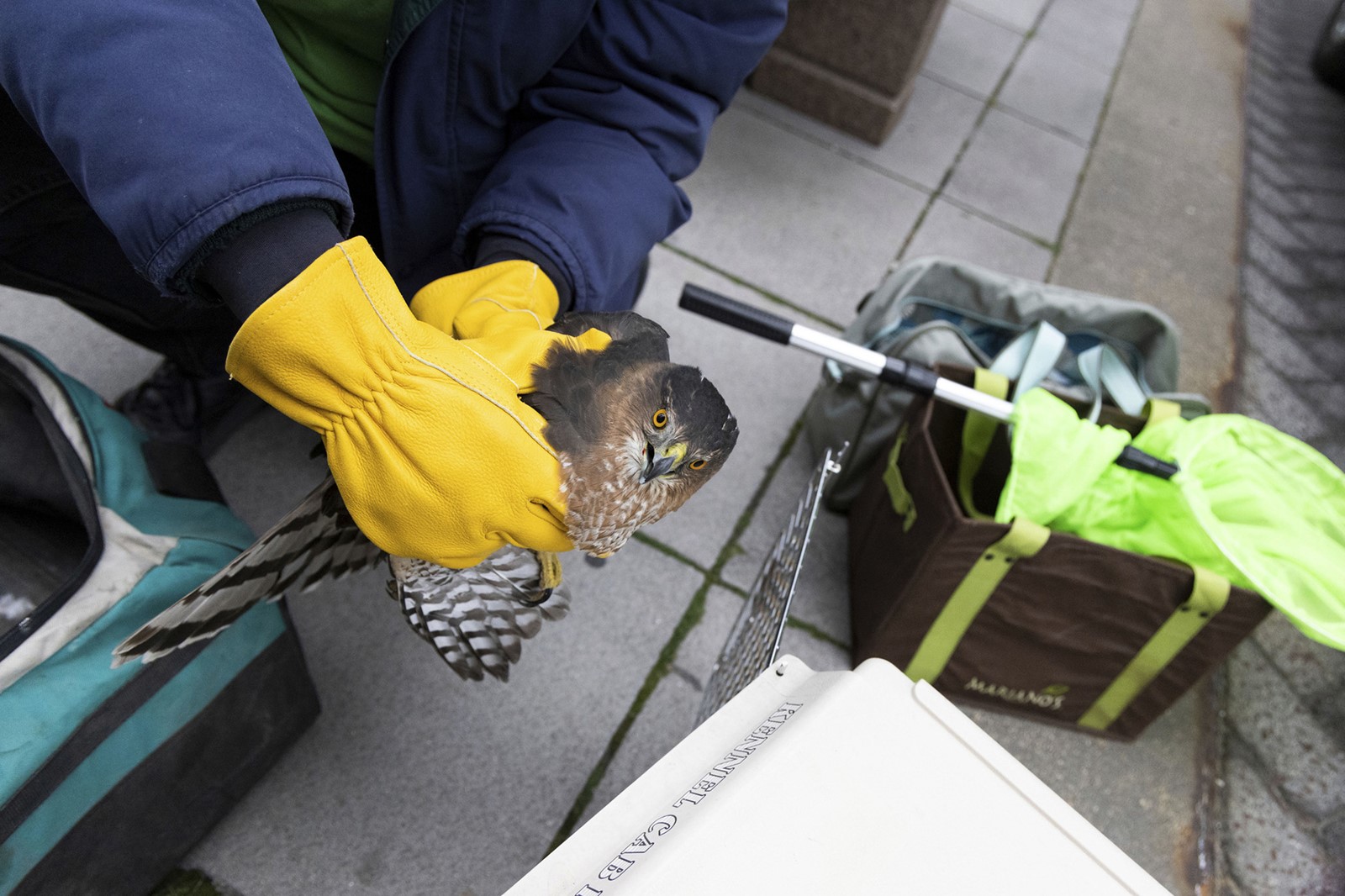


CHICAGO >> Chicago is the deadliest city in the U.S. for birds journeying each spring and autumn between northern locales and Florida, Mexico and Central America.
But the city has put off implementing a 2020 ordinance that would have given greater weight to bird protection measures on the list of criteria it uses to evaluate proposed new buildings. Planning officials say new standards will be released in early 2023 but provided no details. Advocates worry the measures will be toothless.
“We continue to not get a straight answer from them,” said Annette Prince, the head of Chicago Bird Collision Monitors, a volunteer group that each migratory season rescues thousands of birds, most weighing only a few ounces, injured from striking downtown’s glass-walled buildings. “We get put off when we ask direct questions.”
What happens in Chicago can affect bird populations across North America, according to scientists. Chicago sits in the middle of the migratory paths of hundreds of species attracted by the city’s bright lights, lakefront parks and open water. Birds frequently can’t see the difference between glass and sky, leading many to strike lobbies or windows overnight, an additional threat to wildlife already under pressure from habitat loss.
“The migration through the center of the country is really the biggest anywhere,” said Douglas Stotz, senior conservation ecologist with the Keller Science Action Center at Chicago’s Field Museum.
Hundreds of millions of migratory birds die each year across the U.S. in building collisions, perhaps as many as a billion, he added, and a 2019 Cornell Lab of Ornithology study found Chicago was the nation’s deadliest city for birds, just ahead of Houston and Dallas.
“What hits buildings are mostly small, land-based birds that travel at night, songbirds in particular,” Stotz said. “The idea that we kill a billion birds a year is disgraceful. It shows a total lack of respect for the natural world.”
In the 1990s conservationists started Lights Out Chicago, a campaign to persuade downtown landlords to dim exterior lights, which draw in birds at night during spring and fall migration periods. Most buildings now take part, greatly reducing collisions at once-deadly properties such as 875 North Michigan Avenue and McCormick Place’s Lakeside Center, according to Stotz.
When the 2020 ordinance was being considered, Prince and other activists wanted to mandate that new buildings and those undergoing renovations include technology such as patterned glass that birds can better see, and thus avoid deadly collisions. Building owners worried about the costs, and the ordinance was softened, calling instead for planning officials to simply give greater weight to bird protection measures when evaluating whether new projects meet the city’s sustainable development requirements.
“It was rewritten at least six times,” 2nd Ward Ald. Brian Hopkins, the ordinance’s chief sponsor, said.
P
Gabriela Jirasek, assistant commissioner of the Department of Planning and Development, said staff is still working on the update, but promised to finalize it by early 2023.
 PREVIOUS ARTICLE

