




TORONTO — Booing during “The Star-Spangled Banner” at sports games in Canada.
“Buy Canadian” signs multiplying at grocery stores amid a brewing boycott of U.S. goods.
Cross-party calls to find new friends and customers on the global stage.
President Donald Trump may have paused his plans to impose crushing tariffs on Canada, pulling the two countries back from the brink of a trade war. But evidence abounds of the damage Trump has inflicted on the relations between the two nations.
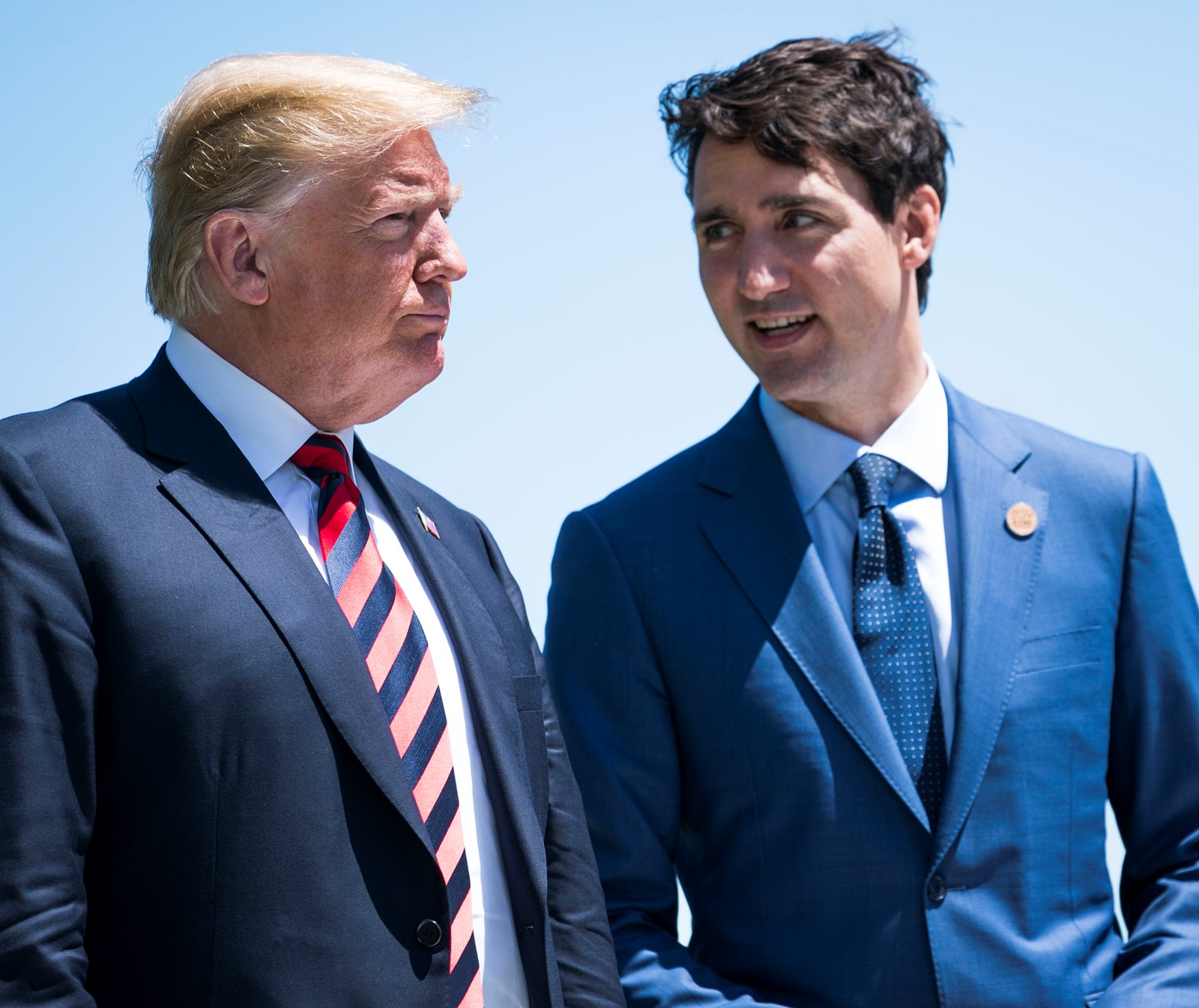
After threatening levies on Canada, and Canada threatening to retaliate, Trump and Prime Minister Justin Trudeau came to an agreement Monday for a 30-day reprieve in the brewing trade war in exchange for new measures to tackle the flow of fentanyl across the northern border.
canadians left livid
But the standoff has left many Canadians livid.
And Trump’s menacing rhetoric, especially his repeated statements that he wants the United States to annex Canada and make it the 51st state, seems to have fractured the fraternal trust that has, for more than a century, been the core of the relationship.
“This has damaged the relationship quite significantly, and there will be a period of sorting out,” said Jon Parmenter, professor of North American history at Cornell. “It has triggered really significant and striking emotional responses.”
Parmenter noted that being the United States’ far less populous neighbor has not always been comfortable for Canadians, who are deeply aware of their dependence on trading with the United States and know that so many things emanating from their superpower neighbor influence their lives.
In the words of Pierre Elliott Trudeau, the former Canadian prime minister and father of the current one: “Living next to you is in some ways like sleeping with an elephant. No matter how friendly and even-tempered is the beast, if I can call it that, one is affected by every twitch and grunt.” But, Parmenter added, rubbing in that dependence the way Trump has done, with his invocation of annexation and repeated complaints about Canada providing little in return to the United States, has touched off a visceral response.
History Matters
While Canada has been described as the United States’ closest friend for over a century, until World War II it was actually closer economically and politically to Britain. The Atlantic province of Newfoundland and Labrador was a British colony until it joined Canada, which it did only in 1949.
Events like the Vietnam War, the brutal crackdown in the South on protests during the Civil Rights Movement and the U.S.-led invasion of Iraq in 2003, which Canada strongly opposed, tested that friendship at times.
But it has generally been marked by moments like the Canadian response to the 9/11 terrorist attacks.
As flights to the United States were grounded, about 7,000 air travelers aboard dozens of diverted flights, mostly Americans, were taken in by the residents of Gander, Newfoundland. The scenes of heartfelt hospitality in one of the United States’ worst moments were recounted in the Broadway musical “Come From Away.”
In his emotional address to the nation Feb. 1, Justin Trudeau, who made sure to direct his comments to Canadians and Americans, did not forget those bonds.
He quoted President John F. Kennedy, who said about Canada: “Geography has made us neighbors, history has made us friends, economics has made us partners and necessity has made us allies.”
And he added: “From the beaches of Normandy to the mountains of the Korean Peninsula, from the fields of Flanders to the streets of Kandahar, we have fought and died alongside you.”
Trump’s targeting of Canada has forged a rare consensus among Canadians and among politicians who, until a week ago, were feuding amid one of the country’s most fraught political periods in recent history.
But for Justin Trudeau, opposition leader Pierre Poilievre and other senior politicians, there is only one game in Canadian politics right now: Team Canada.
“We need a Canada first plan that’s good for this country,” Poilievre, the Conservative Party opposition leader, said in reaction to the tariff fight.
Although Poilievre has built a big advantage in polls over Justin Trudeau’s Liberal Party by highlighting what he describes as the prime minister’s failures, he has toned down those attacks in recent days to focus on a unifying message.Trudeau has leaped at this rally-round-the-flag moment.
“In this moment, we must pull together because we love this country,” he said the evening of Feb. 1, when tariffs were supposed to begin in just over 48 hours. “We don’t pretend to be perfect, but Canada is the best country on Earth.”
Chrystia Freeland, the former finance minister who is running to replace Trudeau as Liberal Party leader, tried to capture the nation’s mood during a recent interview with Fareed Zakaria on CNN.
“We’re hurt, for sure, because we’re your friends and neighbors, but most of all, we’re angry, and we are united and resolute,” she said, adding that “Canada is the true north, strong and free,” an echo of Canada’s national anthem. Public opinion surveys suggest that politicians are aligned with the public mood; 91% of those asked said they wanted a reduction in the country’s reliance on the United States, according to a recent poll conducted by Angus Reid.
The poll also found a 10 percentage point jump since December in the number of people declaring themselves to be “very proud” to be Canadian, and a similar jump in the percentage of Canadians saying they feel “a deep emotional attachment to Canada.”
Speaking at a campaign event in Windsor, Ontario, Mark Carney, the former governor of the Bank of Canada and the Bank of England, who is running to replace Trudeau, said he had been traveling around the country seeking support for his campaign and finding the mood of Canadians toward the United States to be “initially confusion and bewilderment.”
But, increasingly, he added, there is “a real enthusiasm and energy to get on with things on our terms, because we don’t want to wake up every morning and check through social media to find out how our country is being affected.”
The prospect of thousands of autoworkers being laid off if Trump’s threatened 25% tariff is ultimately put in place has brought fear to many people in Windsor, which is the heart of Canada’s automotive industry and sits just across from Detroit.
And it has even shaken Canadians who once supported Trump — a minority of the population, according to surveys.
Feeling Betrayed
Joe Butler, a trucker who carries new cars and trucks every day from a factory owned by automaker Stellantis, Windsor’s largest employer, up and down the highway corridor to Toronto, is one of many Canadians with family ties to the United States.
His great-grandparents moved from the United States to Alberta, in western Canada, where some of his distant relatives still ranch, before his grandfather moved east to Ontario.
During summer school breaks, Butler joined his father, a long-haul trucker, in the cab during his runs to the United States.
“Growing up, I loved the culture of America: the people, the lifestyle, the landscape,” said Butler, whose cargo usually consists of vehicles assembled in Stellantis factories in Mexico and the United States.
Trump’s promise to rebuild America, Butler said, resonated with him. “I was 100% behind him as a Canadian,” Butler said. “Now I just shake my head and say: Where are you going? You just went and completely kicked us in the (expletive). It’s scary.”
If the auto industry comes to a halt, Butler said, he has a small beer, wine and liquor delivery service that he can fall back on for income. But, he added, most of his friends and family members lack such options. Butler, who buys the groceries for his family, now boycotts American-made products. And he wants Canada to find a way to cut out the United States as much as possible.
“I don’t care if they close the border; we can live on our own,” he said. “I still love America, and my job depends on the American economy. But now I feel really betrayed.”
 PREVIOUS ARTICLE
