


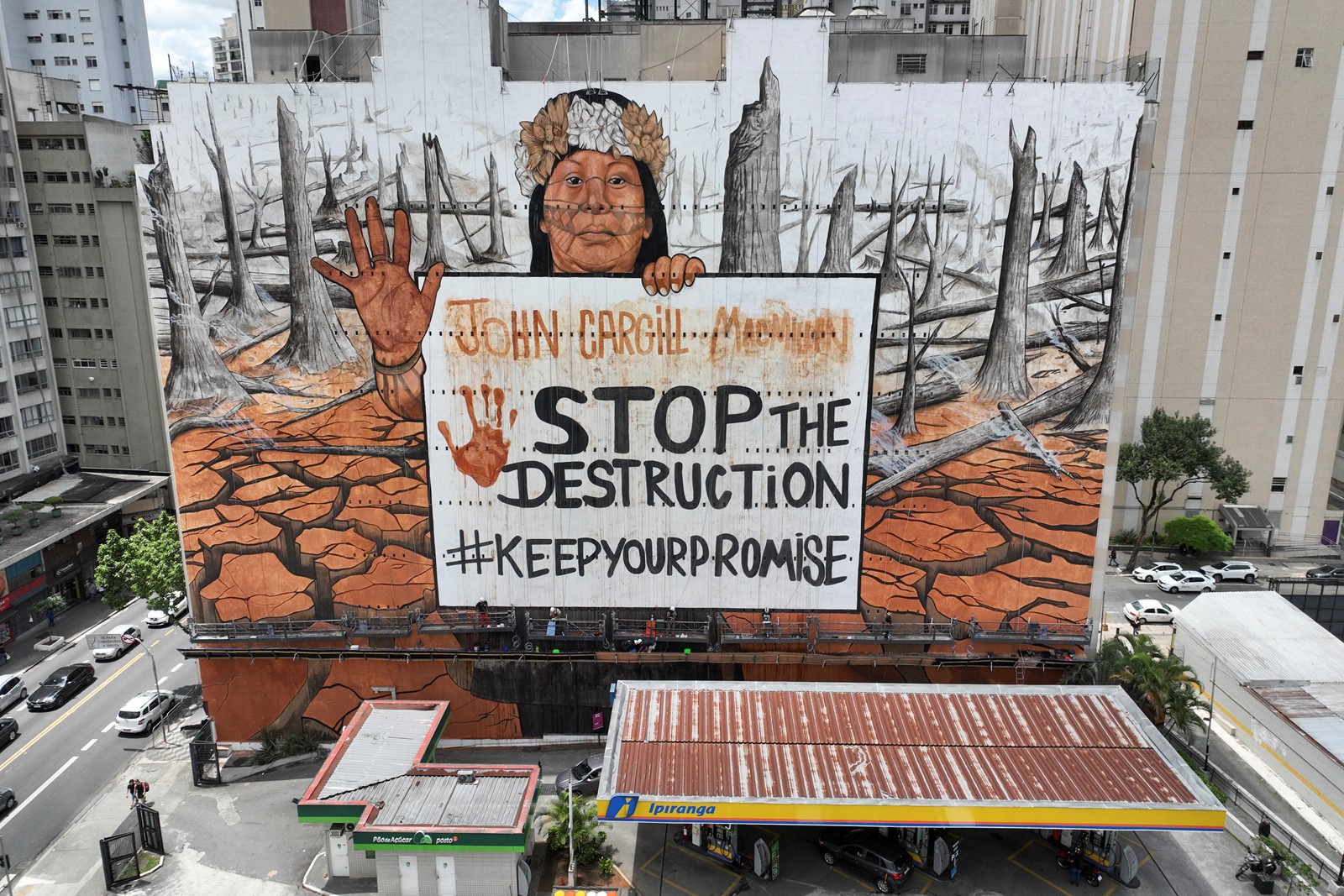


SAO PAULO >> Brazilian artist Mundano on Wednesday is presenting a massive street mural in Sao Paulo that uses ash from wildfires and mud from floods to highlight extreme weather events wreaking devastation across the country — as well as their causes.
Over 98.4 feet high and 157.5 feet wide, the mural depicts deforestation and severe drought in the Amazon rainforest with its parched brown earth and gray tree stumps. It features Indigenous activist Alessandra Korap wearing a crown of flowers and holding a sign that says: “Stop the destruction #keepyourpromise.”
It is a call to the Minnesota-based soy giant Cargill, according to Mundano. Soy farming is one of the biggest drivers of deforestation in the Amazon.
Cargill says on its website that it will eliminate deforestation from its supply chain in Brazil, Argentina and Uruguay by 2025. Mundano is seeking to hold them to account.
“We are tired of being a country, a continent where we and the natural resources we have here are exploited. ... We have to regenerate our planet instead of destroying it,” Mundano said in an interview on Tuesday.
Cargill did not immediately respond to a request for comment on Wednesday morning.
Over the past few months, uncontrolled human-caused wildfires have ravaged protected areas in the Amazon, the vast Cerrado savanna and the world’s largest tropical wetland area, the Pantanal. Those blazes have spread smoke over a vast expanse, choking residents of some cities.
Drought has caused a critical situation nationwide, and forecasts indicate it will persist in much of the country through at least the rest of the month, according to a Sunday report from Cemaden, Brazil’s disaster warning center.
Climate change — primarily caused by the burning of fossil fuels such as oil, gas and coal — leads to frequent and more extreme alterations in weather patterns.
The depth of the Amazon’s Negro River was 41 feet on Tuesday, a slight increase from 10 days earlier, when it registered its lowest level since measurements started 122 years ago. Tuesday’s depth was still around 20 feet less than usual for the same date in prior years, according to data from the Manaus port.
Rivers in Brazil ‘s Amazon always rise and fall with its rainy and dry seasons. But the dry season this year has been much worse than usual.
Earlier this year, an unprecedented flood in the southern state of Rio Grande do Sul killed more than 180 people, affected over 2 million people and destroyed urban communities.
 PREVIOUS ARTICLE
