


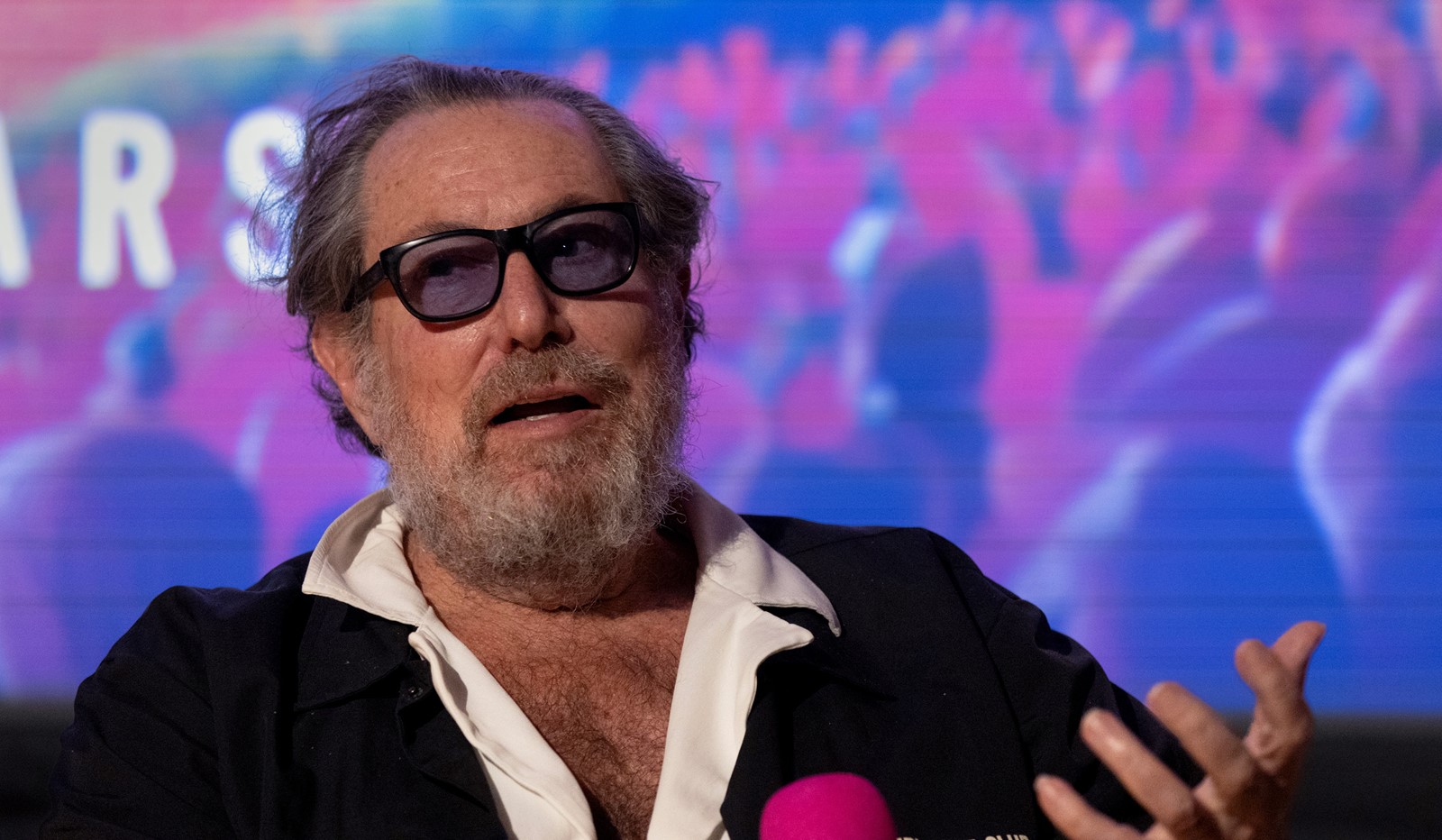
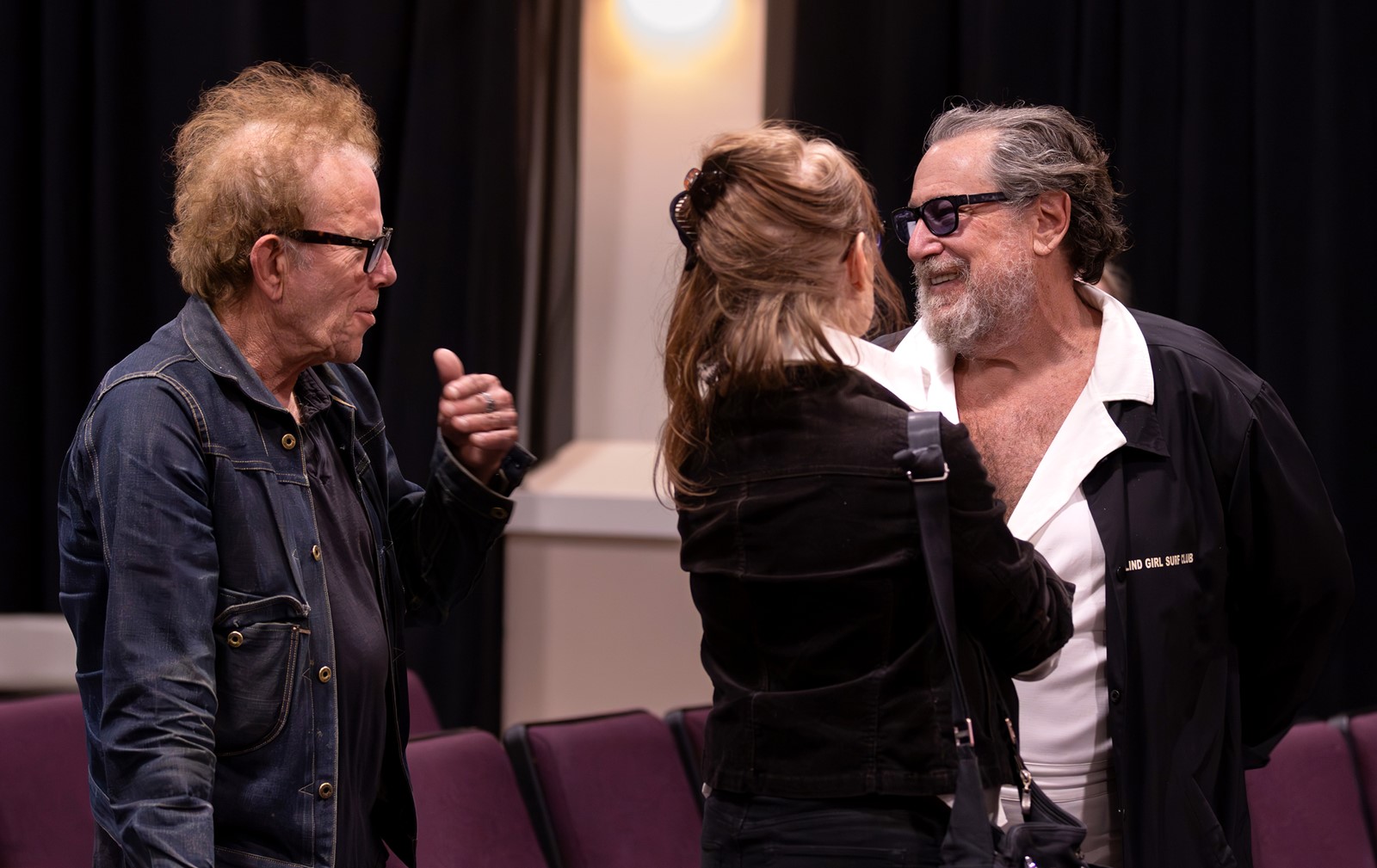
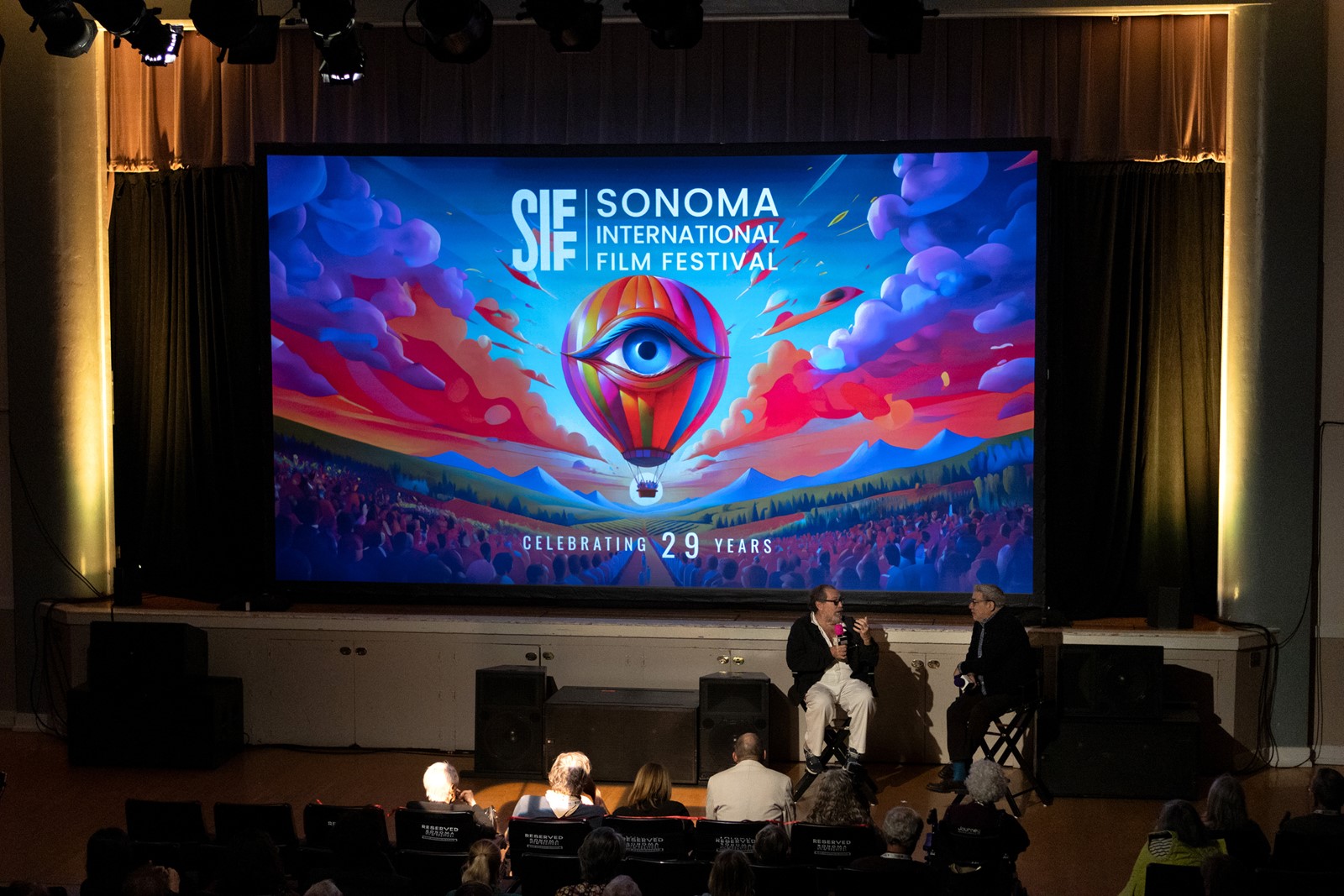


Renowned director Julian Schnabel presented his latest film, “In the Hand of Dante” on Friday night in Sonoma, sharing insights about his latest work and taking some shots at the audience.
Schnabel’s appearance was a highlight of the five-day Sonoma International Film Festival, which screens thoughtful, artistic films you won’t see at the megaplex.
The sprawling, two-and-a-half hour “In the Hand of Dante” shifts between New York City in the late 20th and early 21st century and Italy circa 1300.
It follows an author who’ll do almost anything to track down and possess the handwritten manuscript of Dante’s “Divine Comedy.”
The film, promoted as “a fever-dream epic of art, obsession, and faith rendered in (Schnabel’s) unmistakable painterly style” is an interpretation of Nick Tosches’ 2002 novel of the same title.
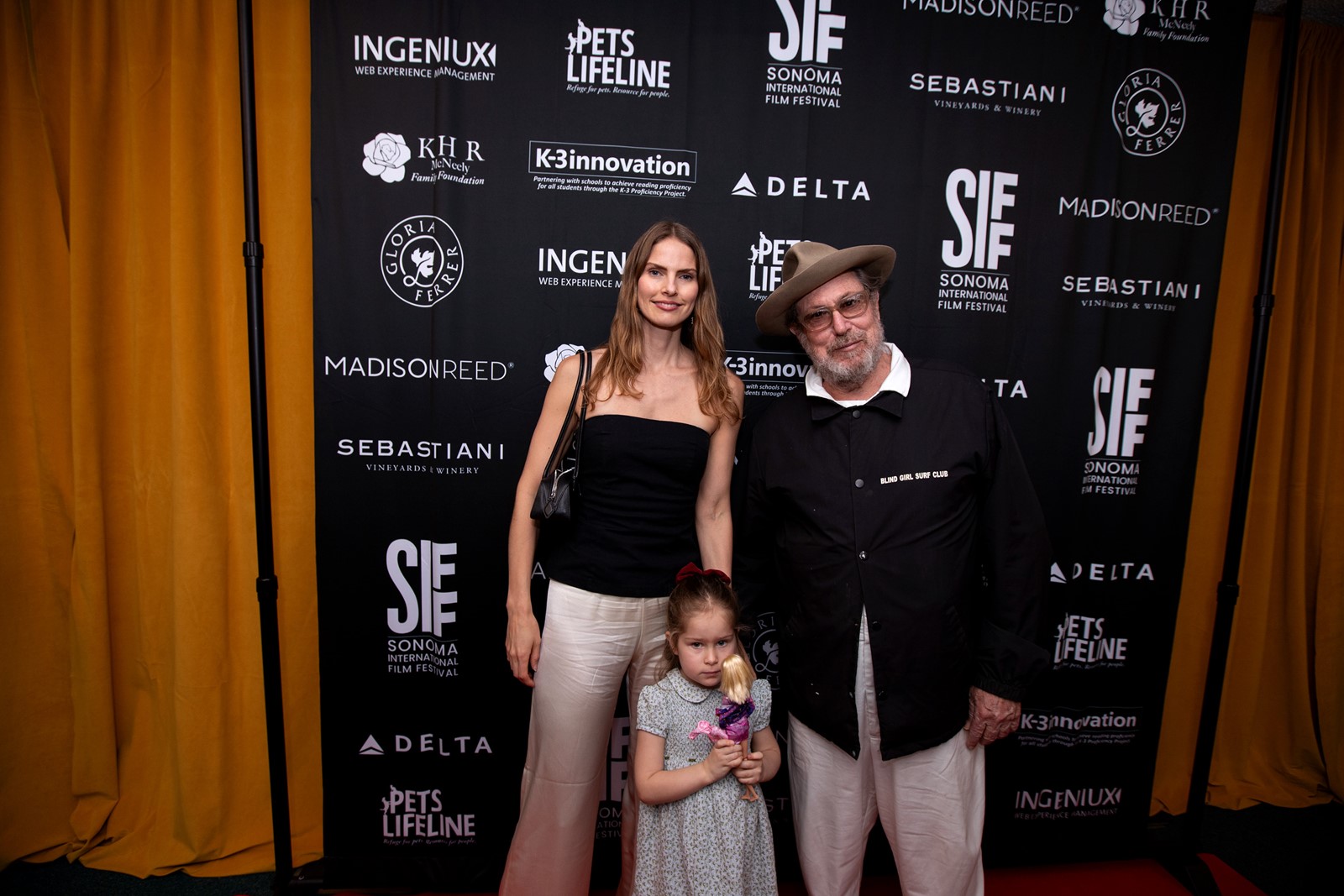
Schnabel, 74, a respected painter and director of “Basquiat” and “The Diving Bell and the Butterfly,” introduced his wife and young daughter before the film.
As a filmmaker he said he could take some liberties that Tosches couldn’t. “I don’t think he could say that he was Dante, but I could, so I had that,” Schnabel said.
Oscar Isaac plays Tosches in the 1990s and early 2000s; he also played Dante in the early 1300s. Al Pacino and Martin Scorsese have unforgettable appearances in the film.
Gal Gadot (“Wonder Woman”) plays Gemma, the wife Dante took for granted seven centuries ago. She also is Giulietta, who becomes his lover in the first decade of the 2000s.
“How do I get this guy to trust this woman that he has never seen?” Schnabel asked rhetorically in the post-film conversation with Sundance festival director Eugene Hernandez.
“When he (Tosches) sees her in the 21st century, in Ravenna, we’ll know that was his wife, that she knew who he was, but he didn’t know who he was,” Schnabel said. “It took him 700 years to figure out that he was with the right woman.”
Intriguingly, in a reverse “Wizard of Oz,” the scenes of modern New York are shot in black and white, while Italy seven centuries ago is rendered in color.
When Hernandez asked about the film’s visuals and music, Schnabel abruptly turned on the audience.
“It was so interesting for me to see people walking out of the movie. I’ve never seen that before,” said Schnabel, clearly agitated.
“I don’t know what’s going on in this town. You’re supposed to be movie buffs.”
From the audience an older woman shouted: “Violence! It was too violent,” referring to the many shootings in the film. Even a dog gets whacked.
“Well, life is violent,” Schnabel said.
“Not that violent,” retorted the woman.
“You’ve been lucky,” he said, “but it’s a tragic comedy.”
The irony was that Schnabel vented his ire at the people who stayed not just for the 151-minute film but for the 30-minute conversation.
Watching a Schnabel film is a visceral experience, and that’s by design.
“I like to make movies in the first person, you feel like it’s happening to you … you’re inhabiting the characters,” he said. “I don’t want to tell somebody anything. I’d like them to have an experience, visually speaking.”
He realizes he’s been fortunate. “I’ve had the privilege of walking between the raindrops and being able to make the films that I wanted to make,” he said.
“I do it for myself, and I have to be true to what that is, and that I won’t compromise,” he said, adding: “I never thought of myself as having a career. I’m unemployable, basically.”
He mentioned that MTV offered to show his 1996 film “Basquiat” but wanted to make a change in the soundtrack. Schnabel refused.
“I don’t want my movie to be on MTV,” he said at the time. “There’s a difference between art and commerce. … If I could change (something to) sell more tickets, I wouldn’t change a frame.”
While making a film, Schnabel said he’s not exactly sure how the process of creation will unfold.
“Anybody that makes art, they’re lying if they tell you that they knew what they were doing,” he said.
“I can talk about it in retrospect, but there’s a moment where you’re dealing with your subconscious, your unconscious, and your conscious. You’re putting it together, and you have to make judgments about what you’re going to let live and what you’re going to destroy.”
An acclaimed painter, Schnabel noted painting is solitary, whereas filmmaking is collaborative.
He complimented Benjamin Clementine, who was in attendance in Sonoma, for his outstanding film score. Clementine also plays Mephistopheles in the film.
“That notion of collaborating, it’s a thing of discovery,” Schnabel said. “When you do that together, and it’s better than something that either one of you thought, it’s a mitzvah” (the Hebrew word for a good deed or commandment from God).
Schnabel offers minimal direction and asks actors to be themselves.
“I don’t want anybody acting. I don’t rehearse,” he said. “People know who they’re supposed to be. … It’s more about casting. You pick the right person, and you believe in them.”
Schnabel said he’s never seen a Gadot movie, proudly declaring: “I never saw a ‘Wonder Woman.’ ”
A video call with her was enough to convince him that she’d be ideal for this film.
“I’ve really been blessed to know talented people that trust in me, and I trust them,” he said.
Hernandez noted that “In the Hand of Dante” won the Cartier Glory to the Filmmaker award at last year’s Venice Film Festival.
“And what do they have, 1,500 people in that cinema,” Schnabel said. “I didn’t see anybody walk out.”
Michael Shapiro covers the performing arts for The Press Democrat. His latest book, “The Creative Spark,” won the Independent Publishers award, www.michaelshapiro.net.
 PREVIOUS ARTICLE
