


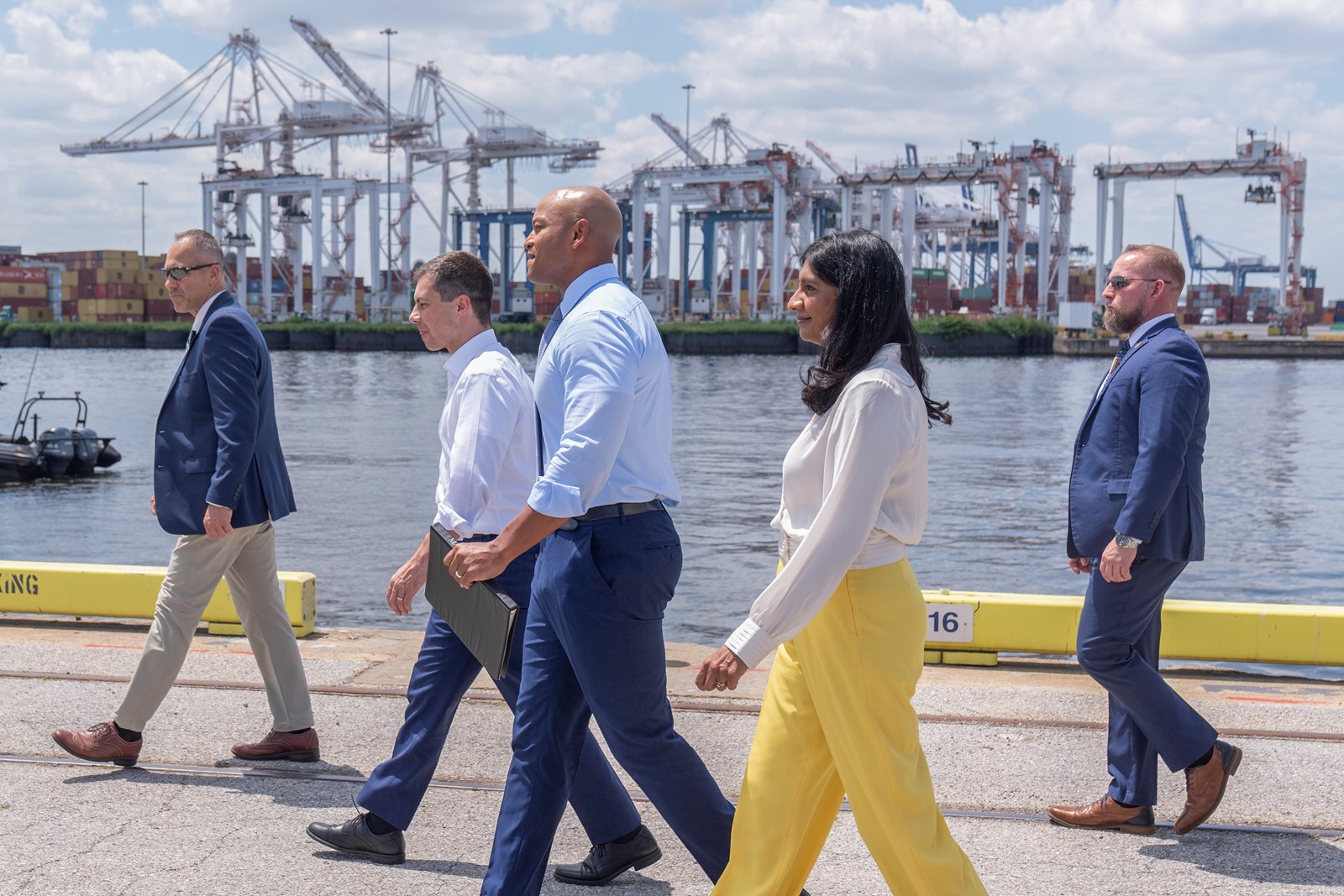


BALTIMORE>> Commercial shipping traffic through the Port of Baltimore is expected to return to normal levels next month, officials said Wednesday, after the channel fully reopened this week for the first time since the collapse of the Francis Scott Key Bridge in March.
“I’ve been waiting to say this for every day for the last 11 weeks: Maryland, the Fort McHenry Channel is fully cleared, and the Port of Baltimore is reopened for business,” Gov. Wes Moore said at a waterside news conference to highlight the milestone.
As the governor spoke, a passing ship blasted its horn.
“You hear that?” Moore said. “That’s a beautiful sound.”
Behind him, giant cranes lifted shipping containers from the deck of a docked cargo ship and deposited them on land.
Many shipping companies rerouted their cargo to other ports after the deadly collapse in March. The deadly disaster halted most maritime traffic through Baltimore’s busy port as crews worked around the clock to clear an estimated 50,000 tons of fallen steel and concrete from the Patapsco River.
The estimated cost for the entire salvage operation is $160 million, with federal, state and local agencies involved. Companies that steered clear of Baltimore during the cleanup likely will come back now that the channel has been returned to its original depth and width, officials said. The port, which processes more cars and farm equipment than any other in the country, is expected to be operating at normal capacity by mid-July.
All that rerouted commercial traffic “belongs in Baltimore today,” U.S. Transportation Secretary Pete Buttigieg said during a news briefing this week. “We have every indication that that is what is taking place, but we will be reinforcing that expectation as we speak with players up and down the supply chains.”
Crews were able to reopen portions of the deep-draft channel in phases, restoring some commercial traffic in recent weeks. Some cruise ships and large container ships have passed through, officials said.
But thousands of longshoremen, truckers and small-business owners have seen their jobs impacted by the collapse and its economic ripple effects, which extend well beyond the Baltimore region.
State officials helped establish several relief programs to keep people employed and businesses afloat in the immediate aftermath.
“We were a wounded port,” said Scott Cowan, president of the International Longshoreman’s Association Local 333, which represents Baltimore port workers. In a competitive industry, he said, other ports were looking to take Baltimore’s cargo.
Reopening the channel means keeping thousands of longshoremen in their jobs, Cowan said.
Officials estimated that the salvage operations for the Army Corps of Engineers will cost up to $75 million, while the Coast Guard response has cost $24 million to date to open the main channel. Maryland used about $60 million in federal emergency funds to open three other smaller channels outside the main one.
 PREVIOUS ARTICLE
