


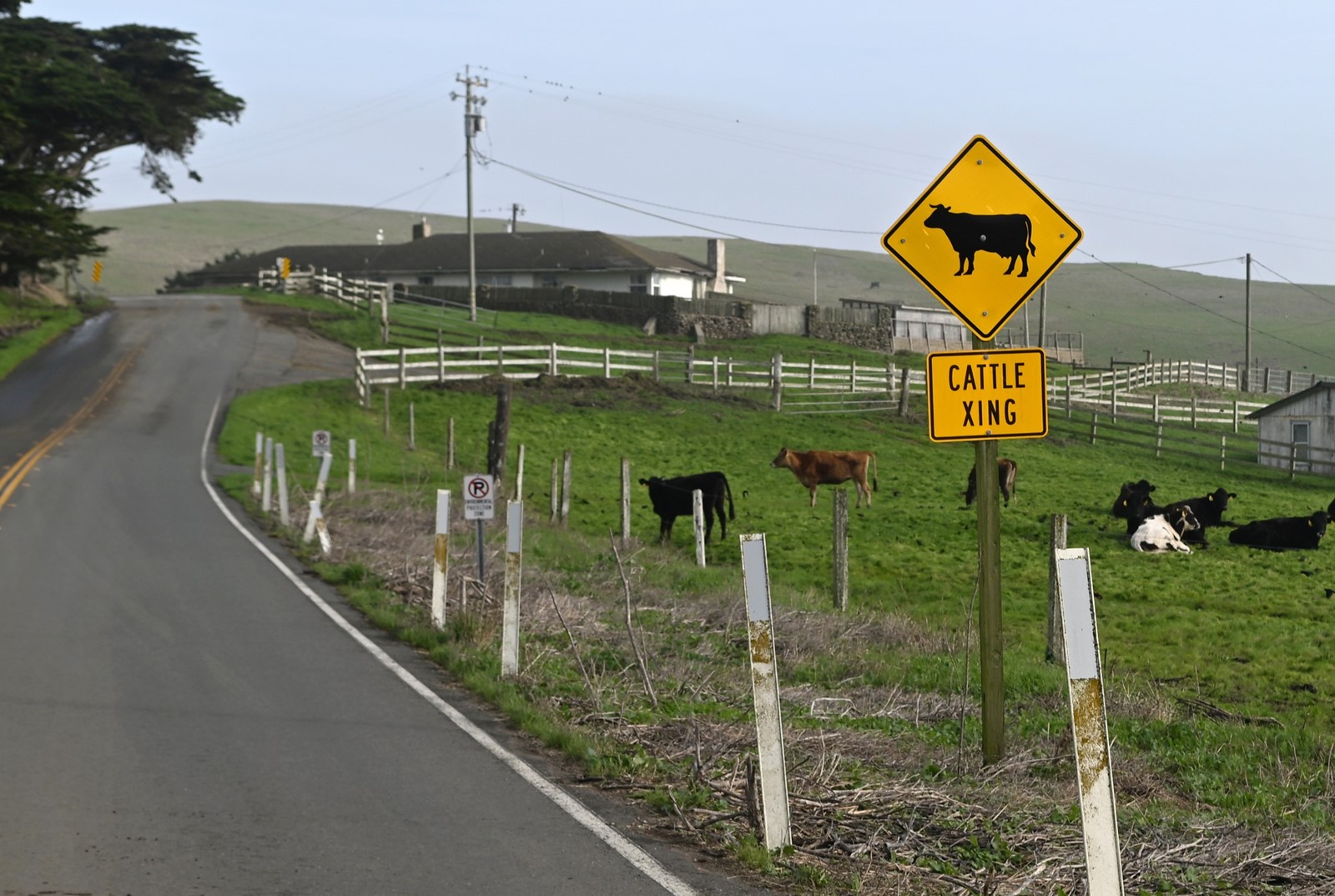
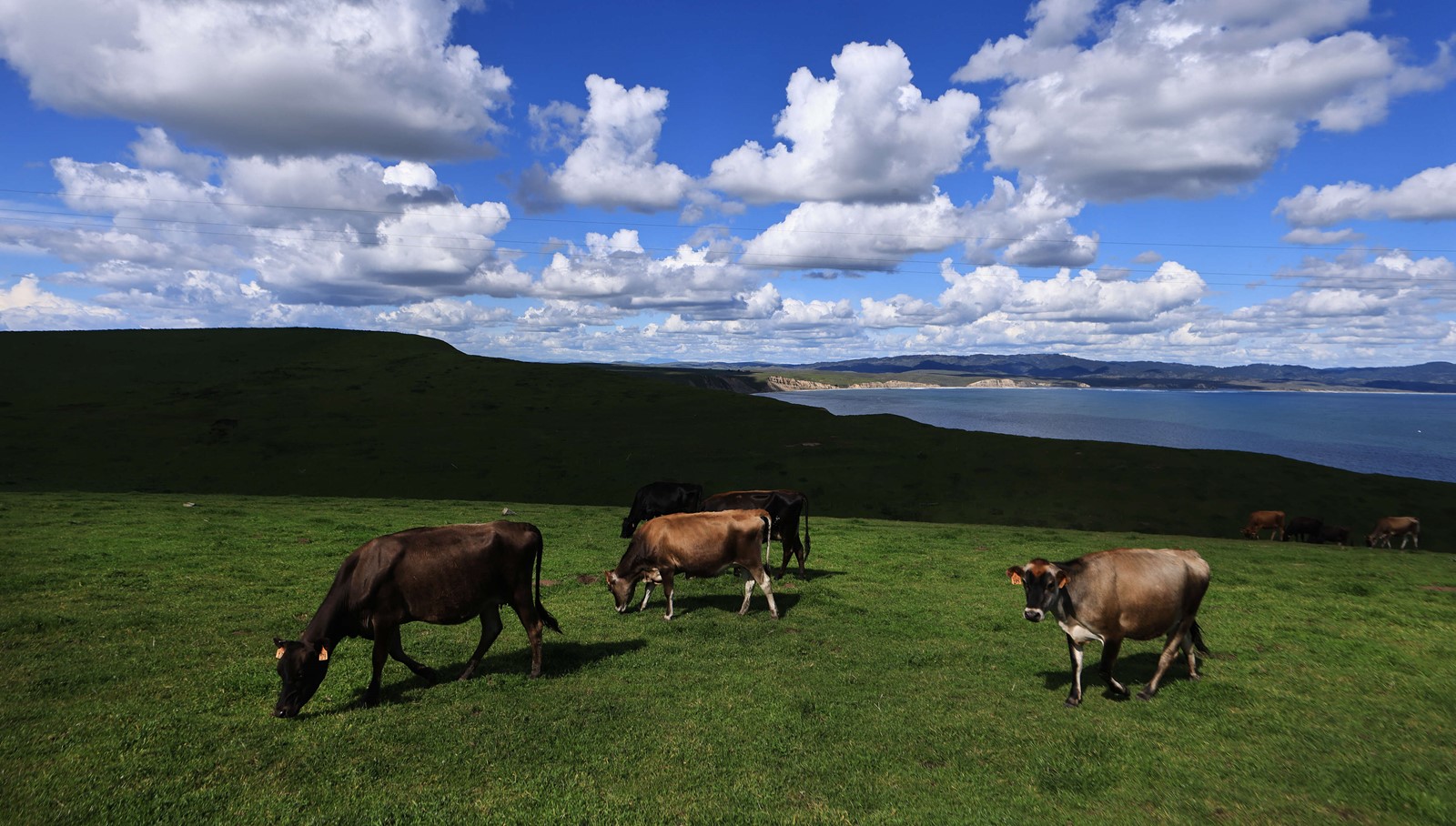


“Last chance — one night only” may sound like a theater marquee, but for organic dairy farms at Point Reyes and across coastal California, it is a fair warning. Decisions made now will determine whether multigenerational organic dairy farms survive or are lost, along with the food security, ecological stewardship and rural livelihoods they sustain.
California is already experiencing the consequences of dairy closures and faces an organic milk shortage. Marin and Sonoma counties, once responsible for roughly 60% of California’s organic milk, have seen the closure of six dairies — nearly 10% of local milk production — along with the loss of historic beef ranches.
Each closure removes not just cows from pastures, but families from the land and resilient food infrastructure from our communities.
What is at stake is far more than nostalgia. Small, organic, regenerative dairies are cornerstones of a functional local food system. They produce nutrient-dense food close to home, provide year-round employment and steward grasslands that store carbon, protect watersheds and support wildlife. When these farms disappear, they are rarely replaced by anything better — for the climate, for food security or for rural economies.
That is why we submitted a proposal to the Interior Department for four organic, regenerative dairy demonstration farms on roughly 6,000 acres at Point Reyes National Seashore. This model deserves urgent public support.
These dairies would house around 400 milking cows and 500 heifers each, operating under long-term National Park Service leases that prioritize working landscapes over abandonment.
They would provide affordable, onsite housing for at least 32 workers and their families in a region where housing costs regularly drive skilled farmworkers away — an essential step toward sustaining the workforce that organic dairies depend on.
These farms would not be industrial operations hidden behind closed gates, but intentionally public-facing. Each dairy would include small-scale, onsite artisan cheese production directly connected to the milk produced there. Visitors could see how milk becomes cheese and purchase milk and value-added products at the source.
Transparency matters, because people protect what they understand. When visitors walk a pasture-to-cheese path, watch cows being milked or see cheese- makers at work, agriculture becomes tangible rather than abstract, building food literacy, trust and a relationship between eaters and the landscapes that feed them.
Just as importantly, these dairies would be designed to invest in the future. They would function as workforce training hubs with pipelines through Chico State and Cal Poly San Luis Obispo, preparing future farmers and cheesemakers in herd management, regenerative grazing, soil health, organic certification and artisan cheese production — training that is essential as the average farmer nears retirement.
Environmentally, these farms would demonstrate climate-smart agriculture in practice.
Compost-based fertility and intensive rotational grazing would build soil organic matter and improve water infiltration. Methane reduction strategies, electrification and renewable-ready infrastructure would reduce emissions. Wildlife-friendly fencing and habitat corridors would allow dairying to coexist with native species, while annual soil monitoring would provide transparency and accountability.
This is not theoretical. Organic and regenerative dairy systems already operate successfully in the region. We propose scaling what works across multiple farms, across a landscape and across generations with institutional support aligned to food security, environmental health and community resilience.
Opponents often frame working dairies at Point Reyes as incompatible with conservation. The reality is the opposite. Where ranches have departed, grasslands have become unmanaged, fire-prone and ecologically simplified. During a recent site visit, an official noted, “It’s clearly a fire hazard.” The Nature Conservancy has sought to implement grazing precisely because managed herds reduce fuel loads and restore ecological balance.
Organic dairy farmers are stewards who know this land intimately because their livelihoods depend on its health. Removing them does not eliminate human impact — it removes the people best positioned to care for these landscapes.
Showing up matters. Public process matters. Without community participation, we risk losing multigenerational family farms, local food security, rural jobs and the stewards who fiercely care for this land.
Supporting dairying at Point Reyes is not backward-looking. It is a forward-looking investment in resilient landscapes and resilient communities. If we want organic milk for our schools, artisan cheese from nearby pastures, trained farmers ready to take the reins and coastlands alive with biodiversity, we cannot afford to sit this one out.
This truly is a last chance. We need you to advocate by showing up at the April 16 meeting, from 5 p.m. to 8 p.m. at West Marin School.
Albert Straus is a second-generation farmer, founder of Straus Family Creamery and a lifelong Marshall resident. Stephanie Moreda-Arend helps manage her family’s west Petaluma dairy farm and publishes Dairy Girl Diaries. From the Point Reyes Light.
 PREVIOUS ARTICLE
