


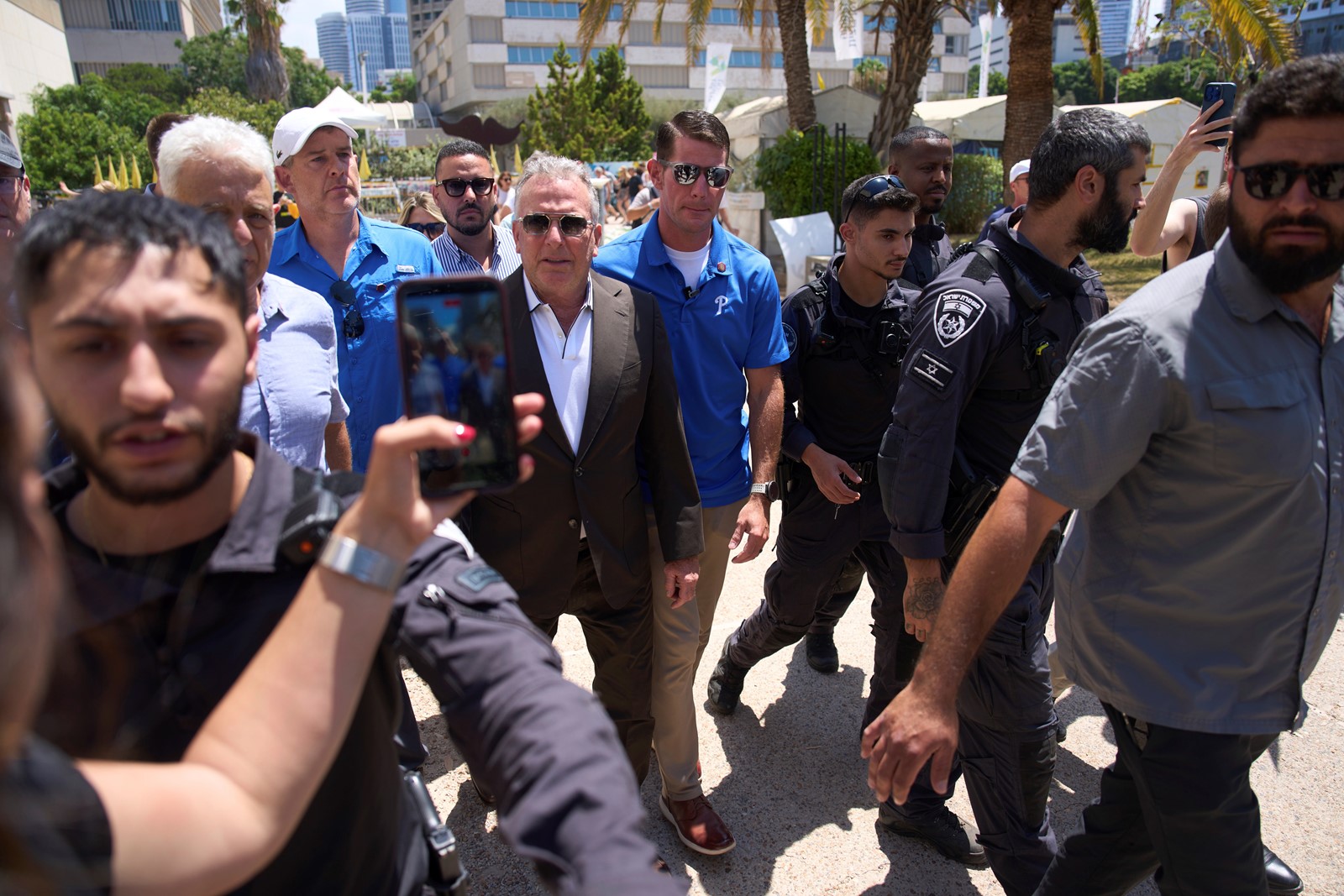


DEIR AL-BALAH, Gaza Strip — Israeli forces opened fire near two aid distribution sites run by the Israeli-backed Gaza Humanitarian Foundation as crowds of hungry Palestinians again sought food, killing at least 10 people, witnesses and health workers said Saturday. The violence came a day after U.S. officials visited a GHF site and the U.S. ambassador called the troubled system “an incredible feat.”
Another 19 people were shot dead as they crowded near the Zikim crossing from Israel in the hope of obtaining aid, said Fares Awad, head of the Gaza health ministry’s ambulance and emergency service.
Nearly a week has passed since Israel, under international pressure amid growing scenes of starving children, announced limited humanitarian pauses and airdrops meant to get more food to Gaza’s over 2 million people. They now largely rely on aid after almost 22 months of war.
But the United Nations, partners and Palestinians say far too little aid is coming in, with months of supplies piled up outside Gaza waiting for Israeli approval.
Trucks that enter are mostly stripped of supplies by desperate people and criminal groups before reaching warehouses for distribution.
Experts this week said a “worst-case scenario of famine” was occurring. On Saturday, Gaza’s health ministry said seven Palestinians had died of malnutrition-related causes over the past 24 hours, including a child.
Aid is “far from sufficient,” Germany’s government said via spokesman Stefan Kornelius. The U.N. has said 500 to 600 trucks of aid are needed daily.
Families of the 50 hostages still in Gaza fear they are going hungry too, and blame Hamas, after the militants released images of an emaciated hostage, Evyatar David.
“The humanitarian aid flowing into Gaza, meant to alleviate suffering, must reach Evyatar, Guy and all the other hostages too,” David’s brother Illay told a large rally in Tel Aviv.
More deaths
Near the northernmost GHF distribution site near the Netzarim corridor, Yahia Youssef, who had come to seek aid, described a grimly familiar scene. After helping carry three people wounded by gunshots, he said he saw others on the ground, bleeding.
“It’s the same daily episode,” Youssef said. Health workers said at least eight people were killed. Israel’s military said it fired warning shots at a gathering approaching its forces.
At least two people were killed in the Shakoush area hundreds of yards from where the GHF operates in the southernmost city of Rafah, witnesses said. Nasser Hospital in Khan Younis received two bodies and many injured.
Witness Mohamed Abu Taha said Israeli troops opened fire toward the crowds. He saw three people — two men and a woman — shot as he fled.
Israel’s military said it was not aware of any fire by its forces in the area. The GHF said nothing happened near its sites.
GHF says its armed contractors have only used pepper spray or fired warning shots to prevent deadly crowding. Israel’s military on Friday said it was working to make the routes under its control safer.
The GHF — backed by millions of dollars in U.S. support — launched in May as Israel sought an alternative to the U.N.-run system, which had safely delivered aid for much of the war but was accused by Israel of allowing Hamas to siphon off supplies. Israel has not offered evidence for that claim and the U.N. has denied it.
From May 27 to July 31, 859 people were killed near GHF sites, according to a U.N. report Thursday. Hundreds more have been killed along the routes of U.N.-led food convoys. Hamas-led police once guarded those convoys, but Israeli fire targeted the officers.
Airdrops by a Jordan-led coalition — which is made up of Israel, the UAE, Egypt, France, and Germany — are another approach, though experts say the strategy remains deeply inadequate and even dangerous for people on the ground.
“Let’s go back to what works & let us do our job,” Philippe Lazzarini, the head of the U.N. agency for Palestinian refugees, wrote on social media, calling for more and safer truck deliveries.
Deal urged
U.S. President Donald Trump’s special envoy, Steve Witkoff, met with hostages’ families Saturday, a week after quitting ceasefire talks, blaming Hamas’ intransigence.
“I didn’t hear anything new from him. I heard that there was pressure from the Americans to end this operation, but we didn’t hear anything practical,” said Michel Illouz, father of Israeli hostage Guy Illouz.
He said he asked Witkoff to set a time frame but got “no answers.”
Airstrikes continue
Nasser Hospital said it received five bodies after two Israeli strikes on tents sheltering displaced people in Gaza’s south.
The health ministry’s ambulance and emergency service said a strike hit a house between the towns of Zawaida and Deir al-Balah, killing two parents and their three children. Another strike hit a tent in Khan Younis, killing a mother and her daughter.
Video on hostages
The family of Evyatar David, an Israeli held hostage in the Gaza Strip, saw him for the first time in months on Friday evening in a video circulated by his Hamas captors. He was emaciated and sallow in what appeared to be an underground tunnel.
The video prompted an outpouring of fear and horror among the families of the dozens of Israeli hostages still held in Gaza nearly two years after the Oct. 7, 2023, attack on Israel that killed about 1,200 people and ignited the war.
“Our brothers are turning into skin and bones at this very moment,” Einav Zangauker, whose son Matan was one of about 250 people taken hostage during the Hamas assault, said at a rally Saturday. Her son is believed to still be alive. More than 100 hostages were freed during two brief ceasefires.
— The New York Times contributed to this report.
 PREVIOUS ARTICLE
