


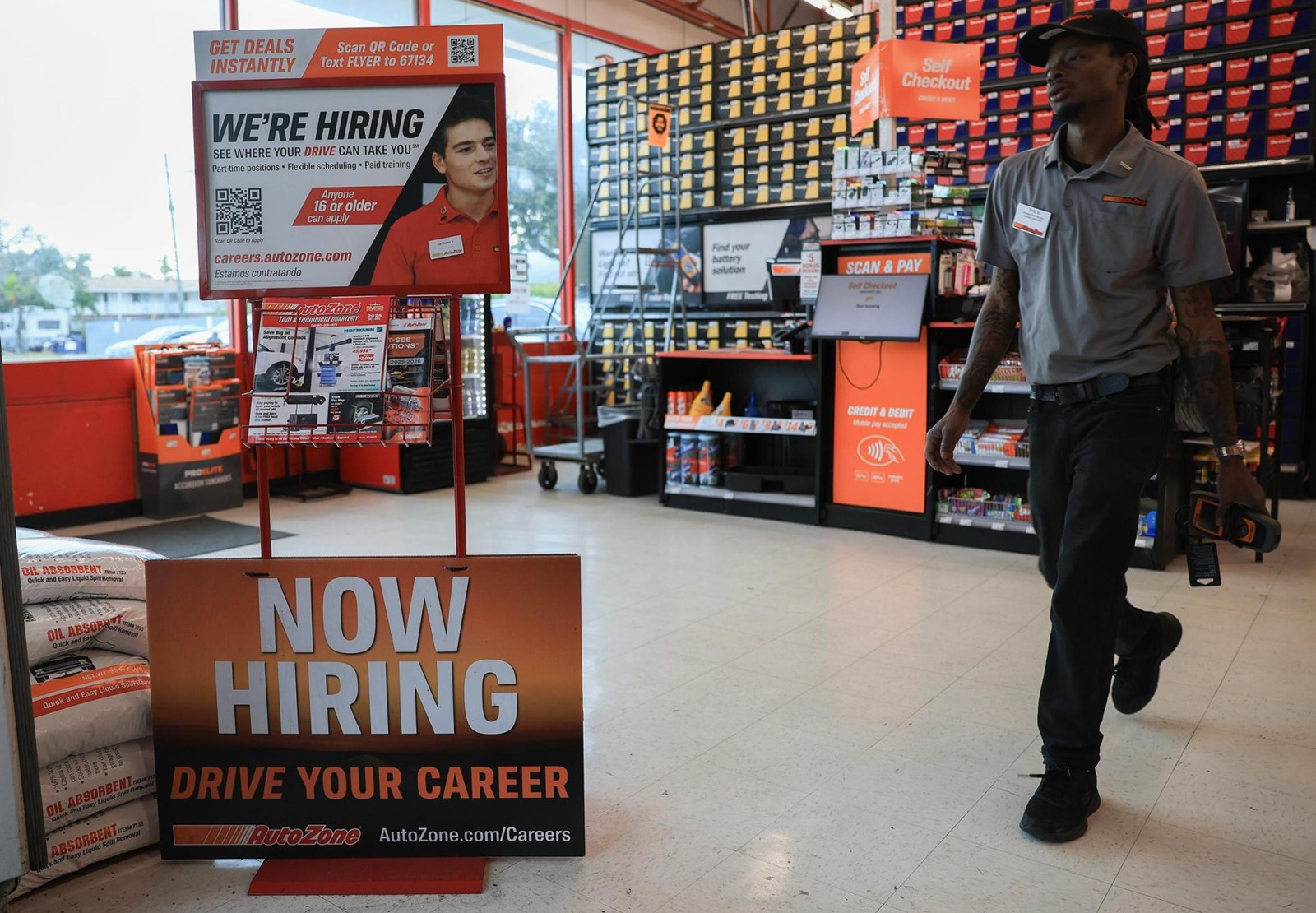


Americans’ outlook on the job market has turned increasingly pessimistic, a surprisingly negative shift given the low unemployment rate but one that likely reflects an ongoing hiring drought.
Just 28% of workers in a quarterly Gallup survey late last year said now is a “good time” to find a quality job, with 72% saying it is a bad time. Those figures are a sharp reversal from just a few years ago, in mid-2022, when 70% said it was a good time.
As recently as late 2024, just under half of workers still said it was a good time to search for a job. The current survey was conducted during the final three months of 2025, long before the Iran war that has sent gas prices soaring and threatens to slow the economy as Americans redirect more of their dollars to filling gas tanks and away from other spending.
Job pessimism is especially pronounced among college graduates. The shift is likely because hiring in many white-collar professions has been unusually weak for the past two years.
A separate Gallup survey of U.S. adults overall found that college graduates’ optimism about the job market is the lowest it’s been since 2013. Meanwhile, the gap in job market sentiment between Americans with and without a college degree was at its widest in that survey since Gallup started asking the question in 2001.
$1 billion to walk away from wind farm
The Donald Trump administration will pay $1 billion to a French company to walk away from two U.S. offshore wind leases as the administration ramps up its campaign against offshore wind and other renewable energy.
TotalEnergies has agreed to what’s essentially a refund of its leases for projects off the coasts of North Carolina and New York, and will invest the money in fossil fuel projects instead, the Department of Interior announced Monday. The Trump administration has tried to halt offshore wind construction, but federal judges overturned those orders.
Environmental groups denounced the TotalEnergies deal as an alternate way to block wind projects. President Donald Trump has gone all in on fossil fuels, which he says is the way to lower costs for families, increase reliability and help the U.S. maintain global leadership in artificial intelligence.
FCC bans routers not made in the U.S.
The Federal Communications Commission ordered a ban on the import of new models of foreign-produced consumer wireless routers after an interagency panel determined they threaten national security.
While the FCC said companies could apply for exemptions, the move could shake up the market for routers, which are primarily made overseas. Consumers and businesses connect wired internet lines to routers to create Wi-Fi networks for computers, phones, TVs, cameras and other internet-enabled products.
The action puts further pressure on TP-Link Systems Inc., one of the world’s largest makers of routers. The company, which was founded in China 30 years ago but which has since set up its headquarters in Irvine, is already facing investigations by the Trump administration over concerns that its connections to China could threaten national security.
“TP-Link is confident in the security of our supply chain, and we welcome this evaluation of the entire industry,” a company spokesperson said.
Other router makers include Netgear Inc., Alphabet Inc.’s Google Nest, Amazon.com Inc.’s Eero, Cisco Systems Inc., Linksys and Asustek Computer Inc. They all build their products overseas.
The import ban is in place regardless of the nationality of the developer. Many of the router makers are based in the U.S. The move doesn’t impact consumers’ ability to continue using previously purchased routers, and retailers will be allow to keep selling already-imported routers.
OpenAI pulls the plug on app Sora
OpenAI is shutting down its social media app Sora, which went viral last fall as a place to share short-form videos generated by artificial intelligence but also raised alarms in Hollywood and elsewhere.
OpenAI said in a social media message Tuesday that it was “saying goodbye to the Sora app” and that it would share more soon about how to preserve what users already created on the app.
“What you made with Sora mattered, and we know this news is disappointing,” it said.
The company behind ChatGPT released Sora in September as an attempt to capture the attention, and potentially advertising dollars, that follow short-form videos on TikTok, YouTube or Meta-owned Instagram and Facebook.
Compiled from Bloomberg and Associated Press. reports.
 PREVIOUS ARTICLE
