





This week I spoke with retired Post-Tribune newsroom colleague Mark Taylor, a long-familiar byline for Post-Tribune readers.
During the past three decades, usually I crossed paths with Mark as a friendly rival from my 24 years with The Times of Northwest Indiana and The Vidette-Messenger of Valparaiso, the latter of which I started writing for as a college intern in 1991.
Mark, 71, who now lives in Munster, began at The Post-Tribune in 1993 covering healthcare and remained in that same newsroom for nearly two decades until he left to spend eight years covering health and business for Crain’s Chicago.
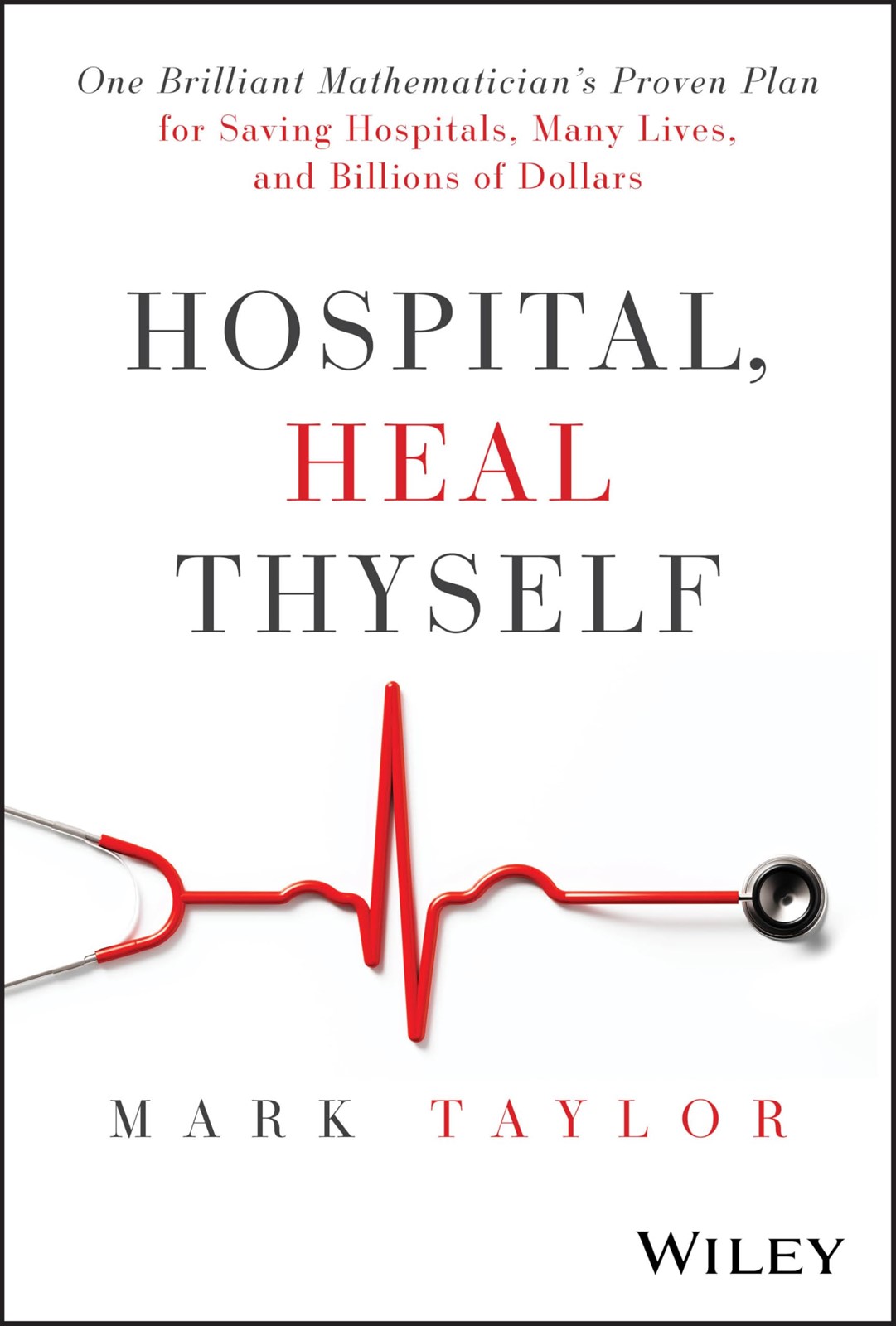
His new book released last month is titled “Hospital, Heal Thyself: One Brilliant Mathematician’s Proven Plan for Saving Hospitals, Many Lives and Billions of Dollars” ($45 John Wiley & Sons November 2024).
The 288-page hardcover is about Harvard Professor Dr. Eugene Litvak, the man and mind Mark says the former Soviet Union “hailed as a genius for improving the efficiency of the Soviet railroads and agriculture departments, in the process saving millions of rubles.”
“He published research papers with Nobel Prize winners and was invited to speak around the world to address his special field, telecommunications,” Mark said.
“However, as a Jew, he was prohibited from traveling abroad, and after years of discrimination, applied to leave the USSR. He and his wife lost their elite research jobs and were threatened with prison. The KGB even unsuccessfully tried to recruit him.”
Mark said after nearly a decade of persecution, the couple and their parents were finally granted permission to emigrate in 1988. This is when he landed his faculty position at Harvard as an expert in his field of medicine and business despite having no formal background in healthcare, nor physician or nurse status. His career timeline never even included time as a hospital administrator.
“His secret power was math,” Mark said.
“By applying complex formulas like graphs, probability and queueing theories, he learned the primary cause of hospital overcrowding, a condition that causes a litany of problems. Litvak not only discovered the cause of the problem but also its solution. He has advised the best hospitals in the U.S. including the world-famous institutions like the Mayo Clinic, Johns Hopkins, Massachusetts General and Toronto General,” Mark said.
Mark said because of the research of Litvak and his practical applications, he is credited with saving today’s hospitals millions of dollars. He said a prime example is the Cincinnati Children’s Hospital and a documented annual savings of more than $100 million. The Cincinnati hospital was able to postpone projects like a planned and budgeted $100 million new patient tower, now no longer needed because of better financial planning and use of existing resources.
Another beneficial example is a community health center in New Orleans prized for treating a poor Black population demographic in a public housing complex.
“Once bleeding red ink and ready to close before adopting Litvak’s methods for improving patient flow and patient safety, the clinic’s annual revenues went from $2 million to $16 million, enabling the not-for-profit as a safety net provider to expand services to six new satellite clinics, hire more doctors and nurses and treat many more needy patients,” Mark said.
“And it isn’t just saving money, although a story published in the ‘Journal of the American Medical Association’ in 2012 found that if every U.S. hospital adopted Litvak’s methods, it would save the U.S. healthcare system between $120 billion and $150 billion annually and that’s $150 billion to $185 billion in today’s dollars. Canada’s largest medical center, Ottawa Hospital, documented saving at least 40 lives annually after adopting Litvak’s methods. And after canceling 600 surgeries in 2012, Ottawa canceled none the following year.”
Mark said Litvak’s research has been published in the top medical journals, such as the “Journal of the American Medical Association,” the “New England Journal of Medicine” and “Health Affairs.”
“My book explores every aspect of Litvak’s fascinating life, his methods of improving the care delivered to patients in hospitals and outpatients in physician clinics,” Mark said.
“And this was all at a time when there is widespread frustration, resentment, anger and fear about our healthcare system with a new administration pledging to cut costs. Litvak, now age 74, offers methods as a solution for reducing spending while improving, not sacrificing quality.”
Mark’s book is available on Amazon and at all local bookstores. He is also planning book signing events and lectures to be announced in the new year.
Philip Potempa is a journalist, published author and the director of marketing at Theatre at the Center. He can be reached at Philip.M.Potempa@powershealth.org.
 PREVIOUS ARTICLE
