


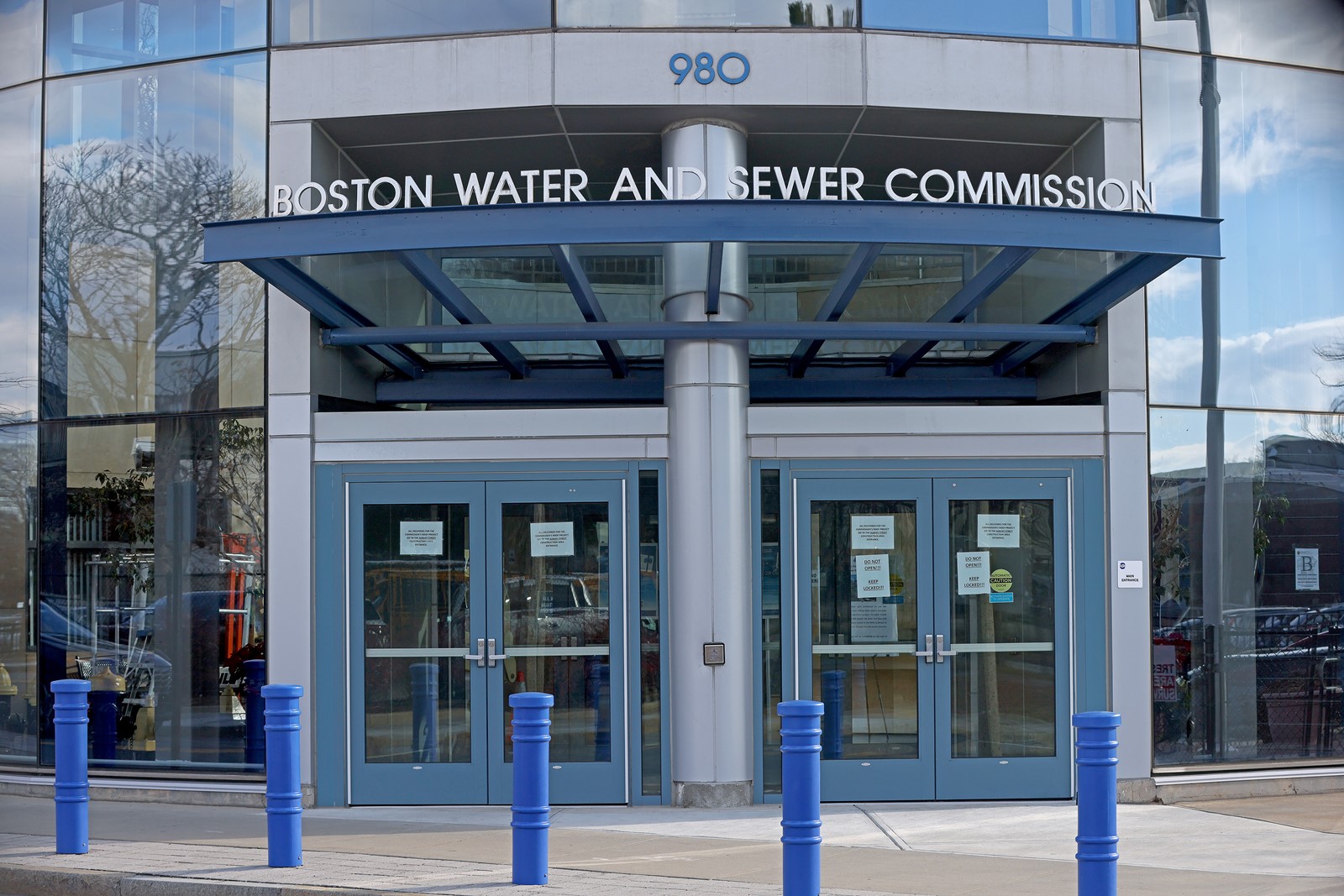


Dueling restraining orders between the Boston Water and Sewer Commission’s executive director and former security chief highlight the latest chaos at the beleaguered quasi-public agency.
In an affidavit for a harassment order filed against Water and Sewer Commission Executive Director Henry Vitale, former director of security and facilities Sean Canty alleges that he has been subject to improper surveillance by the Commission in retaliation for filing a state discrimination claim against Vitale and the agency.
Canty filed his harassment order last week, soon after Vitale filed a restraining order against Canty, claiming in an affidavit that he was fearful that the fired security chief’s actions would escalate to violence against him.
Canty claims that Vitale’s restraining order, filed in late October, is aimed at weakening the employment discrimination claim he’s filed with the Massachusetts Commission Against Discrimination, as he said it was filed soon after the Water and Sewer Commission was served with his complaint.
“After I filed a very strong Massachusetts Commission Against Discrimination complaint against BWSC and its executive director, Henry Vitale, for retaliation, wrongful termination, whistleblower activity, and for being a witness to corruption at the highest levels, I began to experience surveillance and following that I reasonably believe was directed by Mr. Vitale,” Canty wrote his affidavit.
Canty said Water and Sewer Commission vehicles had been following him since late August, when BWSC was served with his employment discrimination filing. The activity continued when he was visiting his daughter in West Roxbury in late October, which caused him to become “so upset and alarmed at being followed” that he drove to the district court to file a restraining order, his affidavit states.
He was told he needed to file a harassment order in Manchester, New Hampshire, where he resides, which he did, Canty’s affidavit states.
Canty said he recognized the activity from his former employer due to Vitale ordering him to conduct surveillance of Commission employees, past and present, who had filed litigation against the quasi-public agency while employed there as its security chief.
“Because of my prior BWSC duties, I know what BWSC vehicles look like, I know that employees can be directed to follow people who have filed claims against the Commission, and I recognize this pattern for what it is: retaliation and intimidation tied to my protected activity,” Canty wrote his affidavit.
Canty also takes issue with the embarrassment he says he was caused when he learned that, in late October, Vitale caused his photograph to be displayed in the Water and Sewer Commission lobby “with the implication that I could be a person of concern or danger.” Per the affidavit, Canty saw the move as retaliatory.
A Boston Water and Sewer Commission spokesperson said the Commission “denies the allegations in the restraining order.”
“Mr. Canty’s allegations are utter nonsense and part of his misguided attempt to defame his former employer,” a Commission spokesperson said in a statement.
Vitale filed a restraining order against Canty in West Roxbury District Court in late October that acknowledges the pending MCAD claim against the Commission, according to an affidavit filed with his order.
In the affidavit, Vitale said Canty was fired from his position on Dec. 18, 2024 after an investigation determined that he made racist statements to a Haitian-American colleague.
“During and after his employment with the Commission, defendant Canty willfully and maliciously engaged in more than three incidents of harassment against me that were intended to cause fear of physical harm and intimidation,” Vitale wrote in the affidavit. “Defendant Canty’s harassing actions have caused and are continuing to cause fear that he will cause me physical harm.”
Those incidents, Vitale claims, took place in August 2019, October 2023 and September 2025, approximately nine months after Canty was fired, and involved other Commission employees.
“Throughout my professional relationship with Defendant Canty, he has been a volatile individual, resulting in serious confrontations with myself and others,” Vitale wrote, adding that he fears “Canty will resort to more violent means as he seeks retribution for perceived slights,” given the deterioration of his mental state, which includes post-traumatic stress disorder from his time in the military.
Canty, in an interview with the Herald, said Vitale’s restraining order is “bogus” and “full of lies.”
He said it was “heartbreaking” that Vitale, who he considered to be a good friend, would try to hurt him so deeply, particularly by publicizing and demonizing his post-traumatic stress disorder, which he reported to the Commission privately.
“Henry Vitale was a friend of mine, and it still hurts me to this day that he would go to such great lengths to hurt me,” Canty said. “I’m not built that way. I’m built that loyalty is everything. … I was heartbroken at what he did to me.”
Canty declined to get into specifics about his MCAD claim, which is scheduled for a Nov. 19 initial hearing, other than saying it is partly a whistleblower claim, involves a demotion to the Alford Street materials handling facility that he says worsened his chronic obstructive pulmonary disease, and would “destroy” Vitale.
He also mentioned that one of his witnesses, who worked in the Commission’s legal department, was recently fired, which he sees as another effort to weaken his MCAD claim.
“It’s funny, the mayor, she attends No Kings rallies, and yet she allows one to stay in her administration,” Canty said of Vitale. “How this person is still there is beyond me. He’s fired anybody that he feels is not 100% loyal to him — not to the city, not to the Commission, but to him.
“The end game, ultimately, is justice,” Canty added. “And I think the only justice is that he’s removed from power.”
 PREVIOUS ARTICLE

