


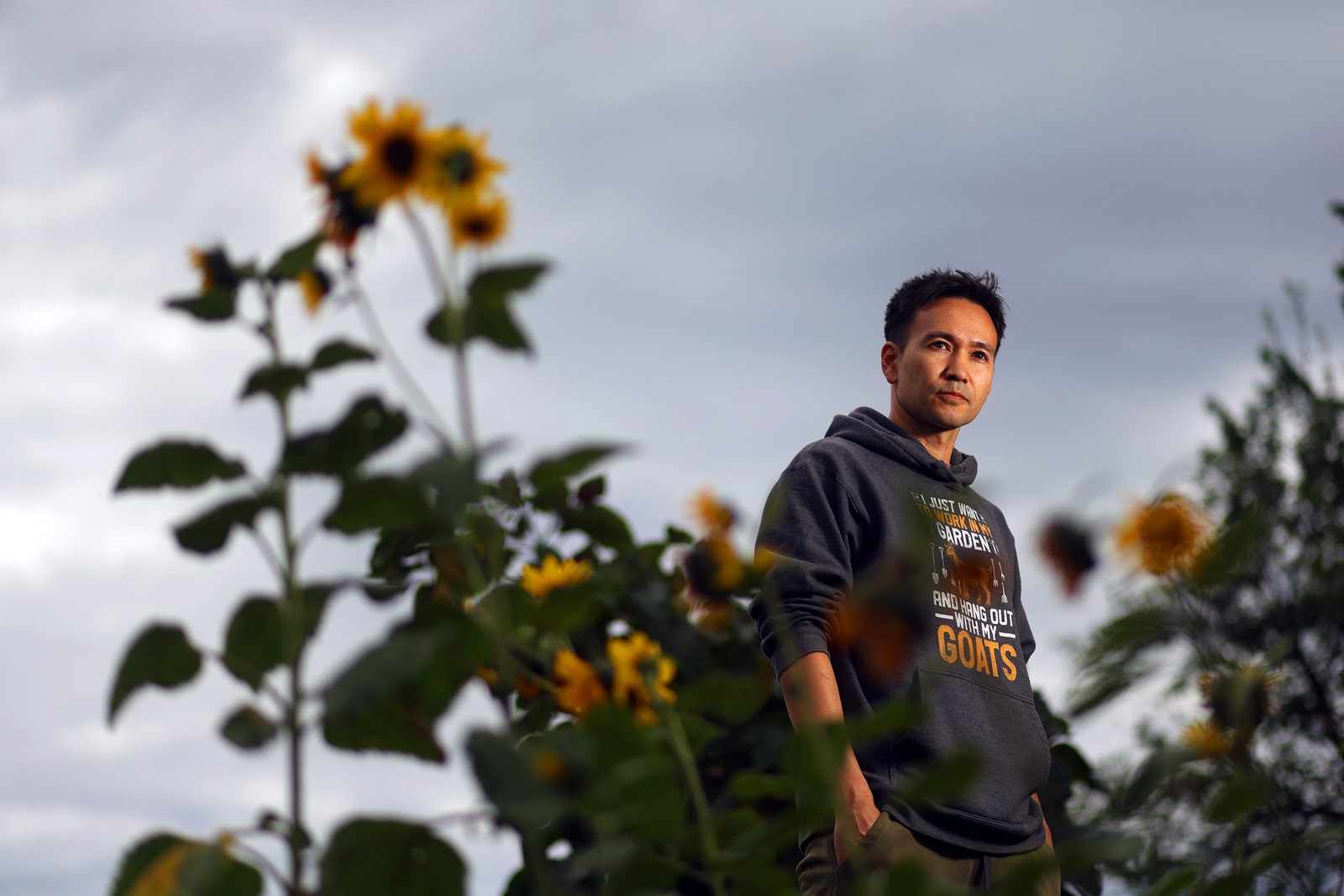
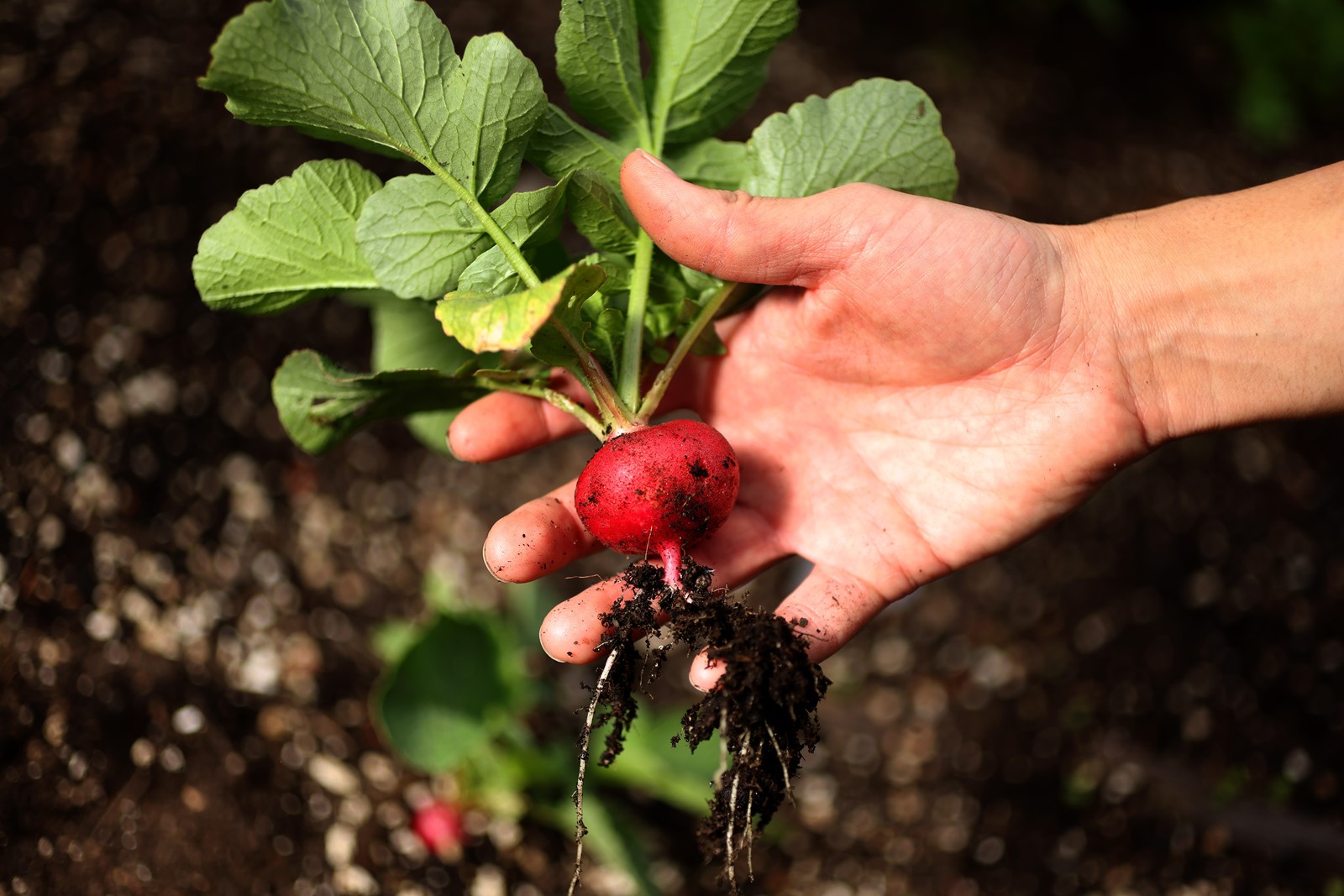


There’s trouble in the Paradise Community Garden in Ashland after the U.S. Department of Agriculture canceled a key pipeline for young, underserved farmers in the Bay Area due to alleged discrimination that utilized “DEI” measures. Communities are already facing the consequences of reduced services.
The Farm Service Agency program canceled 49 of 50 nationwide projects that were aimed at connecting the next generation of farmers with access to land, capital and markets, which are considered significant barriers in an industry entrenched with aging farmers, reducing budgets for urban gardens and leaving the future up in the air for privately-owned farms.
“In many ways, it takes away from this community. This is a priority population that has been historically disadvantaged in the Ashland and Cherryland area. Even the USDA acknowledged this is a food desert in the broader East Bay area,” said Toku Hankins, founder of the nonprofit Plantify, which runs the garden. “People feel tech will solve a lot of things, but the truth is we need producers.”
Announced in 2023, the Increasing Land, Capital and Market Access program, which utilized funding from the Inflation Reduction Act passed in 2022, provided $300 million in grants, with an explicit intent to help “underserved” farmers from marginalized communities who have been historically disenfranchised from breaking into the field as 90% of California farmers identify as white, according to the USDA website. Unlike farmworker programs that focus on improving labor conditions, this initiative was designed to help people become farmers themselves and to eventually own and manage their own operations.
The cancellations come as California farmers face not only the yearly booms and busts of crops, but also uncertainty about the future of their family farms.
An average California farmer today is nearly 70 years old, according to the 2022 Census of Agriculture by the USDA, and the next generation has largely not stepped up to take over, according to Alameda County Agriculture Commissioner Don McCoon.
“It’s always been hard to bring in younger farmers. … These programs are important in helping young people get on their feet in a career and in their passion,” McCoon said. “This just ripped the carpet out right from under them.”
The program was meant to help young farmers start and sustain their own operations, attempting to correct historical imbalances of race and identity. The Farm Service selected two organizations in the Bay Area: El Sobrante-based Agroecology Commons and the Alameda Resource Conservation District.
Agroecology Commons received $2.5 million to expand access to LGBTQ+, Black and Indigenous producers. Alameda County Resource Conservation District received a $482,183 contract for a pilot program to streamline leases for urban agriculture projects, with $75,000 earmarked for “mini-grants” to urban gardens like those of Paradise Community Garden.
But federal approvals to disperse funds stalled after President Donald Trump returned to office in 2025.
Under Trump, the Department of Agriculture announced a funding freeze and terminated Agroecology Commons’ contract, alleging the organization had discriminated against applicants based on Diversity, Equity and Inclusion and was rife with financial misuse. The federal agency flagged specific examples from the program, such as $130,355 on office supplies, $20,000 on massages for farmers and $110,000 on an RV camper, that it considered fraudulent. The agency spokesperson did not clarify if these expenses were tied to Bay Area projects.
“Under the guise of increasing land access for producers, the Increasing Land, Capital, and Market Access Program … permitted the abuse of federal funds, including expenditures on the purchasing of a barbeque smoker, construction of a gazebo, massages and for one awardee, a $20,000 budget for ink pens alone,” a USDA spokesperson told Bay Area News Group.
The USDA also issued a funding freeze for remaining projects, like that of the Alameda County Resource Conservation District, which required direct approval before funds could be spent.
“We actually had mini-grant recipients selected at the end of 2024. But because we were still awaiting approval from FSA, we couldn’t disperse their funds,” Alameda County Sustainable Agriculture Specialist Colleen Hotchkiss said, adding that her agency was forced to turn to crowdsourcing to raise $15,000 to fulfill mini-grants to 2025 recipients.
As Alameda County staff watched Agroecology Commons’ contract get canceled and the Department of Government Efficiency’s aggressive cuts to USAID and Health and Housing Services, Hotchkiss said staff continued to build out a pilot program for land leases.
The Farm Service Agency eventually approved Alameda County Resource Conservation District’s mini-grant program on Feb. 20, with a schedule to request applications for mini-grants in late March. Then came the Department of Agriculture termination letter on March 24.
Hotchkiss said $30,000 of the contract had been spent — just over 5% of the overall project budget. Funding was backloaded, with most expenditures aimed at purchasing sites and preparing them for urban gardens.
“We put in a big chunk of budget to be able to do upgrades at those sites, to put in water meters, to put in fencing, to prepare those lots of land. But that was going to require additional approvals and things from USDA,” said Alameda County Resource Conservation District resource conservationist Courtney Coon. “We were not getting the type of communication that we needed from them to be able to move forward with those types of projects.”
The only remaining “active” project in the Increasing Land, Capital and Market Access program happens to be the first that was targeted to be cut: Agroecology Commons.
Agroecology Commons staff believe that is due to ongoing litigation after the nonprofit sued the Farm Service Agency for terminating a Congressionally approved program last year. Following the suit, a federal judge granted a preliminary injunction in August 2025 to stop the contract’s termination, but a funding freeze remains in effect.
Paradise Community Garden isn’t lost yet, but the challenges of an aging farming ownership remain. Hankins said long-term viability for the nonprofit has been a concern among Plantify board members, and uncertainty about the future of the organization has caused youths to question if they will ever be able to enter the farming industry. Hankins fears that Ashland and Cherryland will devolve into worse food deserts.
“Some of the questions that youth ask me is: What are you doing to protect the future? What are the opportunities that young people have in pursuing different careers in the agriculture sector?” Hankins said. “These mini-grants allow organizations like ours to connect the youth and folks interested in this industry to pursue a career in that. I can’t say more because there isn’t that funding anymore.”
Without funding for the next generation, the future of California farming remains murky.
“We built in priority for underserved producers into our project because that’s what the project was designed to do. The current USDA priorities were not in place at the time that we applied for and received this grant award,” Hotchkiss said. “The agency is not consistent in what it claims to want to do, which is to support farmers, because these projects do support farmers. And so terminating them means that farmers that lack access to these other avenues of funding … are further negatively impacted.”

