


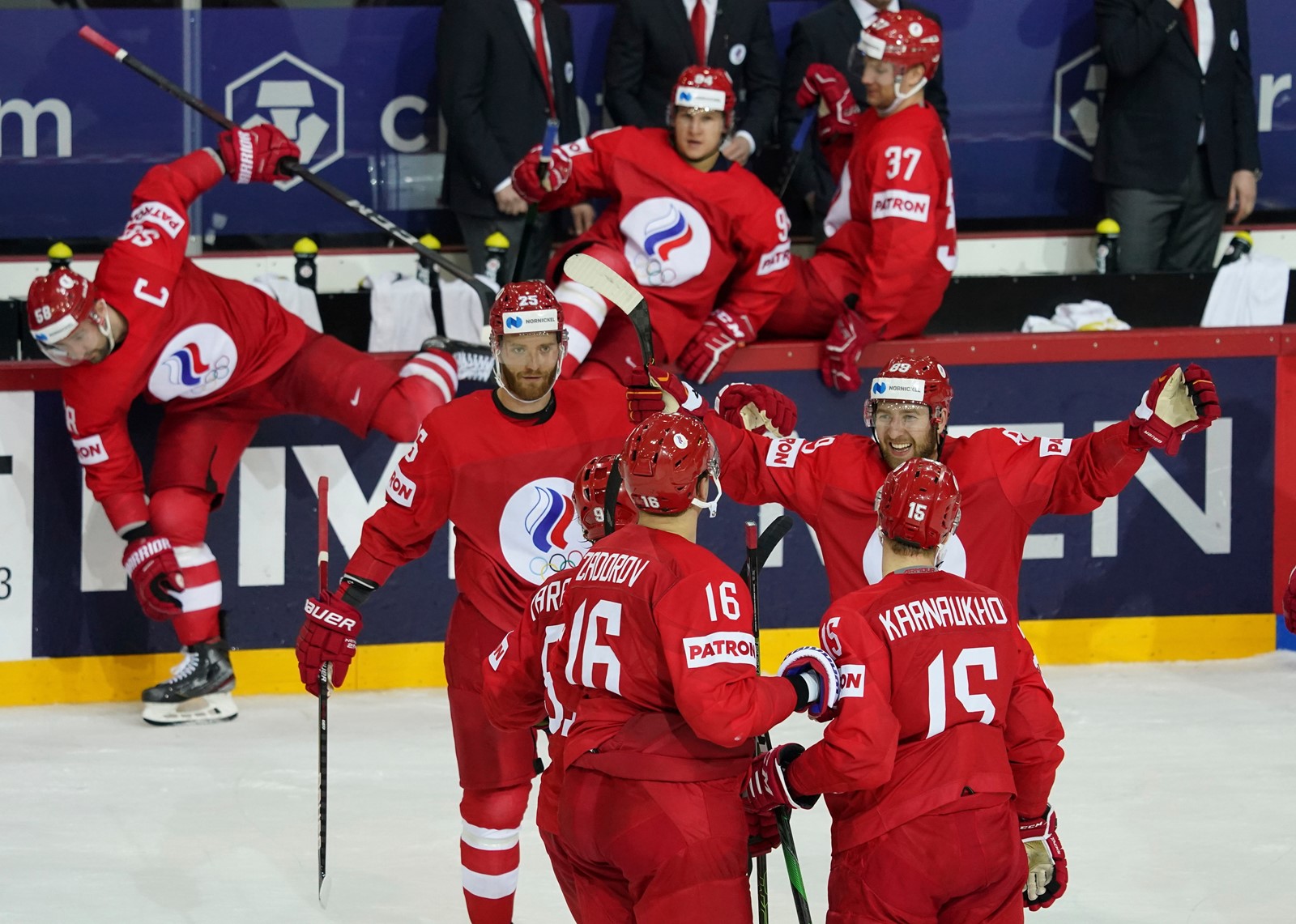


Russia must be allowed to return to ice hockey’s international tournaments, the Court of Arbitration for Sport ruled on Friday, overturning an exclusion in place since the full-scale invasion of Ukraine in 2022.
The ruling is a major win for Russia against efforts to bar it from international sports due to the war in Ukraine. Russian President Vladimir Putin is a noted hockey fan who has previously played exhibition games with former stars.
CAS overturned IIHF decisions, which excluded Russia from events in the 2026-27 season, including the men’s and women’s world championships and world juniors. Russia also missed the Olympic tournaments this year.
Russia’s return throws into uncertainty how the men’s world championship will work next year in Germany, given that Ukraine has also qualified.
In a brief statement, CAS cited a lack of sufficient evidence to support the IIHF’s security concerns.
CAS said its ruling did not address issues such as whether Russia should be required to play without national symbols as a team of neutral athletes, as in some other Olympic sports, or other “organizational consequences.”
The IIHF expressed disappointment with the ruling and said it “maintains that its decisions were necessary to protect the safety and security of all participants and safeguard the integrity of its competitions.”
“While the IIHF respects the authority of CAS and will act in accordance with its ruling, the outcome does not remove the concerns that informed its assessments.”
Russian Sports Minister Mikhail Degtyaryov wrote on the Telegram social media app that CAS “recognized the demands of the Russian Hockey Federation on key points as justified.”
The ruling is an immediate challenge for new IIHF President Franz Reindl, whose home country of Germany hosts the men’s world championship next year.
“Our task now is to implement this ruling responsibly,” Reindl said in a statement. “Several championships are only weeks away, and changes to participation affect many people; players, teams, organizing committees and host cities. We will work closely with all of them to find practical solutions.”
German hockey federation chairman Frank H. Lutz said on Friday that Germany remains opposed to letting Russia take part and that “allowing Russia in has significant security, political and financial consequences for us as hosts.”
It’s not clear how Russia would fit back in, since the draw has already been determined. Adding an extra team would make for uneven groups and an even longer tournament to fit in more games.
Kicking out a qualified team to make way for Russia would risk a backlash, especially if that team is Ukraine. It was last to qualify for the men’s worlds, ending a 20-year wait, and is ranked lowest among the 16 teams currently taking part.
The Ukrainian Hockey Federation said it disagreed with the ruling and argued that security concerns had only intensified since 2022. Ukraine didn’t indicate how it would approach the world championship.
The IIHF signaled “practical arrangements” would be decided after it has assessed the ruling.
The national hockey federations in Canada, Sweden, Finland and the Czech Republic all said they were disappointed by the ruling, but Swedish Ice Hockey Association chairman Anders Larsson told Swedish news agency TT that “a boycott is not on the table.” Finland indicated individual players could opt out of tournaments which include Russia.
Hockey Canada in a statement said the implications of the ruling are not immediately clear and that the organization had briefed its federal government on the situation.
The first tournament where Russia could return is the men’s world junior championship hosted by Canada in Edmonton and Red Deer, Alberta, starting on Dec. 26.
Other events covered by the ruling are the women’s world championship in Canada in November 2027, the men’s under-18 world championship starting in April in Minnesota, and women’s under-18 world championship in the Czech Republic in January. A Russian team playing under its national flag, rather than as neutrals, could have political repercussions in the Czech Republic.
“As the president has stated several times in the past, as long as Russian aggression continues he considers it appropriate to ban the participation of athletes under the Russian and Belarusian flags,” a spokesperson for Czech President Petr Pavel said.
 PREVIOUS ARTICLE

