




HOMESTEAD, Fla. >> Jeremy Ford hates wasting water.
As a mist of rain sprinkled the fields around him in Homestead, Florida, Ford bemoaned how expensive it had been running a fossil fuel-powered irrigation system on his five-acre farm — and how bad it was for the planet.
Earlier this month, Ford installed an automated underground system that uses a solar-powered pump to periodically saturate the roots of his crops, saving “thousands of gallons of water.” Although they may be more costly up front, he sees such climate-friendly investments as a necessary expense — and more affordable than expanding his workforce of two.
It’s “much more efficient,” said Ford. “We’ve tried to figure out ‘How do we do it?’ with the least amount of adding labor.”
A growing number of companies are bringing automation to agriculture. It could ease the sector’s deepening labor shortage, help farmers manage costs, and protect workers from extreme heat. Automation could also improve yields by bringing greater accuracy to planting, harvesting, and farm management, potentially mitigating some of the challenges of growing food in an ever-warmer world.
But where she sees promise, others see problems.
Frank James, executive director of grassroots agriculture group Dakota Rural Action, grew up on a cattle and crop farm in northeastern South Dakota. His family once employed a handful of farmhands, but has had to cut back due, in part, to the lack of available labor. Much of the work is now done by his brother and sister-in-law, while his 80-year-old father occasionally pitches in.
They swear by tractor autosteer, an automated system that communicates with a satellite to help keep the machine on track. But it can’t identify the moisture levels in the fields which can hamstring tools or cause the tractor to get stuck, and requires human oversight to work as it should. The technology also complicates maintenance. For these reasons, he doubts automation will become the “absolute” future of farm work.
“You build a relationship with the land, with the animals, with the place that you’re producing it. And we’re moving away from that,” said James.
Tim Bucher grew up on a farm in Northern California and has worked in agriculture since he was 16. Dealing with weather issues like drought has always been a fact of life for him, but climate change has brought new challenges as temperatures regularly hit triple digits and blankets of smoke ruin entire vineyards.
The toll of climate change compounded by labor challenges inspired him to combine his farming experience with his Silicon Valley engineering and startup background to found Agtonomy in 2021. It works with equipment manufacturers like Doosan Bobcat to make automated tractors and other tools.
Since pilot programs started in 2022, Bucher says the company has been “inundated” with customers, mainly vineyard and orchard growers in California and Washington.
Those who follow the sector say farmers, often skeptical of new technology, will consider automation if it will make their business more profitable and their lives easier. Will Brigham, a dairy and maple farmer in Vermont, sees such tools as solutions to the nation’s agricultural workforce shortage.
“A lot of farmers are struggling with labor,” he said, citing the “high competition” with jobs where “you don’t have to deal with weather.”
Detasseling corn used to be a rite of passage for some young people in the Midwest. Teenagers would wade through seas of corn removing tassels — the bit that looks like a yellow feather duster at the top of each stalk — to prevent unwanted pollination.
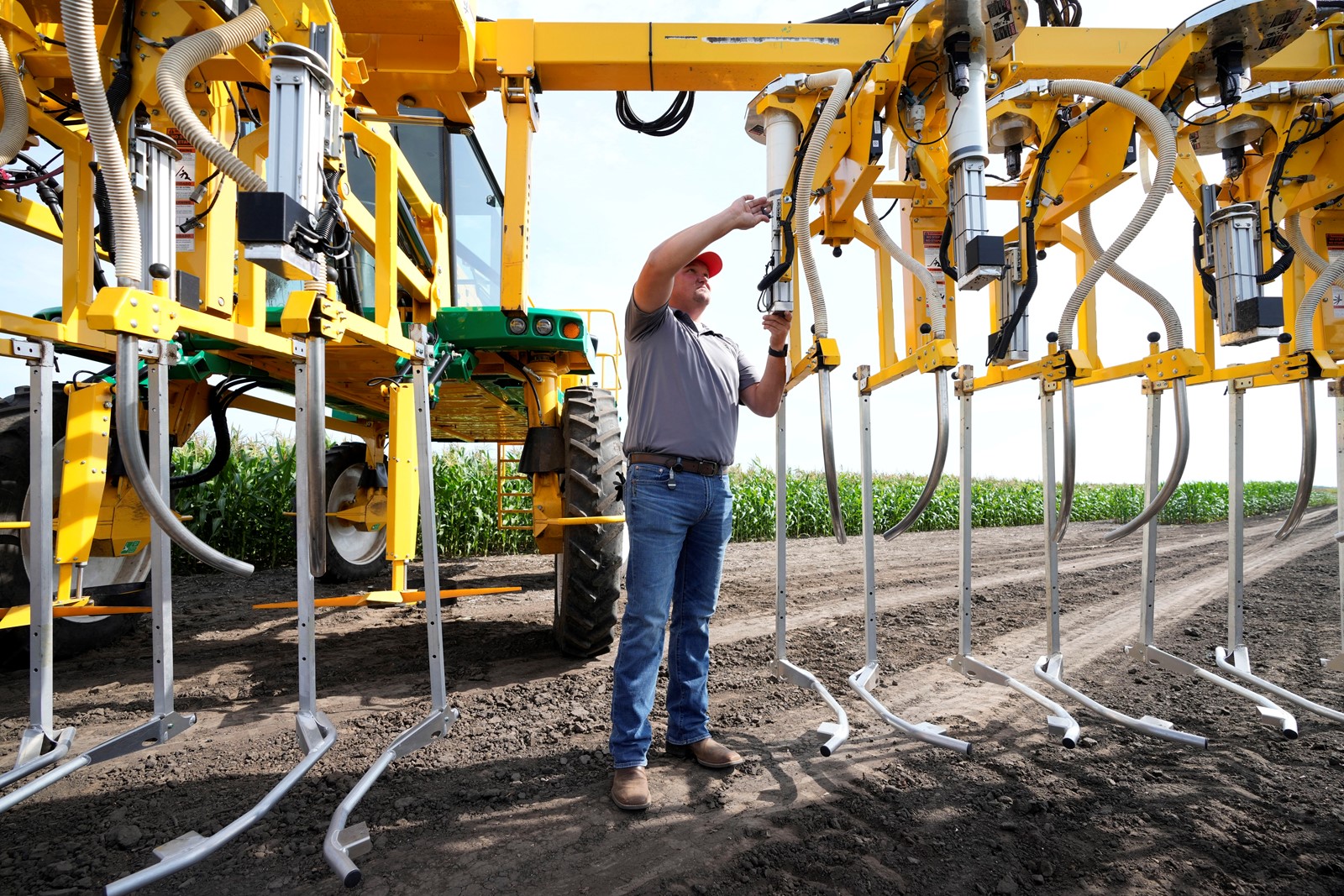
Extreme heat, drought and intense rainfall have made this labor-intensive task even harder. And it’s now more often done by migrant farmworkers who sometimes put in 20-hour days to keep up. That’s why Jason Cope, co-founder of farm tech company PowerPollen, thinks it’s essential to mechanize arduous tasks like detasseling. His team created a tool a tractor can use to collect the pollen from male plants without having to remove the tassel. It can then be saved for future crops.
“We can account for climate change by timing pollen perfectly as it’s delivered,” he said. “And it takes a lot of that labor that’s hard to come by out of the equation.”
 PREVIOUS ARTICLE
