




Minnesota’s Marcus Foligno took a hit, delivered one of his own to Chicago’s Jarred Tinordi, and the two big guys dropped the gloves. Outdoors in front of 82,000 people in the Meadowlands, it took even less for Matt Rempe and Matt Martin to spice up the Rangers-Islanders showdown with a fight.
When Morgan Rielly cross-checked Ridly Greig for firing a slap shot into an empty net? Some pushing and shoving. Nothing more.
“How there wasn’t a brawl there, I don’t know how everyone didn’t start fighting,” wondered Todd Simpson, a 50-year-old retired player who piled up more than 1,300 penalty minutes in 580 NHL games. “That should’ve been a big fight.”
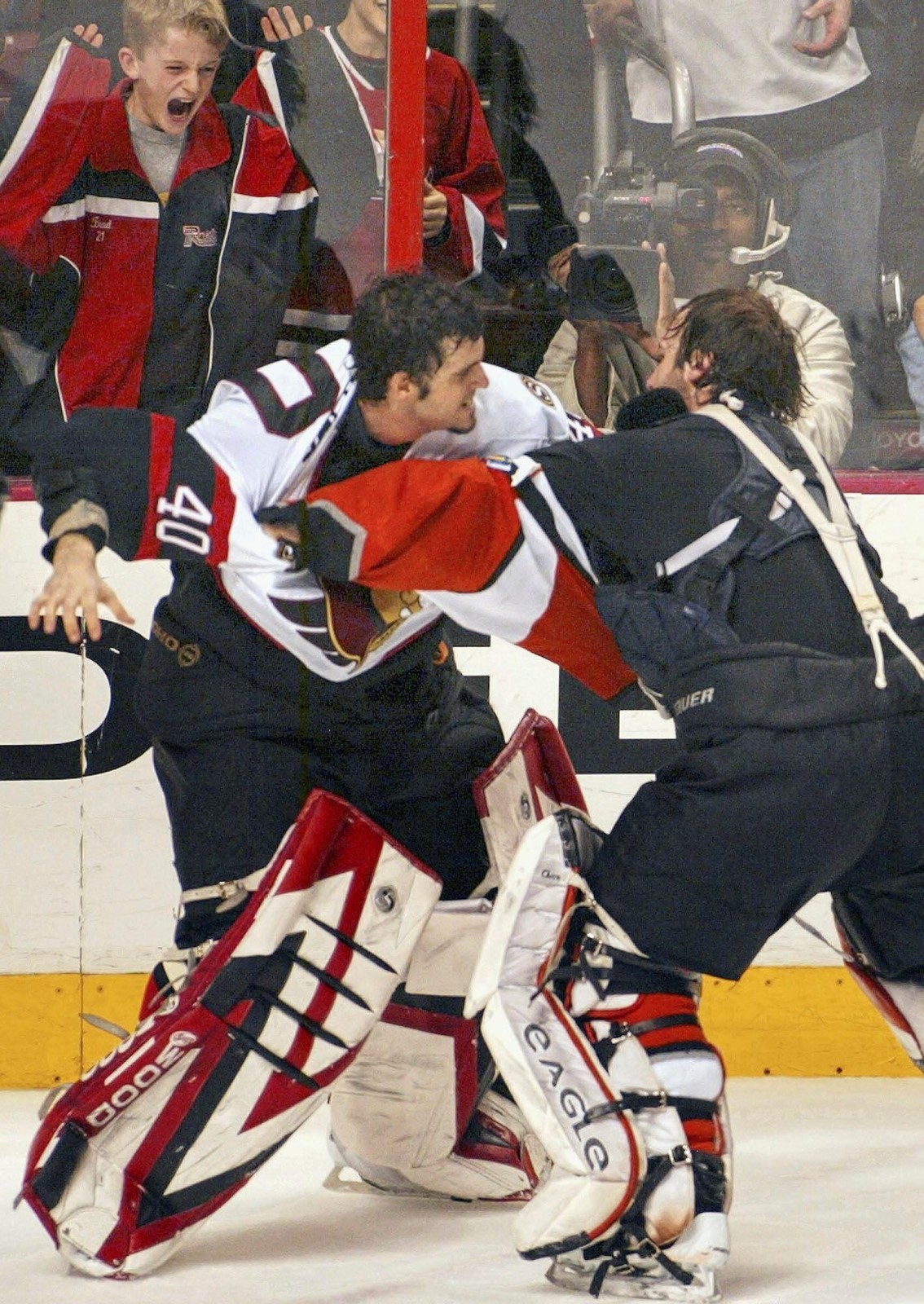
All of these situations were over the past month alone, riveting reminders that fighting is alive and well in the NHL even if it is diminished in many ways. It has been 20 years since Simpson and his Ottawa teammates got into a fight fest at Philadelphia, a game that still holds the NHL record with an astounding 419 penalty minutes. Of 40 players who suited up, 23 got at least two minutes of penalty time. Many got far more.
Those kinds of massive clashes are long gone, faded like the cheap shots and blood in “Slap Shot.” Like the beloved movie, however, fighting is warmly remembered, even desired, by many fans of the game and cheering on the brawls remains common. Those fans need not worry: Even in the NHL, which has fewer and fewer spots for goons these days, fighting is rare but certainly not gone, with a fight coming roughly every four or five games across the league.
Fighting on the wane
The NHL does not publicly list penalties by type, including fighting and other major infractions. According to HockeyFights.com, there have been 219 fights this season through Monday with 63 more projected before the playoffs begin for a total of 282, which would be a sharp drop from the 789 in 2003-04. That is a 200% decrease over 20 years and significantly down from 645 as recently as 2010-11.
Rule changes are part of the reason. The institution of the salary cap in 2005 made it more difficult for a team to pay a player whose skills were limited to throwing punches and protecting stars. In 2013, it became illegal to take a helmet off to fight and mandatory visors were grandfathered in.
“It’s obviously evolved a lot where guys like myself back in the day no longer exist — one-dimensional fighters no longer exist,” said Riley Cote, who fought 50 times in 156 games with Philadelphia from 2007-10 and countless other times in the minor leagues. “It’s been a natural progression. ... I’m not sure at the NHL level they’ll ever fully phase it out, but they’re doing a pretty good job of trying.”
Will fighting survive?
A 2011 survey by the NHL Players’ Association and CBC found that 98% of players at that time didn’t support the total elimination of fighting.
A vast majority of those players are now out of the league, replaced by a generation that has made hockey faster and more skilled than ever — but still willing to drop the gloves on occasion and wanting that option.
“It always needs to be in the game,” said St. Louis Blues captain Brayden Schenn, who has fought twice this season but never more than four times a year as a professional. “You need guys to police it themselves, and if you’re going to run around and make a big hit, you’ve got to know that sometimes you’re going to have to deal with the consequences.”
Fighting’s legacy
Like many sports, hockey is facing the fallout from decades of its players suffering concussions and other traumatic brain injuries when safety wasn’t the top priority it is now.
Patrick Sharp, who fought a handful of times as a player and is now in the Flyers’ front office, said he cringes when he sees a player’s helmet come off taking a heavy punch or banging their head on the ice.
It’s what happened to George Parros during a fight in 2013 that left him unconscious after falling face first.
The deaths of old-school enforcers like Derek Boogaard and Bob Probert, who were posthumously found to have chronic traumatic encephalopathy, or CTE, has changed some minds when it comes to glorifying fighting the way it used to be.
Oleksy contends that heavyweights of that vintage are no longer in the game and the risk of serious injury is much less now.
 PREVIOUS ARTICLE
