


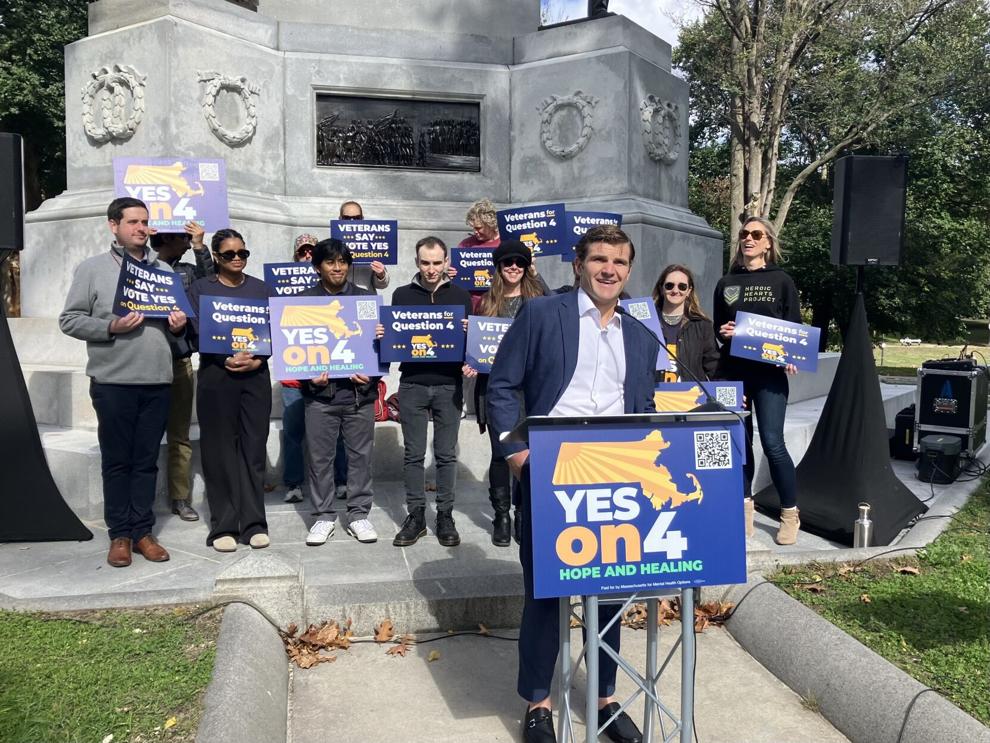


Plant-based medicine advocates haven’t given up their efforts to see that therapeutic method take root.
Question 4, defeated on the state ballot in November, would have legalized some psychedelics for mental-health treatment.
It called for no legal action against adults ages 21 and older for “possessing, using, processing, or testing not more than a personal use amount of a natural psychedelic substance,” and would have allowed home-grown plants or fungi cultivated for psychedelic substances, but only in areas secured from minors.
Retail sale of psychedelics, or “psychedelic dispensaries,” would have been barred.
If passed, this ballot initiative would have legalized both the medicinal and personal use of certain psychedelics — something that wasn’t even contemplated by supporters of legalizing marijuana.
But now, a few grass-roots activists have taken the reins of the movement to make this type of treatment a reality in Massachusetts.
Graham Moore and Jamie Morey both have personal experience with the healing effects of psilocybin — a compound found in some mushrooms — and now run the Yes on 4 campaign.
“I was just determined to not let the defeat of this ballot question sort of be the end of this conversation …,” said Morey.
The pair say the question failed not for lack of support, but because of the way it was written, or objections to small parts of the overall plan.
Opponents at the time said the measure could fuel a black market for psychedelics, increase crashes while driving under the influence, and pose a risk to children and pets.
Chris Keohan, spokesman for the Coalition for Safe Communities, said the opposition group wasn’t against the medicinal benefits of plant medicine, but rather worried about some of the language contained in the ballot question.
Now, advocates say they’re taking a different, more nuanced approach.
Since December, they’ve been volunteering their time while becoming the driving force behind 10 bills filed in the new legislative session working to expand access to psychedelics.
The next steps include gathering volunteer feedback, and encouraging stakeholders to get involved before a new nonprofit, Mass Healing, takes over the campaign’s work at the end of the month.
That new organization will be run by Morey and CJ LoConte.
“We were playing catch-up to mitigate 50-plus years of societal stigma,” said LoConte, an U.S. Army veteran and one of the committee’s leading volunteers during the campaign to pass Question 4.
An Army combat veteran, LoConte credits psilocybin for making him a better husband and father.
The activists told Springfield’s WLLP 22News they’re pleasantly surprised to see so much support this time around from the Legislature.
Responding to voters, the bills filed this month have a more limited focus than Question 4, instead concentrating on psilocybin access and research, said state Rep. Lindsay Sabadosa.
They have been designed to “bring the opposition to the table,” since voters had expressed concern about the lack of professional oversight and access to dangerous drugs.
Sabadosa filed a bill calling for psychedelic pilot programs that seek to establish nonprofit treatment centers throughout the state for regulated psilocybin.
She previously stated that she never expected to become an advocate for psychedelics. But the Northampton Democrat said that changed at the end of the previous legislative session, when she heard from a constituent who managed to overcome mental-health struggles and stay in school by using psilocybin.
State Rep. Marjorie Decker, D-Cambridge, and state Sen. Cindy Friedman, D-Arlington, also filed their own bills for pilot programs.
State Sen. Dylan Fernandez, D-Falmouth, presented a research bill focusing on use by veterans, and state Rep. Mike Connolly, D-Cambridge, filed a bill that would establish a task force to study equitable access to entheogenic plants, which have profound effects on consciousness.
Half the bills filed advocated for legal personal consumption of psilocybin, that naturally occurring psychedelic compound found in over 200 species of mushrooms.
Lawmakers worked in conjunction with Massachusetts for Mental Health Options, the referendum committee formed in July 2023 to champion Question 4, to pave the way for what they believe are transformative drugs for combating mental-health challenges.
Voter input collected after the election gave legislators direction for the 10 bills they’re putting forth now.
That input supported removing criminal penalties for personal use of natural psychedelics, and supportive of therapeutic access, which resulted in bills with a narrower focus.
According to Morey and Moore, psilocybin was specifically cited in the 10 bills, as opposed to the four other drugs listed, because of its clinical and observational results, as well its ease of cultivation.
The substance had also been given “Breakthrough Therapy Designation” by the U.S. Food and Drug Administration as of last year.
We opposed Question 4 because it put the cart — medicinal and recreational use of multiple psychedelics — before the horse — clinical research focusing on specific uses for one or more of these plant-based therapies.
The information derived from one or more of these bills should provide the database required to form comprehensive legislation with the efficacy to back it up.
That’s likely the path that most lawmakers can support.
 PREVIOUS ARTICLE
