




JAKARTA, Indonesia >> A year ago, TikTok’s e-commerce business in Indonesia was thriving. With its viral videos, TikTok had become a worldwide phenomenon, and it was translating its influence into a powerful new revenue stream by letting users buy and sell things while its videos played.
Indonesia was a critical market and the first place where TikTok rolled out this feature. The app, owned by the Chinese tech giant ByteDance, had about 130 million users, nearly as many as it had in the United States. Since its launch here in 2021, TikTok Shop had become one of the most popular places for Indonesians to buy things online.
Then one day in 2023, TikTok said it was removing Shop from its app in Indonesia. The government declared that social media platforms would no longer be allowed to process online payments. TikTok was forced to abruptly halt its e-commerce operations.
Some Indonesian officials argued that TikTok was so popular it threatened to monopolize online shopping, while others said it didn’t have the right license. TikTok’s defenders in the industry said the government was acting on behalf of TikTok’s competitors in Indonesia.
The government’s edict did not name TikTok. It didn’t need to. No other app blended social media and e-commerce the way TikTok did.
Dealing with official scrutiny is familiar terrain for TikTok. The government in India, once home to the app’s largest audience, banned TikTok in 2020 as payback for a violent border dispute with China. In the United States, TikTok is facing a possible ban that could begin as soon as January after spending years fielding concerns about its influence and security.
But the threat in Indonesia had the potential to deal an especially devastating blow to ByteDance’s ambitions to make a lot of money with e-commerce. ByteDance wanted TikTok to repeat the success of its sister app, Douyin, whose live video shopping business in China topped $200 billion in transaction value in 2022.
New restrictions in Indonesia could inspire neighboring countries to take similar action, said Jianggan Li, the CEO of Momentum Works, a consultancy in Singapore.
“This is a market they can’t afford to lose,” Li said.
TikTok executives scrambled for a way to continue to offer e-commerce. Word spread through the Indonesian tech community that TikTok was looking for a local company to team up with. And within weeks, it was ready to buy a stake in Tokopedia, a former startup that had become one of Indonesia’s main e-commerce platforms.
TikTok wanted Shop back online by Dec. 12, according to two people familiar with the discussions who were not authorized to speak publicly.
That date had been one of the biggest days for deals on e-commerce platforms in China for years, and the trend had caught on in Indonesia. In recent years, the government promoted it as a day for buying from small businesses.
TikTok Shop restarted as a pilot program under government supervision on Dec. 11. As it had before, Shop appeared as a tab within the TikTok app. But now it was decked out with Tokopedia’s logo and signature green branding.
The deeper change was on the back end. When a shopper clicked “Buy,” the checkout process ran on Tokopedia’s system. TikTok Shop was still part of a social media platform. But to satisfy the government, the transaction took place on infrastructure built by an Indonesian e-commerce company.
Tokopedia was a key player in Indonesia, one half of the Indonesian tech conglomerate GoTo. The companies behind GoTo spent years developing payment and delivery technology that made it possible, in a country of 270 million people and 17,000 islands, to buy things online and receive them in a day or two. The deal integrated these systems with TikTok Shop.
“Combined with the content and experience on TikTok, that’s unique,” said Farras Farhan, a senior analyst at Samuel Sekuritas, an investment firm in Jakarta.
TikTok received majority ownership of Tokopedia, which paid TikTok for the right to operate TikTok Shop in Indonesia. GoTo kept just under a quarter of Tokopedia’s shares, and was promised a cut of profits from future TikTok Shop sales. TikTok paid $840 million and said it would invest further, up to a total of $1.5 billion, in the combined entity.
The episode was a jolt to everyone involved. ByteDance has cut a significant portion of the people working on its e-commerce operations in Indonesia.
The government said its new rules for e-commerce were intended to protect small businesses. But the businesses that sold goods on TikTok Shop were caught off guard by the sudden interruption. Some struggled to get by without income they relied on.
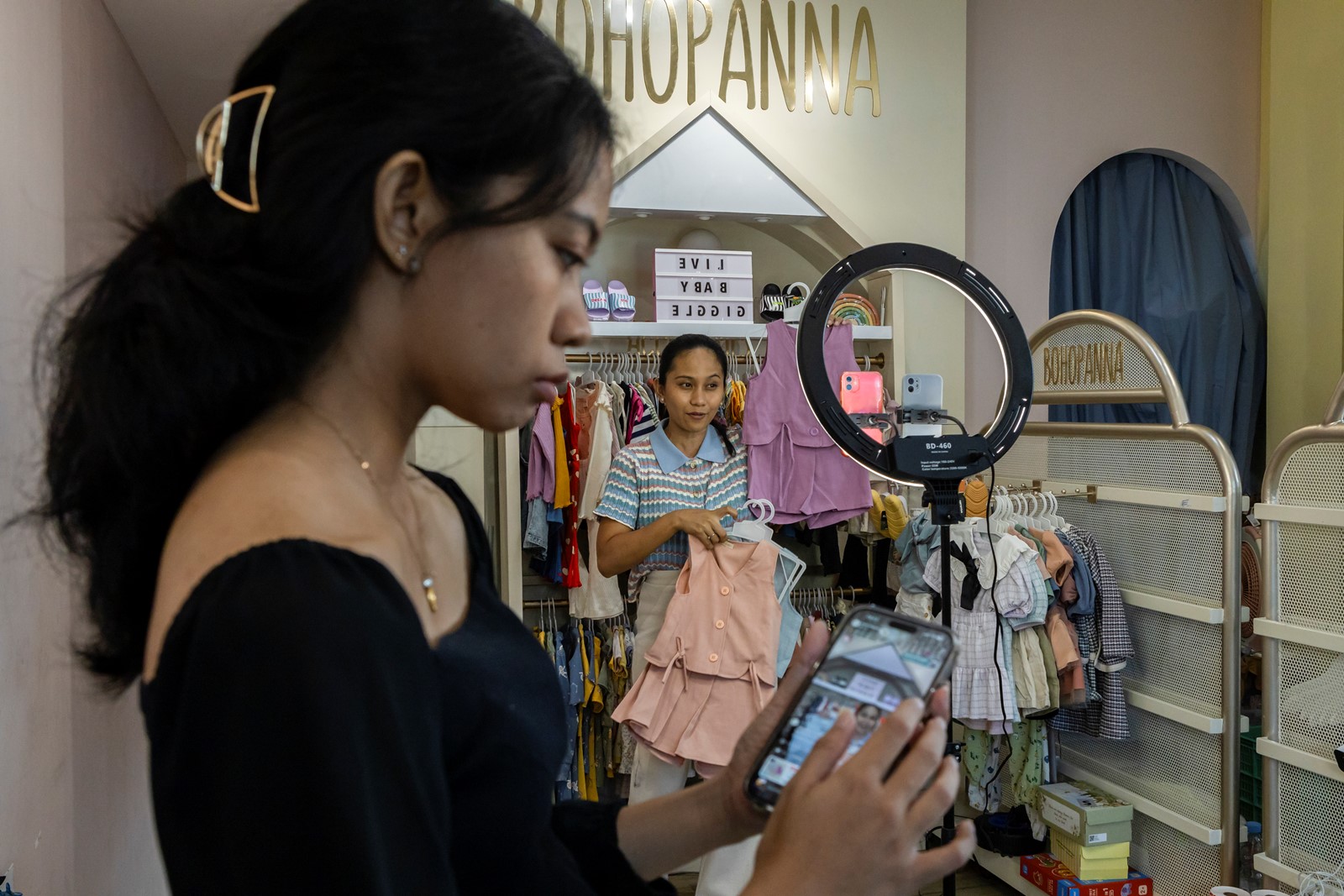
Agata Pinastika Kenastuti runs a children’s clothing shop in a Jakarta suburb. She had stocked up on new inventory days before TikTok announced that Shop would shut down. “When I found out, I cried for three days,” she said.
Sellers reopened their stores on TikTok Shop to find a more competitive marketplace. Last year, TikTok Shop had about 6 million merchants. Now there are 23 million merchants who are able to work easily across TikTok Shop and Tokopedia.
In interviews, six sellers said it had been difficult to regain the number of viewers, and therefore paying customers, that they had before TikTok Shop shut down.
TikTok’s experience with the Indonesian government over Shop is probably not the last time its e-commerce business will come under scrutiny.
In Malaysia, where TikTok Shop held nearly 20% of the e-commerce market last year, officials say they are mulling rules for the platform. And the Indonesian government isn’t done regulating the e-commerce industry, Rifan Ardianto, a director at the Ministry of Trade, said in an interview.
This month, Indonesian officials said they had asked Apple and Google to block the Chinese fast-fashion platforms Temu and Shein from app stores in the country.
 PREVIOUS ARTICLE
