




MONTEREY >> A frantic phone call came from Mac Villanueva’s mother while he and his wife were in Fullerton dropping off their daughter for college in August.
Her words were met with disbelief and fear. His son Jackson, a 20-year-old student at Hartnell College and former two-sport standout at King City High, had collapsed to the floor while visiting his grandmother. He couldn’t feel his legs.
“My mom said ‘Jackson can’t get up,’” recalled Mac Villanueva, the King City High football coach. “He is losing feeling in all his extremities. He’s not doing well.”
Having complained of numbness in his hands and feet earlier in the week, along with pain in his back, Villanueva thought his son might have had a pinched nerve in his back.
Jackson’s condition worsened over the next few hours as the Villanuevas drove home. Eventually, Jackson couldn’t swallow his food.
“He started choking,” Villanueva said.
“I had to perform the Heimlich to get him to cough it out. He was having trouble breathing. We went straight to the emergency room in Salinas.”
What the Villanuevas learned that night was that their son was suffering from Guillain-Barre syndrome, a rare autoimmune disease that causes nerve damage and can cause paralysis.
“I got up and just fell,” Jackson Villanueva remembered. “I couldn’t get myself up. I had no idea what was going on. I was freaking out. I said ‘Grandma, what’s wrong with me?’”
What the Villanuevas were told that night was that it would get worse before it got better. When their son couldn’t breathe on his own, he was incubated for five days and put on a ventilator.
“The last thing Jackson asked me before he couldn’t talk anymore was ‘Dad, am I dying?’” said Villanueva.
Despite the hardships, Mac Villanueva has continued to coach for the Mustangs, largely because it is what his son wants. But it hasn’t been easy and coaching has not been the distraction Villanueva had hoped it would be over the past eight weeks.
“Honestly, I kind of felt it would be a great distraction,” Villanueva said. “But it’s not. When I go to practice, I think of Jackson and realize how lucky I was to coach him. It just makes me think of him more and realize how quickly life can turn.”
Believed to have been caused by a bacterial infection, Guillain-Barre Syndrome (GBS) attacks the nervous system. It affects less than one percent of people. There’s no timeline for recovery.
“He’s a healthy kid,” said Villanueva’s mother Heidi. “All of a sudden he can’t move. You don’t know what’s going on. You’re in a state of panic. We were confused. How did this happen?”
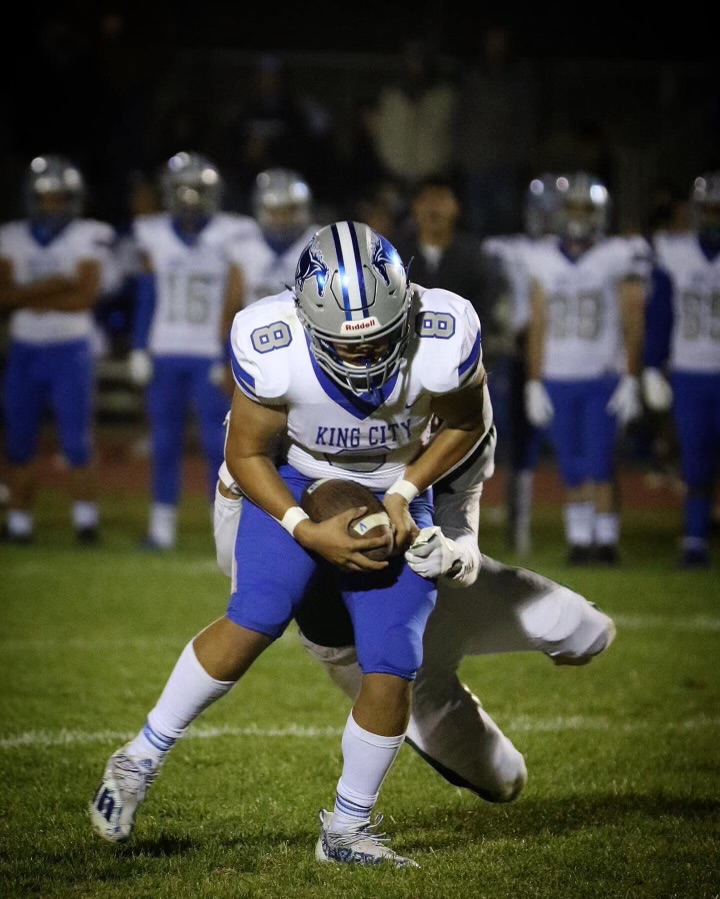
Once a chiseled 6-foot-3, 250-pound tight end for King City High, the younger Villanueva is 50 pounds lighter from having spent more than 60 days in the hospital.
“I could see the panic on his face,” Mac Villanueva said. “He was in and out of consciousness. It was a complete shutdown. You can’t prepare for what you’re seeing happening to your son.”
A five-day treatment for GBS left Villanueva incubated for five days at Salinas Valley Memorial Hospital until he could begin to breathe on his own again.
“That first week in ICU, I didn’t know if I was going to make it,” Jackson Villanueva said. “I couldn’t feel my limbs. I could feel my breathing getting harder. I was scared.”
Transferred to Community Hospital of the Monterey Peninsula almost 60 days ago, the former football and baseball standout at King City finally got to come home last Friday.
That same night, his father, as he has done with the encouragement of his family, was on the sidelines when King City played North Salinas.
“My dad has to be out there,” Jackson Villanova said.
“He makes such an impact on all the kids that come through that program. If I’m fighting, he has to fight through his emotions as well.”
The feelings have begun to return for the younger Villanueva and with it has been intense pain in his feet and hands. While his speech is slower, he can talk, breathe and eat on his own again.
“Jackson described it as a blow torch against his feet,” Heidi Villanueva said. “It’s bittersweet. Feeling pain means things are firing up. But it’s hard to see your son in so much discomfort.”
There are several challenges for Villanueva on his path to recovery. While his right hand works perfectly, his left has been slow to bounce back.
Before his release, it had been suggested the Villaneuvas send their son to the California Neurology Institute in Bakersfield for intense rehabilitation.
“To get him back on his feet faster, it might be better for him to go for a week or two,” Mac Villanueva said. “But Jackson wanted to go home.”
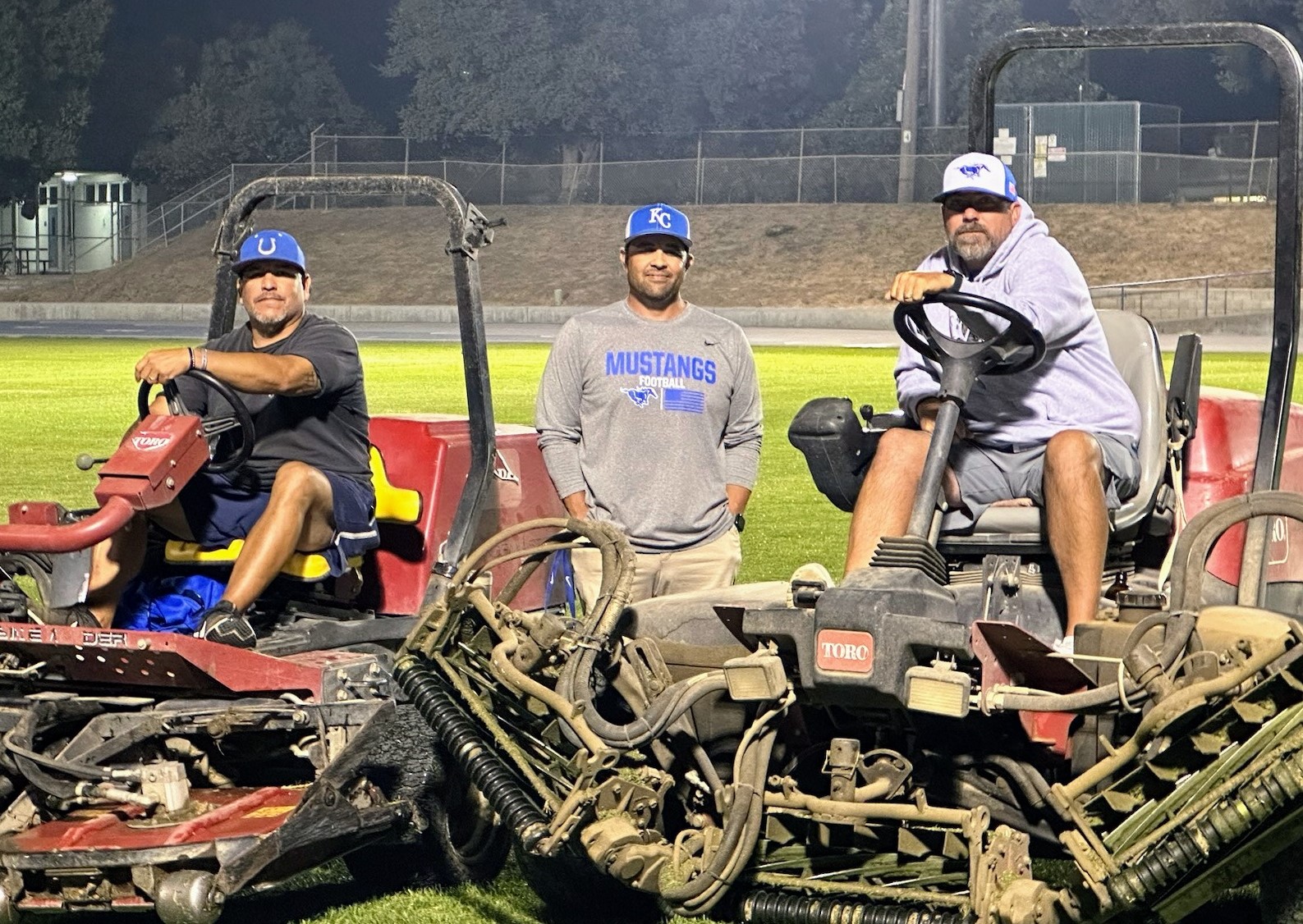
Throughout the ordeal, Mac Villanueva has continued to coach the Mustangs football program, turning to longtime assistants Matt Mendez and Jeremy Sarina when he’s not there.
“I’m a big believer you don’t judge a man by his character in his best moments,” Sarina said. “You define him in his worst moments. I know Mac feels strongly that he needs to be a father and husband first. But he also feels strongly for these kids.”
Villanueva, who has been the Mustangs’ head coach for 12 years, was set to step aside in August when his son became ill. That changed when his son gave him a piercing look of disdain that the family laughs about now.
“He couldn’t talk at the time,” Mac Villanueva said. “But when I told him I didn’t need to be there, Jackson shook his head ‘No.’ I know all his looks. He communicated to me to go. Mom is here. Come when you can.”
Sarina made it clear that anyone would have understood and respected Villanueva had his decision been to step away to be with his family and his son.
“Mac is a walking testament to what we teach these kids,” Sarina said. “I’m not saying this has been easy. We’re like brothers. Mac and Matthew (Mendez) are an extension of my family. I get emotional just talking about it. But he’s going to honor his commitment. He’s living up to his word.”
Mac Villanueva, who works in Salinas, had been driving to Community Hospital after work daily to visit his son before returning to King City for practice.
“My company (Holiday Seed) has been above and beyond supportive,” Villanueva said. “I have a great support system with my family. I’ve been coaching with Matt and Jeremy forever. We know each other so well, it’s stupid.”
Perhaps wanting to show his parents how badly he wanted to come home, Jackson Villanueva had a group of therapists and nurses in near tears with applause when he began to walk with help down the hall last week.
“He took his first steps in two months,” said Heidi Villanueva. “He’s in pain. But he can tolerate it. He has to think ‘I’m going to get through it.’ We’re not calling it pain. We’re calling it pressure.”
Much like Jackson Villanueva treated workouts in the weight room or gassers on a football field just two years ago, he doesn’t consider it pain if it’s benefitting him.
“It’s testing my patience,” Villanueva said. “I’m only 20. How did this happen? But I’m staying level-headed through all this, listening to the doctors. I have a positive mindset. But it takes a toll being in the hospital this long, having to depend on others.’’
Now at home, therapy will occur at least three days a week as he regains all feeling and use of his extremities, building his strength to walk on his own.
“He’s frustrated, he is stubborn,” Mac Villanueva said. “He doesn’t like being held back. But he doesn’t have a choice. His body is allowing him to heal at a slower pace. Jackson understands what’s going on. He has a no-quit attitude. He expected the same from me.”
Which is why Mac Villanueva remains on the sidelines on Friday nights and during the week, rebuilding a program with a dozen sophomores, grateful that his son is recovering while he works with other people’s kids.
“Those kids need Mac,” insists Heidi Villanueva. “Jackson knows that. He told Mac ‘Go.’ But there were times I was so scared to leave him alone at night when he could not talk or move his hands. The hospital staff has been incredible.”
The ordeal has changed the Villanuevas. Compassion was the first word that came out of Mac Villanueva’s mouth when thinking about the past two months.
“It’s not something that happened to us, it happened,” Villanueva said. “I’m more aware of what other people are going through, more cognizant of what’s going on around me. I’m blessed to have an employer and family that’s compassionate and caring.”
Villanueva has not used his son’s illness as a crutch. In fact, outside his circle of family and friends, he has told just one coaching peer during the season about this situation.
“I did not want to be a sympathetic figure,” Villanueva said. “There are people that go through worst situations. My son is going to recover. But you realize how quickly life can change.”
While there have been more smiles than tears in the last week, emotions still come out when Heidi looks back at what the family has been through.
“This is the worst illness anyone, anyone could have to go through with their kid,” Heidi Villanueva said.
“Without the support of my family and friends, I don’t think I could have gone through this. If I didn’t have Mac … he’s been my rock to get me through this.”
 PREVIOUS ARTICLE
