




KHAN YOUNIS, Gaza Strip — It cost a fortune, she said, but Asmaa Fayez managed to buy a few zucchinis in a Gaza market. She cooked them with rice and brought it to her 4-year-old son, who has been in the hospital for the past week. The soup was his only meal of the day, and he asked for more.
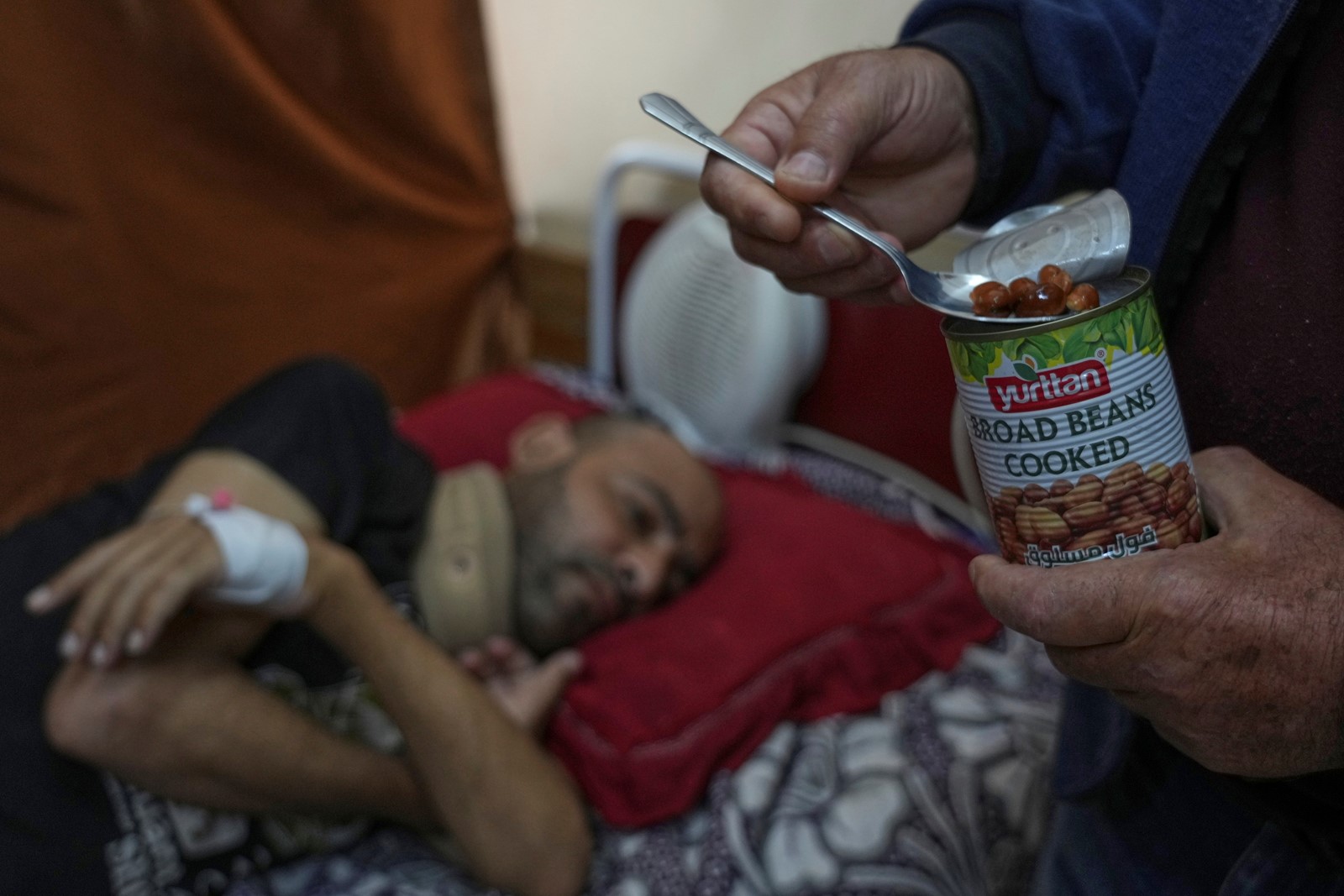
“It’s all finished, darling,” Fayez replied softly. Still, it was an improvement from the canned beans and tuna she brings on other days, she said.
Hospital patients are among the most vulnerable as Palestinians across Gaza struggle to feed themselves, with Israel’s blockade on food and other supplies entering the territory now in its third month.
With hospitals unable to provide food, families must bring whatever they can find for loved ones.
“Most, if not all, wounded patients have lost weight, especially in the past two months,” Dr. Khaled Alserr, a general surgeon at Nasser Hospital in the southern city of Khan Younis, told The Associated Press. Nutritional supplements for intensive care unit patients are lacking, he said.
“Our hands are tied when it comes to making the best choice for patients. Choices are limited,” he said.
Malnutrition is on the rise across Gaza, aid groups say. Thousands of children have been found with acute malnutrition in the past month, but adults as well are not getting proper nutrients, according to the U.N. It estimates that 16,000 pregnant women and new mothers this year face acute malnutrition.
Since Israel’s blockade began on March 2, food sources have been drying up. Aid groups have stopped food distribution. Bakeries have closed. Charity kitchens handing out bowls of pasta or lentils remain the last lifeline for most of the population, but they are rapidly closing for lack of supplies, the U.N. says.
Markets are empty of almost everything but canned goods and small amounts of vegetables, and prices have been rising. Local production of vegetables has plummeted because Israeli forces have damaged 80% of Gaza’s farmlands, the U.N. says, and much of the rest is inaccessible inside newly declared military zones.
Israel says it imposed the blockade and resumed its military campaign in March to pressure Hamas to release its remaining hostages and disarm.
Hamas ignited the war with its Oct. 7, 2023, attack on Israel, in which militants killed some 1,200 people, mostly civilians, and took 251 hostage, most of whom have been released in ceasefire agreements or other deals. Israel’s offensive has killed over 52,000 Palestinians, mostly women and children, according to Gaza’s Health Ministry, which does not say how many of the dead were civilians or combatants.
 PREVIOUS ARTICLE

