


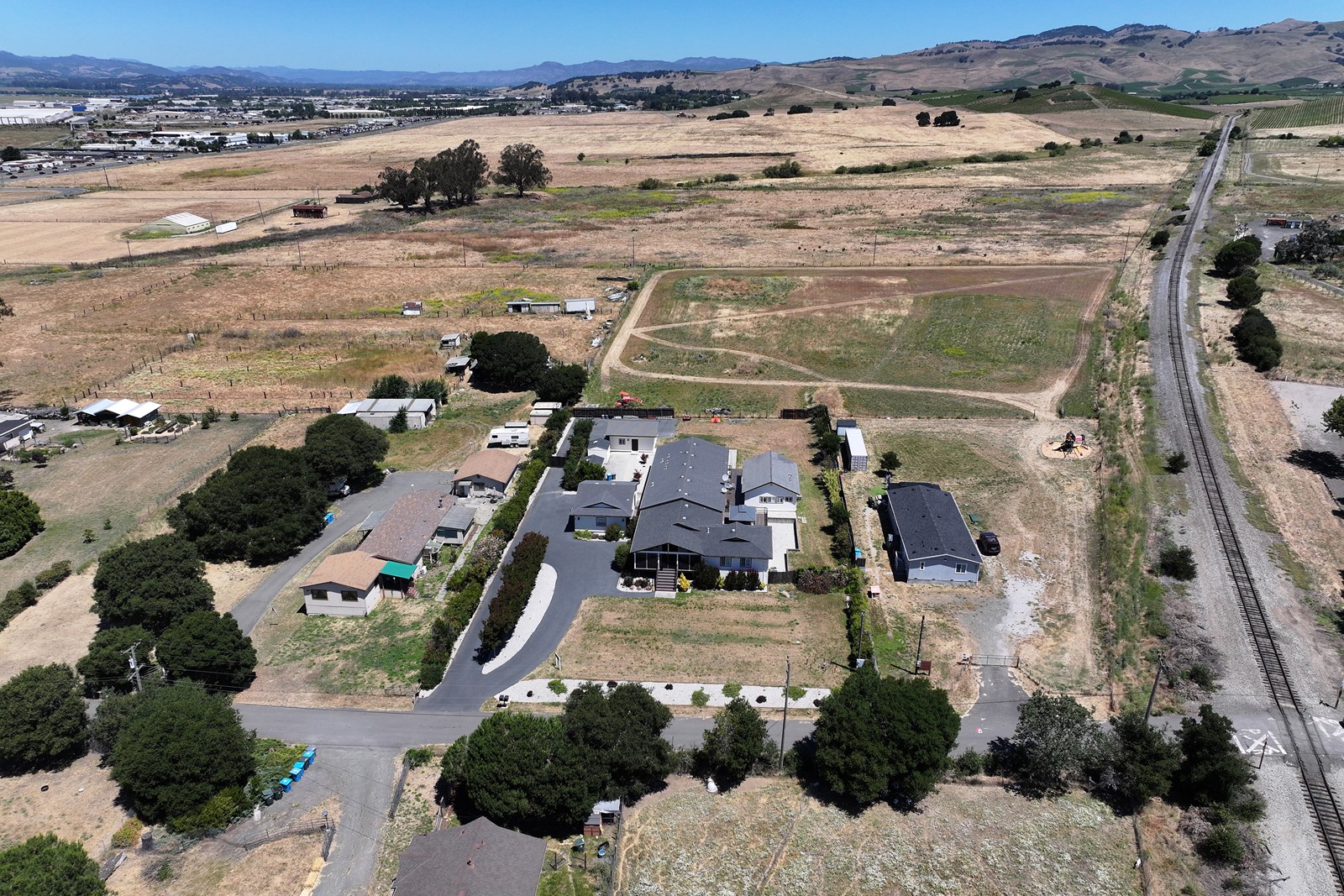


In anticipation of expanding the city’s limits by nearly 300 acres, American Canyon this week took steps to begin identifying acceptable uses for the unincorporated land northeast of its existing boundaries.
The City Council voted unanimously Tuesday, Sept. 1, in favor of prezoning the 281-acre area — which is bounded by Highway 29 to the east and Watson Lane to the south — as a “special study area.” A final vote will move forward at a future meeting.
The special study zoning designation — which would only come into effect after the expansion — would allow for current uses such as crop-growing and grazing. But the zoning would also serve as a placeholder while the city figures out long-term uses that could dramatically change the landscape of the area.
“What makes it prezoning is it’s the zoning that the city designates before it becomes part of the city,” Brent Cooper, the city’s community development director, said at the meeting.
Prezoning is one of several steps the city needs to take prior to the annexation process, according to the city staff report. Other prerequisites that have already been met include an agreement between American Canyon and Napa County for property tax sharing as well as an agreement to shift to the city a portion of the county’s housing allocation — the state-mandated number of future homes the county must plan for in the unincorporated area, assigned locally by the Association of Bay Area Governments.
The Napa County Local Agency Formation Commission, or LAFCO, will ultimately decide whether the expansion can move forward.
The commission on June 1 approved a smaller, city-proposed expansion of 89 acres in the area north of the Watson Ranch housing development, the American Canyon’s largest ongoing housing project.
At the same meeting, commissioners delayed a decision on the larger expansion — the owners of the land, the Hess and Laird families, proposed the city absorb the 281 acres — to allow time for objections from voters and landowners in the area.
Cooper said at the council’s meeting Tuesday the city would begin planning for the Hess-Laird site’s future “in a more precise manner” if LAFCO votes in favor of the expansion.
Public commenters at the meeting spoke about the potential future of the site, with some raising concerns about what could happen there.
Yvonne Baginski, who said she was representing the Napa County Wildlife Habitat Conservation Coalition and the Napa Solano Audubon Society, told the council the groups weren’t against development on the Hess-Laird property, but would like to be included in the planning process. They’re also requesting that a portion of the property be set aside for conservation, she said.
“This is a major area for not only the red-legged frog but also the tricolored blackbirds and also foraging area for the Swainson’s hawk,” Baginski said.
Leon Garcia, a former American Canyon mayor, said he’s looking forward to community conversations about the property going forward, including how it might help increase jobs in the city.
“I’m looking for opportunity that is good for our local base here in American Canyon, and something that could bring employment closer to home,” Garcia said.
Matthew Summers, the city attorney, addressed some emailed comments to the council that raised concerns about the city’s compliance with the California Environmental Quality Act. Specifically, he said, the writers contended the city was piecemealing a project — in essence, splitting up a project into small pieces that are individually exempt from environmental review in an effort to evade that review.
But Summers said that wasn’t the case, because there is no particular project at this time.
“There has been no specific proposal provided,” Summers said. “We have no proposal for residential, nor warehouses, nor any other potential land use on that site.”
Councilmember Mark Joseph said a special study zone implies, almost by definition, that there will be a process to develop a specific plan for the area that goes into detail on land uses and environmental impacts.
“Prezoning it special study is the most appropriate thing to do because it is essentially saying ‘We’re not sure what we want to do with it, we want to study it,’” Joseph said.
You can reach Staff Writer Edward Booth at 707-521-5281 or edward.booth@pressdemocrat.com.
 PREVIOUS ARTICLE

