




I’ll never forget that distinct sound of metal shearing from granite, not unlike in a movie when a warrior pulls a sword from its scabbard — shhiiiiiiiiing! Then, a moment of weightlessness, followed by the horrifying realization that the metallic sound meant I was about to fall a very long way.
Last month, I wrote the first of a two-part story about the darker, less visible (at least on social media), side of climbing in Yosemite Valley — a place climbers have long revered as the Center of the Universe.
The dark side is where we struggle, fail and sometimes have accidents. Part one involved the worst fall I’ve seen, when my climbing partner hit the ground from 40 feet up. Part two is about the worst fall I’ve taken, which happened just a few days after the first accident back in 2001.
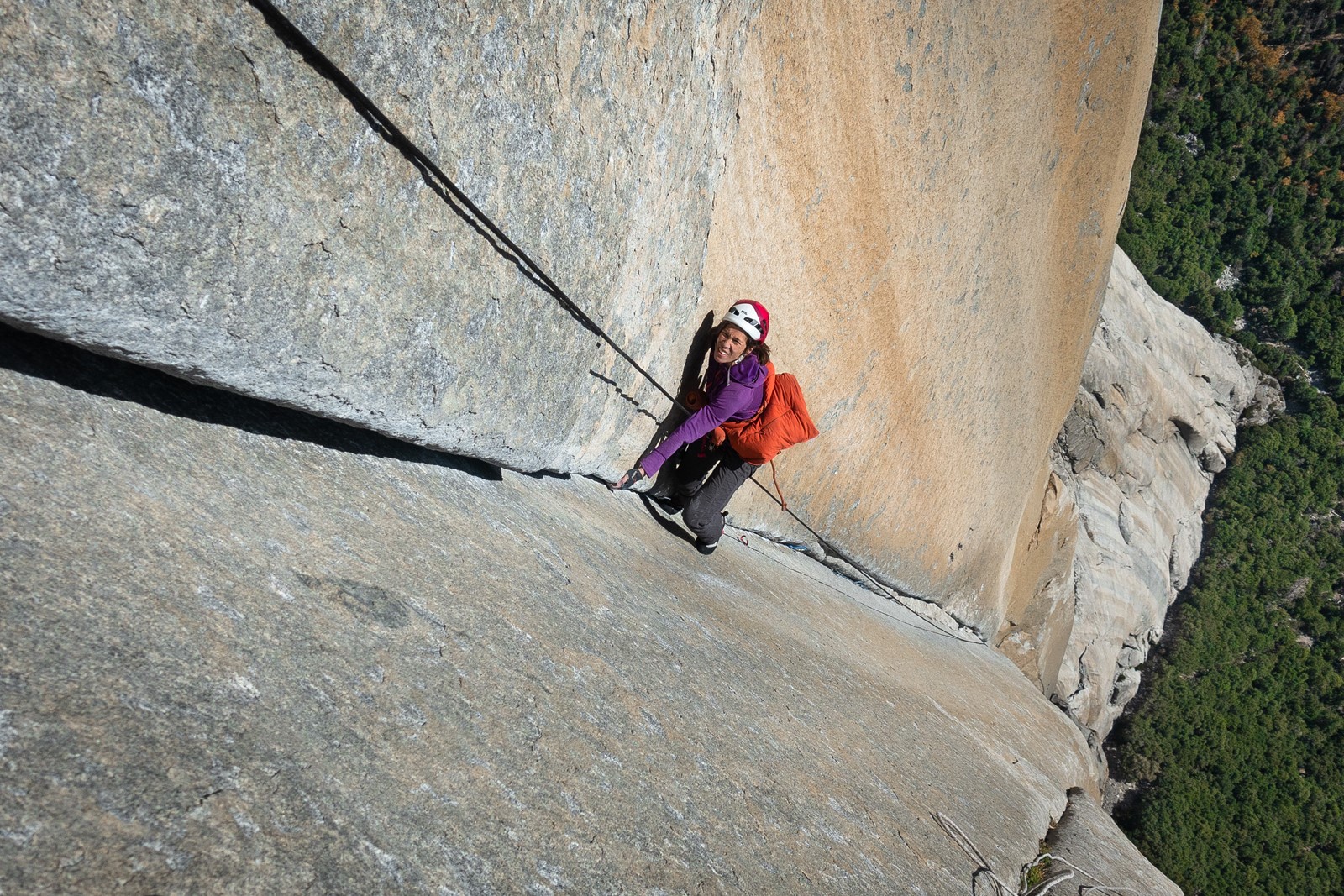
Justen Sjong, of Boulder, and I had been climbing El Capitan for three days. With a few hours of daylight left, we still had 650 feet to go. From the belay on a small, sloping ledge, I started up the so-called “Enduro Corner,” motivated by the desire to top out that evening rather than spend another cramped night on a rocky ledge nearly 3,000 feet above the ground.
I recall feeling confident and efficient as I climbed, which was particularly liberating. Until that point on the climb I’d been stifled by fear, as the nasty scene of Roger’s recent ground fall replayed in my mind like a nightmare I couldn’t turn off.
Fifty feet up the corner, I clipped into a “bong” — a large steel piton that had been hammered deep into a crack. It had probably been there for decades. I was aid climbing, meaning I’d hang on a piece of gear, clip a nylon ladder (an “aider”) to it, then stand in the aider to place another piece higher. Since the bong appeared bomb-proof, I decided to “back-clean” by reaching down to remove my last piece so I could use it higher up. I stood in the top step of my aider, reached as high as possible to place a cam, then… shhiiiiiiiiing!
I went flying.
My body slowly arced backward, then upside-down as I ferociously gained speed. It’s strange how fear can be momentarily pushed aside and our rational brain can take over. I remember calmly thinking that if the rope didn’t come tight soon I would hit the belay ledge and probably die…
Just then the rope began to slow me down. And just after that I smashed onto the ledge head-first, sliding farther before coming to a stop.
As I lay on my back, I realized I was conscious. Next, I wiggled fingers and toes — thank god. I slowly, painfully righted myself and crawled up to the belay where I assessed the damage: my back was scraped and bloodied, but that didn’t seem too bad. The alarming issue was the bone poking through the skin of my elbows which, along with my head, took the brunt of the impact; my helmet had broken in three places. I would later learn that several teeth had cracked as well.
The sun was setting, and we had to move. Justen suggested we go down, but I couldn’t stomach the idea of two dozen rappels through the night with arms I could barely bend.
A bivy ledge lay just a few pitches above, so we decided Justen would lead us there, and I would ascend the rope behind him.
Blood oozed from my bandaged elbows as I fearfully inched up the rope. Eventually, we made it to Long Ledge and spent our final night on the Salathé Wall.
By the following afternoon, we had slogged down to the valley floor where, to my surprise, X-rays revealed bruised but unbroken elbows.
Gripping the steering wheel for the 20-hour drive home proved incredibly painful. But during that time, reflecting on life in light of the two accidents, I had an epiphany.
Somewhere on the road between El Capitan and the Flatirons, I came to understand with absolute clarity something I’d known in theory all along: that nothing matters more than generosity, compassion and love.
Contact Chris Weidner at cweidner8@gmail.com. Follow him on Instagram @christopherweidner and X @cweidner8.
 PREVIOUS ARTICLE
