


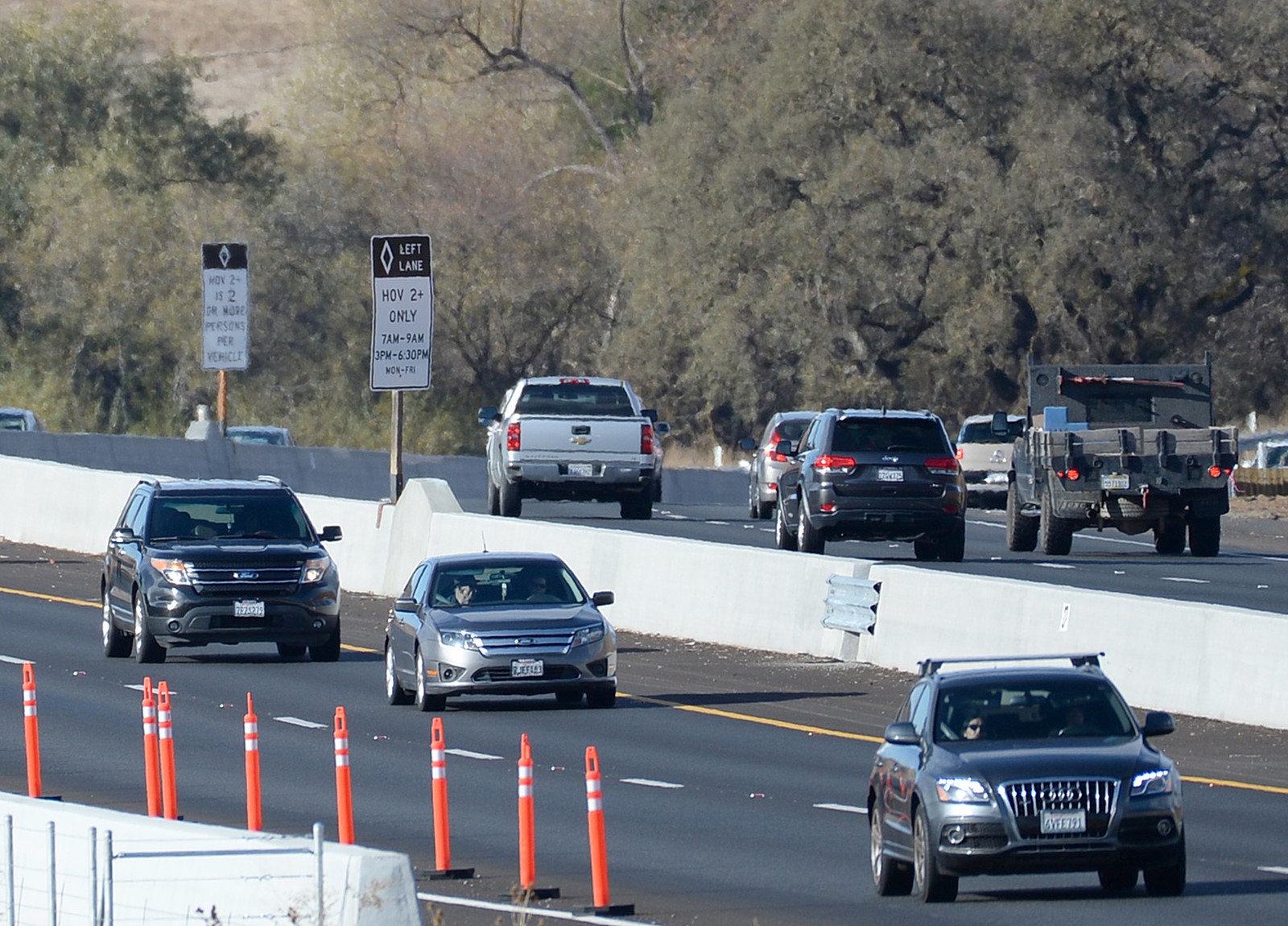


For motorists regularly traveling up and down Highway 101 through the “Novato Narrows” the wait for the seemingly endless construction has been arduous.
Their wait is finally over. After 14 years of construction — including years of being routed through narrow chute-like lanes — the new lanes are complete, ending what may be one of the longest public works projects seen in the two counties.
Initially, the project was designed to widen the busy freeway from its longstanding — and long-outdated — configuration of two lanes in each direction between Novato and Petaluma — a stretch locally dubbed the Novato Narrows. The project adds a commuter lane in each direction. It was also stretched northward, across the Petaluma River, almost reaching the Cotati Grade.
The new lanes provide a continuous stretch of carpool lanes for 50 miles, between the Richardson Bay Bridge to Windsor.
Gone is the traffic-jamming squeeze of three lanes into two between Novato and Petaluma. The last phase, which seemingly took forever to finish, was the stretch from the north end of Novato to the Marin-Sonoma line.
Its completion is, as Marin County Supervisor Eric Lucan, put it: a “huge milestone.”
The wait, however, isn’t completely over. The extension of carpool hours, restricting the new lanes to carpools and buses, has undermined expectations that the widening would speed up the commute. Instead, motorists are complaining — with ferocity and understandable frustration — that the lanes have made their commute worse.
Motorists’ patience hasn’t paid off, they say. Having the new lanes restricted for longer hours has left them stuck in traffic longer. With electric vehicles losing their right to use the carpool lanes, traffic in the unrestricted lanes likely isn’t going to improve. The carpool lanes are supposed to reward commuters for joining or forming carpools or riding public transit. In theory, by encouraging motorists to take carpools and public transit, there should be fewer cars in the normal lanes.
For years, the hours in Marin have been 6:30 a.m. to 8:30 a.m. during the southbound morning commute and 4:30 p.m. to 7 p.m., heading north later in the day.
Caltrans pushed to implement a uniformed time frame of 5 a.m. to 10 a.m. and 3 p.m. to 7 p.m. on weekdays in both directions.
That’s a huge increase in the time that the lanes are not restricted. They got a cautious endorsement from local officials, who called on Caltrans to track traffic conditions and vowed they would press to change them back if the commute-hour jam didn’t improve.
They just may have to follow through on those intentions.
Lucan and Marin’s lawmakers in Sacramento, state Sen. Mike McGuire and Assemblyman Damon Connolly, should ride herd on this issue.
State and local officials say more time is needed to see how traffic conditions perform with the extended carpool hours. Right now, it’s too early to tell, they say.
Motorists whose patience has already endured years of construction shouldn’t have to spend years waiting for officials to assess whether the longer carpool hours are working. The lanes were supposed to improve traffic conditions, not make them worse for most of the motorists.
Completion of the Novato Narrows project is indeed a “huge milestone.” But it shouldn’t become a huge millstone for motorists who rely on getting up and down Highway 101.
 PREVIOUS ARTICLE
