


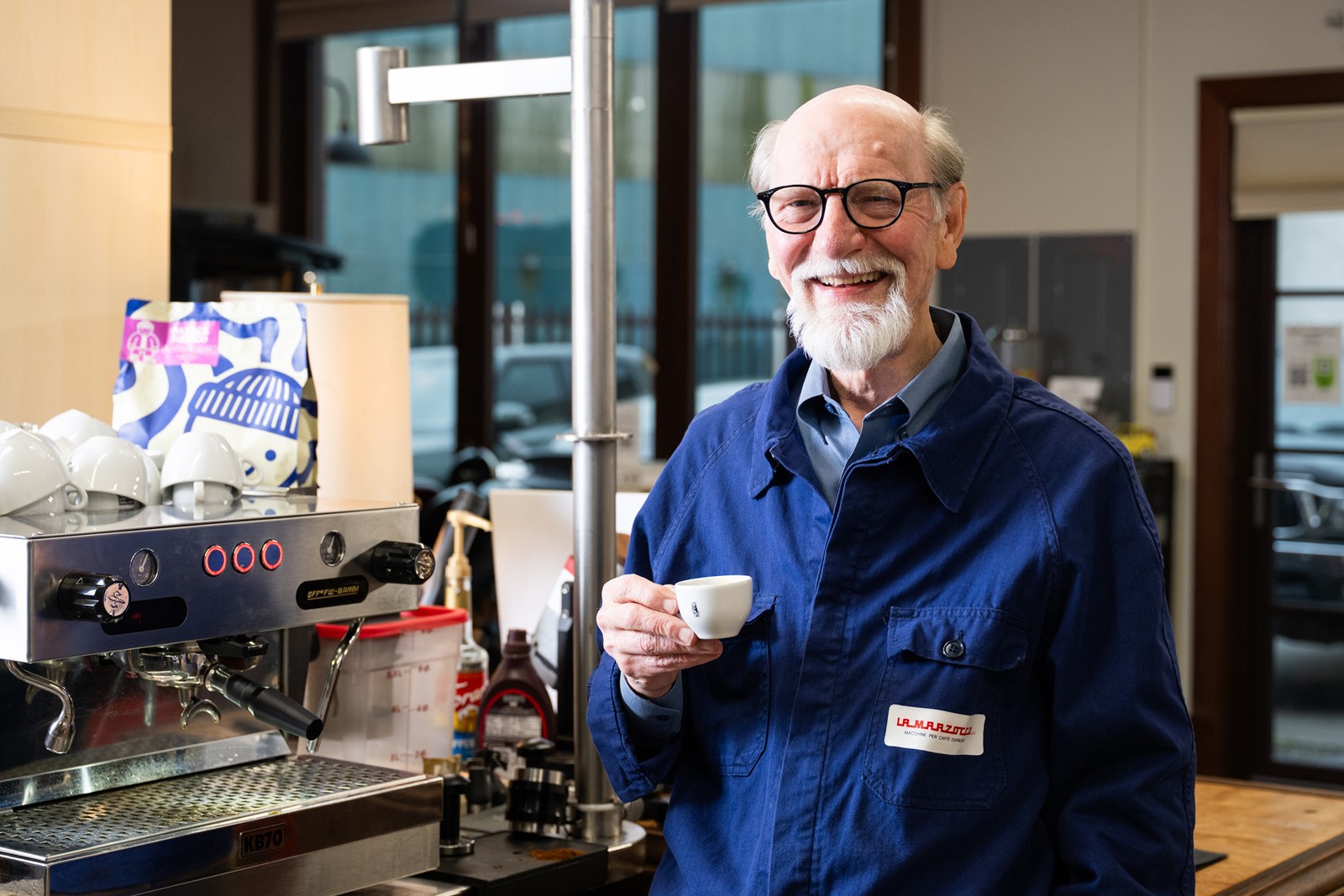


Nearly 50 years ago, a Seattle cafe owner traveled to Italy to try his hand at importing espresso machines. His trip changed the course of coffee history in the United States.
While in Florence, that owner, Kent Bakke, noticed something he’d never seen before: a machine that had two separate boilers, one for steaming milk and another for brewing coffee, allowing the milk to stay hot without scorching the espresso. A decade later, he signed a deal with the manufacturer, La Marzocco, then sold several of the machines to a local coffee startup — named Starbucks.
As Starbucks went on to create a mainstream market for high-end coffee, La Marzocco became a shiny emblem of that shift.
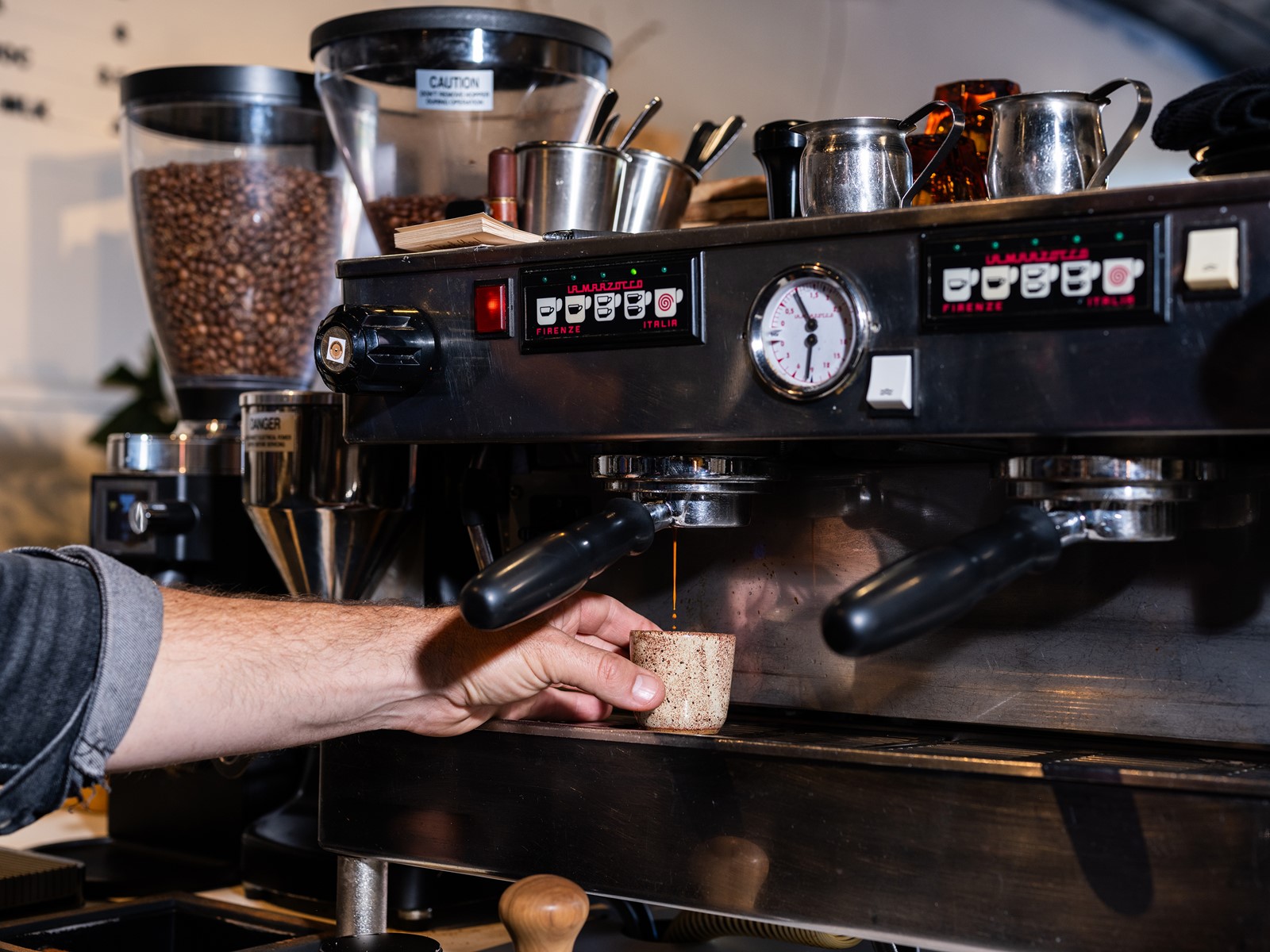
Today, La Marzocco machines sit in just 15% of American coffee shops, according to Andrew Daday, the managing director for La Marzocco USA. Yet they still wield an outsize cultural influence. Even if you’ve never heard of the 99-year-old Italian company, you’ve probably seen the machines: sturdy and retro, with clean lines, stainless-steel finishes and the company name affixed in angular lettering.
“Folks will come in and just marvel that I have this machine,” said Jessica Troupe, the owner of Sankofa Cafe in Montclair, New Jersey, who bought hers new two years ago, for about $15,000. “It really does have a cult following.”
But these days, what’s coveted even more than a new La Marzocco is an old one.
A secondhand market has emerged that’s as intense as the one for vintage cars. Sales are brisk and competitive, spread mostly by word of mouth. Scams abound. The deals can be great — a used model can sell for half the price of a new one — though for rare models, the price tag can well exceed that price.
Like classic cars, La Marzocco machines tend to hold their value, said Tony Konecny, the founder of the subscription service Yes Plz Coffee. “They occupy this space that is like a Ferrari and a John Deere tractor at the same time.”
In 2012, Nathan Smith helped repair a La Marzocco machine while working for Blue Bottle Coffee in Oakland, California. A few years later, while opening Seeker Coffee in Old Fort, North Carolina, he heard from a co-worker that the same machine was available for resale. By that point, it had made its way through several cafes.
Smith bought it for just $2,500 — but the price wasn’t the main appeal. “It’s like how a Honda Civic from the ‘70s is even cooler now because it has different parts and it has lasted this long,” he said. “It can stand the test of time.”
On the extreme end are professional collectors like Henk Langkemper, who owns 27 La Marzocco machines, some dating back to the 1950s. For the coveted Rondine model, one of the company’s oldest, he paid about $40,000. “It is a lifestyle product,” he said. “People don’t buy La Marzocco only for the coffee. We do it as a hobby.”
When a rare machine becomes available, he tends to find out through his small network of fellow collectors. Then the bidding wars start. “The price will go up per minute,” he said.
For a company as old as La Marzocco, the resale market in the United States is surprisingly new. Bakke said it began in the early 2000s, when Starbucks began to switch to automatic espresso machines for efficiency. He said Starbucks sold some of its old machines to a wholesaler, then arranged with La Marzocco for the remaining ones to be scrapped.
Randy Phillips, a former Starbucks technician who now runs his own specialty coffee equipment company, Underground Mountain, in Asheville, North Carolina, said Starbucks instructed him and other employees to disassemble its La Marzocco machines and take them to the recycling yard.
But he and other employees had a different idea. “I definitely let a couple slide out the back of my van,” said Randy Phillips, a former Starbucks technician. “We all did.”
He said Starbucks feared that reselling its espresso machines “would incite an army of independent coffee shops that would rise up against them,” Phillips said. “They were right.”
Suddenly, former Starbucks baristas who had trained on La Marzocco machines were buying secondhand equipment and starting their own cafes, he said. A third wave of coffee shops had arrived.
A Starbucks spokesperson denied that the company told technicians to dismantle machines, and said the company has always been supportive of independent coffee shops. “Starbucks welcomes competition and is proud to have played a significant role in building awareness of the finest coffee around the world,” she said.
After leaving Starbucks, Phillips became one of many independent technicians who spoke fluent La Marzocco. The beauty of the machines, he said, was that new parts could be placed on any machine, regardless of age. “A person with hand tools and know-how could create a new machine out of an old one,” he said.
La Marzocco now accounts for 70% of his servicing business, and he sells three times more used than new ones. A used La Marzocco “is always going to garner a higher sales value” than any other machine, he said, “by virtue of that name.”
It’s why Sean Henry, the owner of Houndstooth Coffee in Dallas and Austin, Texas, was willing to drive across the state in 2009 to pick up a limited-edition La Marzocco machine that the company made in partnership with Dutch designer Kees van der Westen.
The machine cost $10,000 — only slightly less than a new one. “But I just thought it was really cool,” Henry said. “That low-profile look is hard to come by in traditional espresso machines.”
One reason the secondhand market for La Marzocco continues to thrive is the availability of parts and people who specialize in the machines.
Not long after Christine Armao opened First Bloom Coffee and Bakery in 2022 in Cleveland, Tennessee, she realized that maintaining the espresso machine she’d bought would be impossible because no local repair technicians knew how to service them or had the right components. A year later, she bought a secondhand La Marzocco for $6,000.
The relative affordability of a used La Marzocco has lowered the barrier to opening a high-end cafe, she said. The number of coffee and tea shops in the United States has grown to 52,829 — a 25% increase since 2021, according to the market research company Circana. The steady demand has made the business of selling used machines all the more lucrative — and ripe for fraud.
Will La Hara, who owns Legacy Coffee Tech in Linden, New Jersey, said he has seen many sellers in Australia and South Korea offering used machines online for deeply discounted prices, while not disclosing that their equipment isn’t certified for use in American cities and states that regulate the machines for safety and hygiene.
Other sellers will paint the outside of the machine to look new, but not replace any internal parts, said Spencer Perez, the founder of Coffee Machine Service Co. in Chattanooga, Tennessee.
In 2023, La Marzocco was acquired by Italian appliance manufacturer DeLonghi, a move that Perez says has contributed to worse-quality machines and poorer service.
“There is more plastic, thinner metal, not quite as solid,” he said. “Parts age faster.” And the company, he added, has become less responsive to technicians like him.
Daday of La Marzocco USA said that the company wasn’t using cheaper materials and that it continued to manufacture parts — even for older models — and invest in training technicians. “There is a strong commitment to the circular economy,” he said.
Bakke, who was La Marzocco’s CEO from 1994 to 2018 and now owns a minority stake, said it behooves the company to support the market for used machines. “Being able to see a machine that has held up over time certainly helps the brand,” he said.
Still, Perez said his customers seem more enthusiastic about newer, higher-tech espresso machines from companies like Slayer, Synesso and Duvall.
Sleek silver Slayer machines adorn the counters of Café Avole’s flagship location in Seattle. The owner, Solomon Dubie, was impressed with their ability to program shots with the press of a button and their futuristic aesthetic, which fit his shop’s design.
The Synesso machine, which Ian Fadness uses at his shop, Slow by Slow Coffee in Boise, Idaho, has a touch screen that displays live pressure and flow graphs as an espresso shot is pulled. “I like having more information and more control,” he said.
Still, Fadness said, even if those companies last long enough to sprout strong secondhand markets, “they are never going to have that Michael Jordan effect that La Marzocco has.”
 PREVIOUS ARTICLE
