


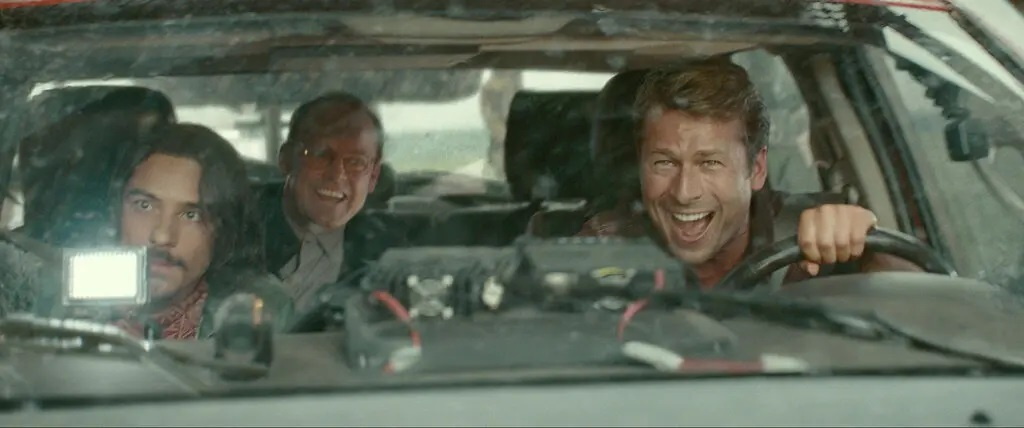


First you get the aroma of the meadowlands. Then a vision of an Oklahoma prairie fills the screen and, as the grass undulates, a soft breeze wafts over you and your seat sways. The wind is not ominous — not yet.
These sights, sounds, feelings and scents open a 4D presentation of the tornado thriller “Twisters.” For the past decade and a half, companies like CJ 4DPlex have turned splashing and shaking moviegoers into an art, fine-tuning their techniques to lure fans into theaters. Carefully tracking through each scene, they look for moments to heighten the experience in a way that adds meaning without distracting from the narrative.
In a typical 4D presentation, audiences pay on average $8 more than the price of a regular ticket to sit in pods of four chairs that can pitch and tilt subtly or with extreme force, using technology first developed for military flight simulators.
Extra mechanics inside the chair can punch you in the back when, say, a Nazi lands a blow on Indiana Jones, or buzz to the rhythm of the thumper that attracts a giant sandworm in “Dune: Part Two.” As Paul Atreides and Chani ride the worm on-screen, the chair shakes so violently that there is no mistaking their peril.
The smells in a 4D theater — options include “gardenia,” “burning rubber,” “gunpowder” and “beef town” — come from a tiny opening in front of the seat. Some films have custom scents. “Wonka” had a whiff of chocolate. “Beauty and the Beast” had a touch of rose. There are also holes that can blast cones of air and water, good for the first jump scare in the horror prequel “A Quiet Place: Day One.”
Then there are the flexible straws that hang between your feet and wag quickly back and forth, smacking your ankles. This might simulate what Raymond Diaz, general manager of the Regal Times Square theater, described as “a critter running around the floor.” A frightening prospect in New York.
Not all the effects are quite so literal. Is a light sprinkling of water on your forehead during a battle in the first “Lord of the Rings” meant to evoke orc blood?
“Yes,” said Cindy Lee, head of CJ 4DPlex’s production studio in Seoul, South Korea, where she and teams of 4D producers compose the experience. “I’m sorry,” she added.
HER STUDIO IS part of one of the biggest companies producing such effects. It started as a kind of experiment by the South Korean movie chain CJ CGV in 2009 and has now spread to more than 790 theaters across the world.
CJ 4DPlex has thoughtfully embellished about 1,050 films — action movies, horror films and Pixar — with 4D, typically after every other part of production is just about finished. Lee compares the 4D theater to a concert hall. The lead producer is the conductor, and the effects are the instruments in the orchestra.
“You can’t have the piano or the percussion or the wind instruments overtake each other too much,” she explained via video with the help of a translator. “There has to be a balance.”
Different effects can convey different shades of emotion. Take air, for example. “In ‘Twisters,’ the air is a representation of a ‘character’: the tornado in its full glory,” said Paul Hyo Kim, senior vice president of content and production for CJ 4DPlex.Precursors to modern 4D cinema are almost as old as film itself. In 1905, Hale’s Tours placed viewers inside a fake train that could rattle and bump like the real thing. Aroma-Rama in 1959 and Smell-o-Vision a year later were short-lived, poorly functioning novelties. In the 1970s, Sensurround, which shook seats with low-frequency sound waves, could mimic the feeling of being in an earthquake.
A decade later, Disney executives brought together George Lucas, Michael Jackson and Francis Ford Coppola to make the immersive 17-minute space adventure “Captain EO.” Rusty Lemorande, who wrote that screenplay, came to be known as the father of 4D when he persuaded Lucas to add smoke, lasers and lights and got set designer John Napier to build out his vision.
“I’ll call it 4D, but back then it was just ‘in-theater effects,’” Lemorande said in an interview.
UNSURPRISINGLY, SOME DIRECTORS, like Martin Scorsese, are not fans of modern 4D. If a film “needs chairs that bounce around or certain scents that are used in the theater, or more technical elements besides the image on the screen, would it still be a film?” he asked the BBC recently. Nor is Lemorande. A few years ago, he went to Disneyland Paris and saw a new iteration of “Captain EO” in which motorized chairs moved along with the music. He hated it, he said: “It breaks the suspension of disbelief.”
The producers at CJ 4DPlex have heard the critics. “4D is not going to be for everyone,” Lee acknowledged. “But for those that enjoy it, we want to make sure they can focus on the story,” and have fun with the motion and effects.
After Lee began working on 4D effects 14 years ago, she sought to improve her craft by going into the field, flying in helicopters and driving go-karts to observe the wind and torque on fast turns. She has taken gyroscopes onto boats and recorded data in calm and choppy waters. She has also spent the last decade and a half studying cinema theory, finding, for instance, that upward facing shots make people feel relaxed and that tilting the seat back achieves the same effect.
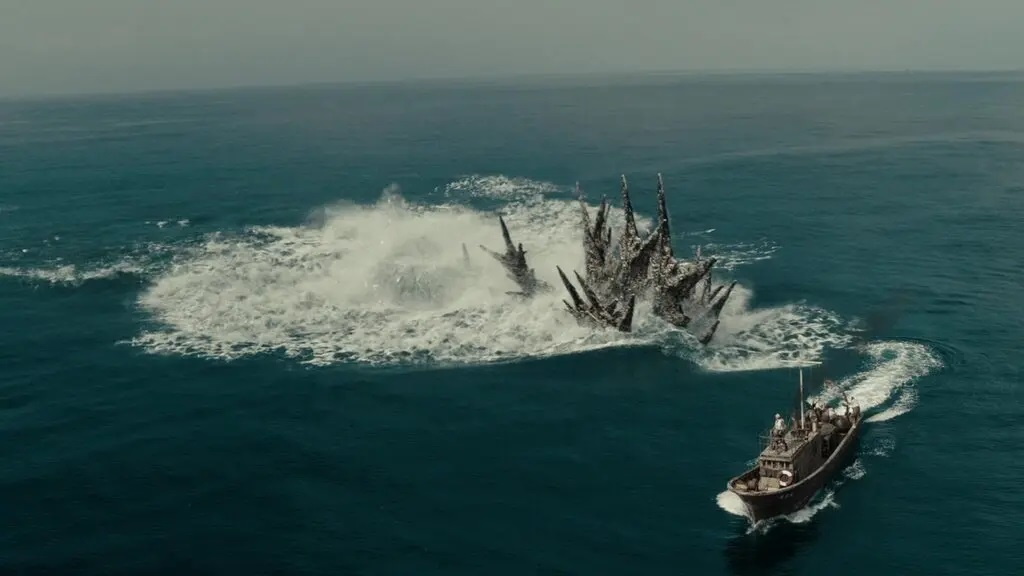
Such work has gone to good use. In “Godzilla Minus One,” the protagonists board a small wooden ship to search for naval mines off the coast of Japan.
“We had a really hard time filming in the ocean,” Takashi Yamazaki, the director, recalled. “We all got seasick.” Screening the movie in 2D was OK, he recalled, but the 4D version imitates the swaying of the boat with extreme accuracy. “I felt a little sick,” he said. “It was so immersive.”Yamazaki said formats like 4D are imperative for getting audiences back to theaters and are “probably going to be a must” for his next few projects. A fan of the original “Captain EO,” he has overseen the creation of several 4D amusement park attractions and freely takes inspiration from them for his cinematic work.
In “Godzilla Minus One,” a group of journalists stands on top of a building in Tokyo as the monster tears through the streets. “It’s dangerously close,” a radio announcer says. Godzilla stomps toward them, growing larger. The roof cracks, and the journalists start sliding off. The 4D seat follows their movement.
Yamazaki asked the 4D producers to tilt the chair back first, imperceptibly, before sending the audience rolling forward to frightening effect. He also said he made sure Godzilla’s roars were accompanied not just by vibrations from the soundtrack but also by vibrations in the seat “so that your body would tremble as you watched.”
 PREVIOUS ARTICLE
