


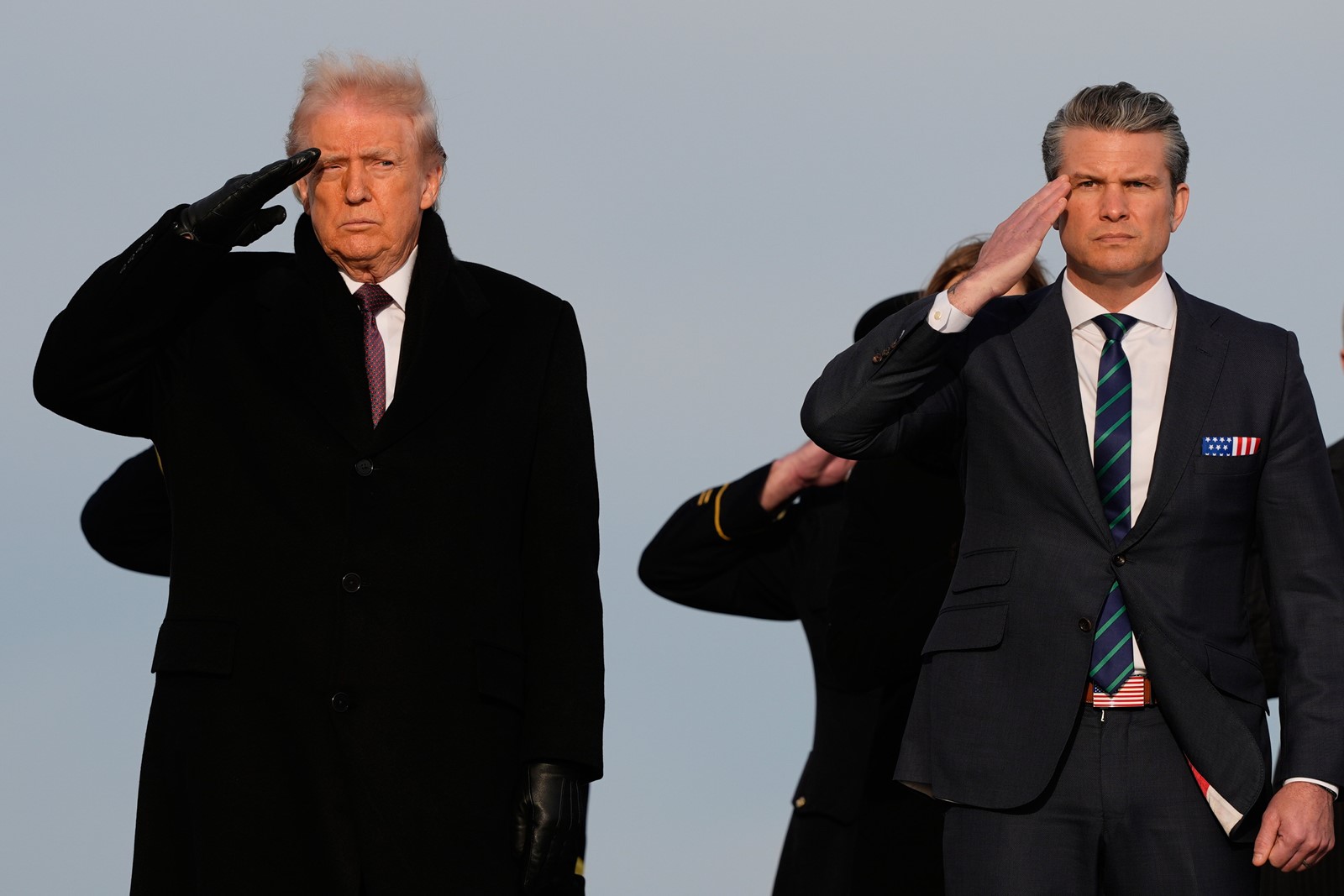


WASHINGTON — The United States carried out major airstrikes against the Islamic State group in Syria on Friday, fulfilling President Donald Trump’s vow to avenge the deaths of two U.S. Army soldiers and a civilian U.S. interpreter killed in a terrorist attack in the central part of the country last Saturday.
U.S. fighter jets, attack helicopters and artillery fired more than 100 munitions at more than 70 suspected Islamic State targets at several locations across central Syria, including weapons storage areas and other buildings to support operations, the military’s Central Command said in a statement. It said Jordanian warplanes assisted in the operation.
The U.S. air and artillery attacks were expected to last several hours, deep into early Saturday morning in Syria, in what U.S. officials said was “a massive attack.”
Social media accounts in Syria reported explosions across wide swaths of the country.
Defense Secretary Pete Hegseth sought to tamp down fears that the United States might reopen a major new war in the Middle East, but also suggested that increased attacks against the Islamic State group would continue.
“This is not the beginning of a war — it is a declaration of vengeance,” Hegseth said on social media. “The United States of America, under President Trump’s leadership, will never hesitate and never relent to defend our people.”
Hegseth added: “Today, we hunted and we killed our enemies. Lots of them. And we will continue.” He offered no other details about the strikes.
The soldiers slain last Saturday were the first American casualties in the country since the fall of dictator Bashar Assad last year. They were supporting counterterrorism operations against the Islamic State group in Palmyra, a city in central Syria, when they came under fire from a lone gunman, U.S. and Syrian officials said.
The U.S. strikes Friday, and the likelihood of more counterterrorism operations in the coming days, signal a sharp military escalation in Syria at a time when the United States has reduced its presence there to about 1,000 troops, half of what it started with at the beginning of the year. The decision to draw down forces had reflected the shifting security environment in Syria after Assad’s government collapsed.
But the assault last weekend was a stark reminder of the danger in the region and the quandary of whether to keep U.S. forces there at all.
No group has claimed responsibility for the attack, though initial assessments suggest that it was most likely carried out by the Islamic State group, according to the Pentagon and U.S. intelligence officials.
Top U.S. intelligence officials told Congress this year that the Islamic State group would try to exploit the end of the Assad government to free 9,000 to 10,000 of the militant group’s fighters.
 PREVIOUS ARTICLE
