


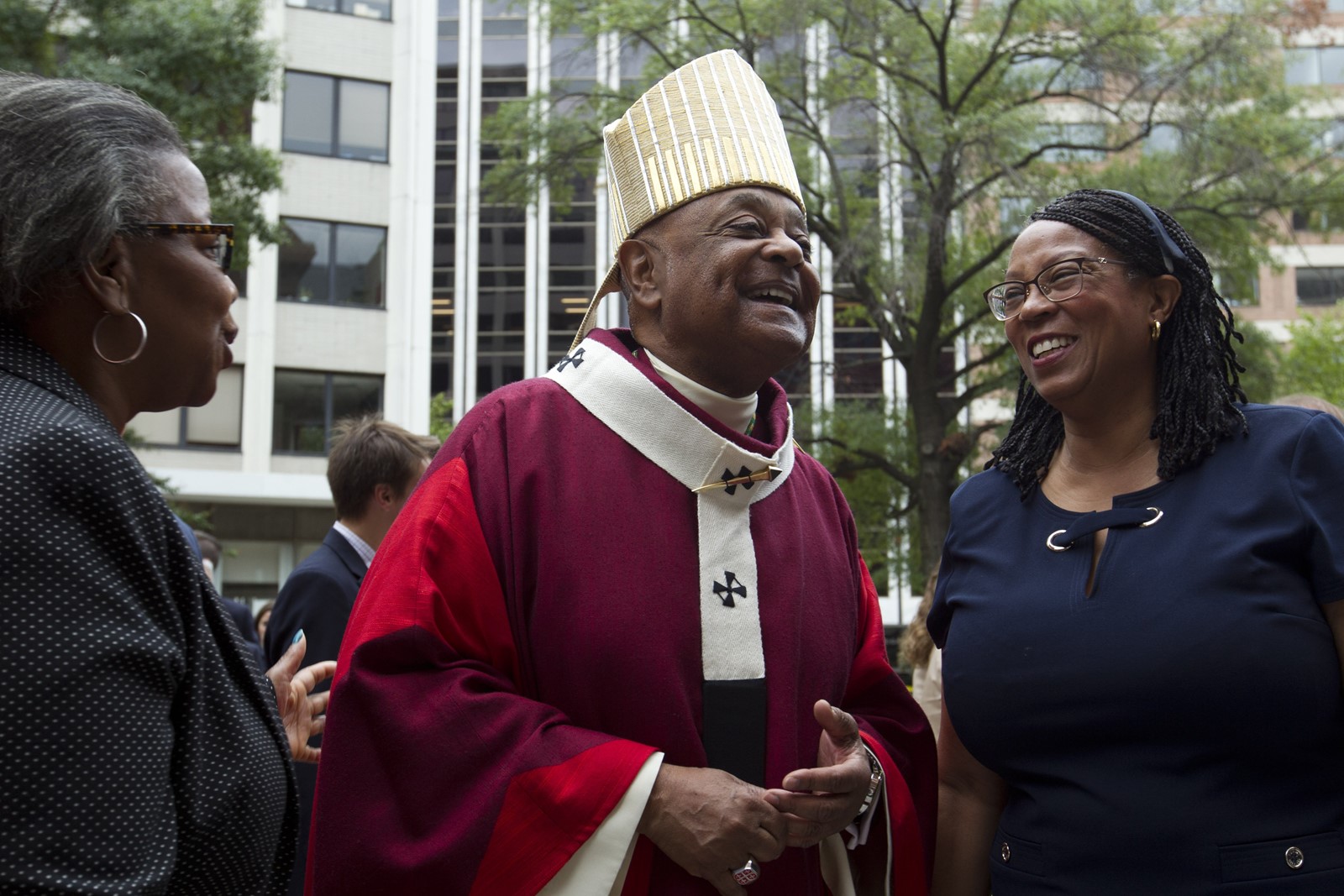


In a surprise announcement from his studio window to faithful standing in St. Peter’s Square, Francis said the churchmen would be elevated to a cardinal’s rank in a Nov. 28 ceremony.
Francis asked for prayers so the new cardinals “may help me in my ministry as bishop of Rome for the good of all God’s faithful holy people.”
The selection of Gregory won praise from LGBTQ advocates in the United States, days after Pope Francis grabbed headlines for voicing support for civil unions for gay couples.
Other new cardinals include an Italian who is the longtime papal preacher at the Vatican, the Rev. Raniero Cantalamessa, who is a Franciscan friar; the Kigali, Rwanda, Archbishop Antoine Kambanda; the Capiz, Philippines, Archbishop Jose Feurte Advincula;, and the Santiago, Chile, Archbishop Celestino Aos Braco.
Another Franciscan who was tapped is Friar Mauro Gambetti, in charge of the Sacred Convent in Assisi. The pope, when elected in 2013, chose St. Francis of Assisi as his namesake saint.
In a reflection of the pope’s stress on helping those in need, Francis also named the former director of the Rome Catholic charity, Caritas, the Rev. Enrico Feroci, to be a cardinal.
The prestigious Washington archdiocese traditionally brings elevation to cardinal’s rank, so the appointment of Gregory, 73, last year by the pope had positioned him to be tapped for the honor.
Still, the timing of his rise to cardinal is noteworthy, coming in the thick of increased U.S. attention on racial injustice following the police killing of George Floyd, a Black man, May 25 in Minnesota. Gregory was publicly critical of President Donald Trump’s visit to the St. John Paul II National Shrine in Washington a day after civil rights demonstrators were forcibly cleared from a square to facilitate the president’s visit to an Episcopal church in Washington.
Gregory has had his pulse on factions in the U.S. Catholic Church, which has both strong conservative and liberal veins since he served three times as the head of the U.S. Conference of Bishops.
 PREVIOUS ARTICLE
