


Business briefing
China sees exports fall again in Oct.


China's exports fell again in October in a fresh sign that weak global demand is complicating Beijing's efforts to shore up economic growth and reduce reliance on trade and investment.
Exports contracted by 7.3 percent from a year earlier to $178.1 billion, an improvement from September's 10 percent decline, customs data show. Imports fell 1.4 percent to $129.1 billion, compared with the previous month's 1.9 percent decline.
“Goods exports improved somewhat in October after the major setback in September, but not enough to prevent a further loss of momentum and underscoring that the recent trend toward somewhat stronger global demand growth remains fragile,” Louis Kuijs of Oxford Economics said in a report.
Growth in the world's second-largest economy held steady at 6.7 percent in the three months ending in September, but that was the lowest quarterly level since the 2008 global crisis. Growth was shored up by consumer spending and a bank lending boom, but forecasters expect it to weaken because regulators are trying to cool a surge in real estate prices and credit.
Exports for the first 10 months of this year are down 7.7 percent from the same period of last year. Imports are off 7.5 percent.
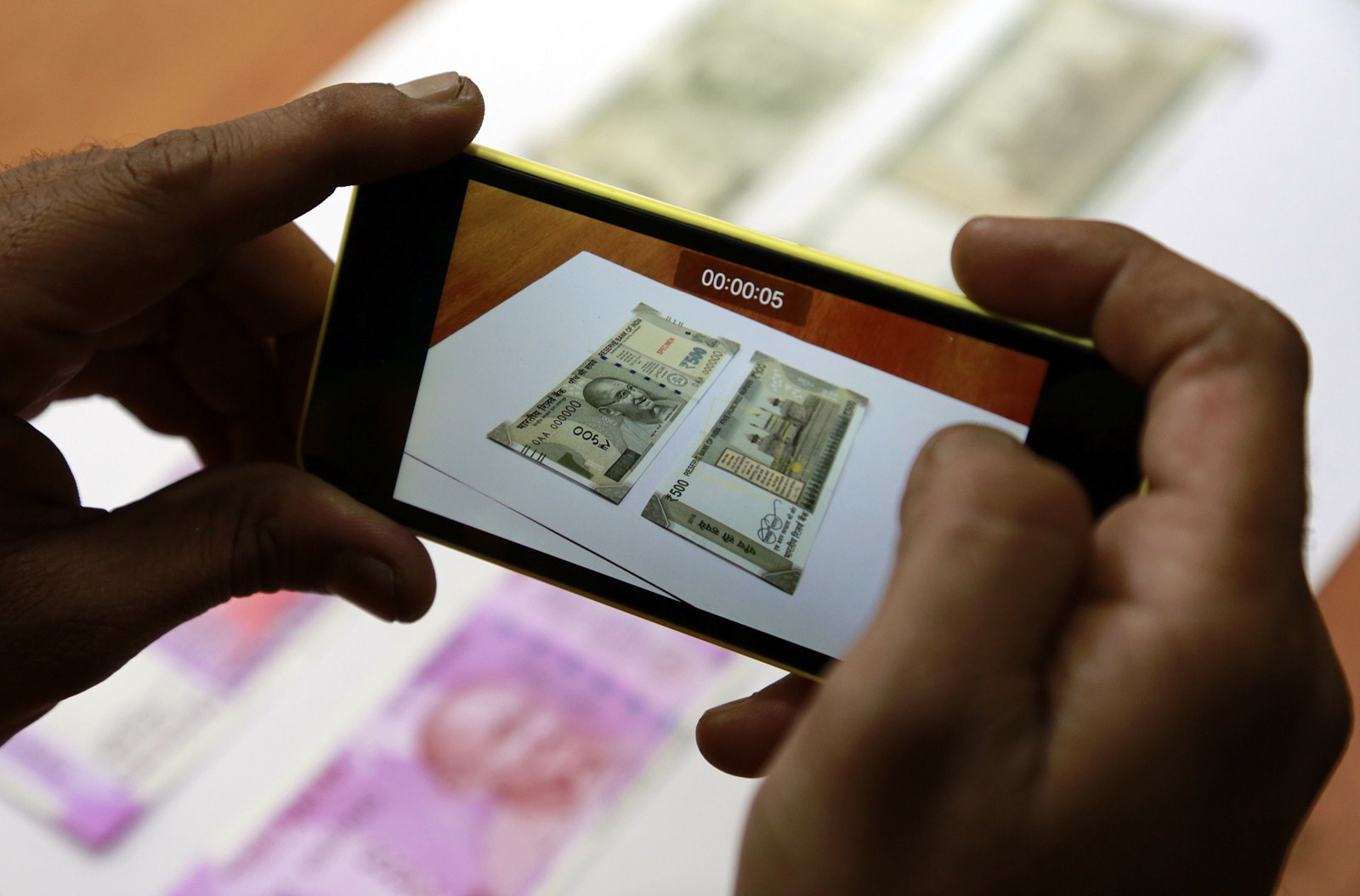
Indians awakened to confusion Wednesday as banks and ATMs remained closed after the government withdrew the highest-denomination currency notes to halt money laundering.
Roadside vegetable sellers, kiosks selling biscuits and tea, small mom-and-pop stores selling groceries, all saw a sharp drop in customers Wednesday, the day after Prime Minister Narendra Modi's announcement.
As of midnight Tuesday, all 500- and 1,000-rupee notes had no cash value. People holding the notes can deposit them in banks and post office savings accounts before the end of the year. The government will issue new bank notes of 500 and 2,000 rupee denominations soon, an official said.
The European Union says economic growth in Britain is set to “almost halve” next year because of the impact of the June referendum vote to leave the 28-nation bloc.
In Wednesday's publication of the autumn forecasts, the EU said that GDP growth in Britain is set to fall from a projected 1.9 percent for this year, to just 1 percent next year, before slightly picking up to 1.2 percent in 2018.
The report says that it reflects the “impact of heightened uncertainty following the referendum and its impact on business confidence.”
The report said the eurozone “seems to have shrugged off the result, but the sharp increase in policy uncertainty ... is expected to persist.”
THE BOTTOM LINE
 PREVIOUS ARTICLE
