


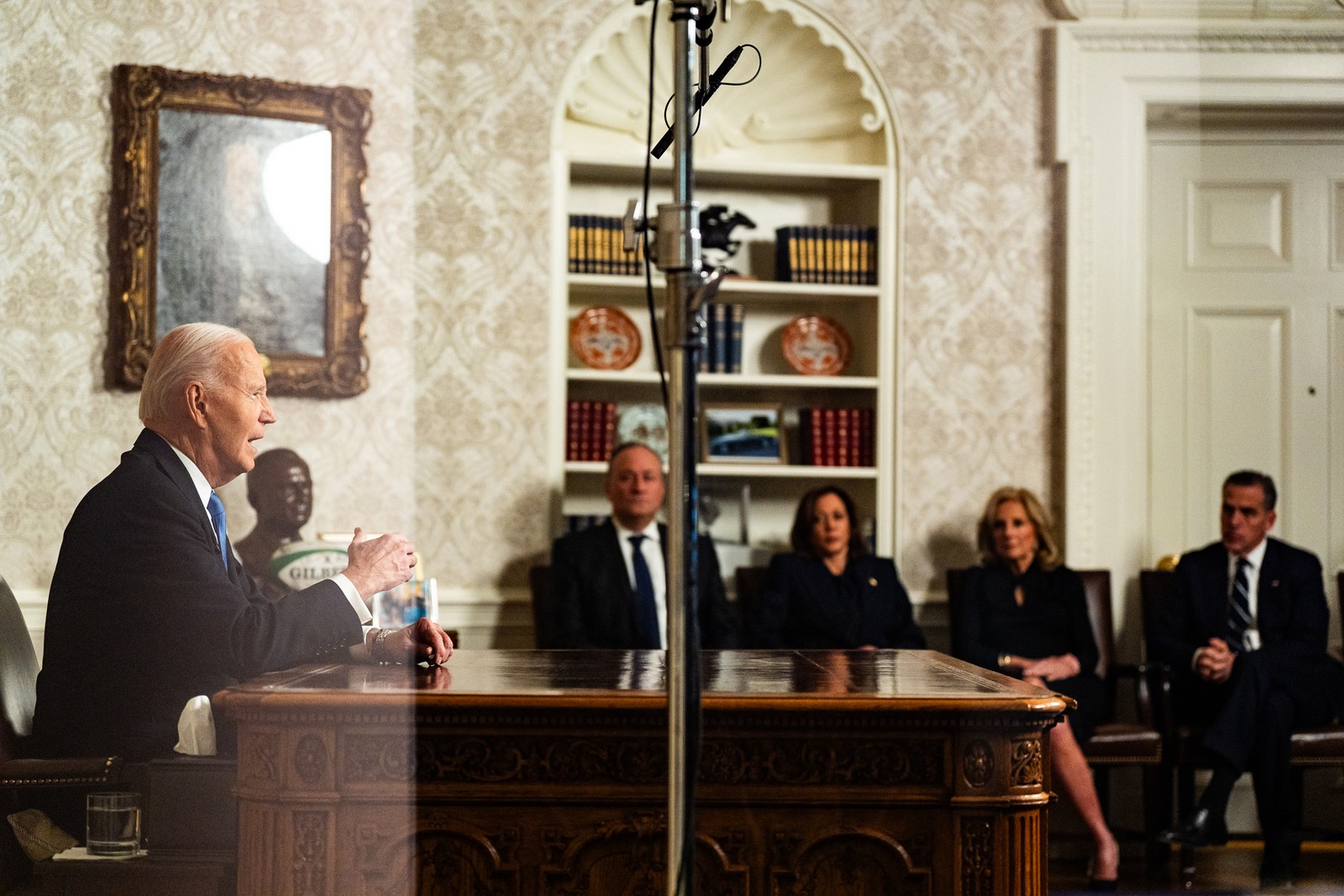


Joe Biden had two messages to send America in his farewell address: His administration has been a historic success, and the country is on the verge of becoming an oligarchic dystopia. Oh, and the chief problem with this oligarchy is that it isn’t active enough in telling the rest of us what’s true and false. With such discordant themes, I can’t fault him for tripping over his message this time.
There’s a reason neither part of the speech tied together with the other, let alone with reality.
Biden’s speech, like his presidency, took its bearings from a nostalgic vision of the New Deal. On this understanding, the job of Democrats is to crusade against overbearing capitalists on behalf of the workers, who will then reward them with political success.
Like all forms of nostalgia, this one took liberties with the actual history: Franklin D. Roosevelt inaugurated a long free-trade era and opposed public-sector unions; Biden saw protectionism and those unions as part of his pro-worker mission.
But the parallel to FDR matched the scale of Biden’s ambitions. Just two months into Biden’s presidency, one breathless but well-sourced journalistic account held that it had “already been transformative, and he has many more giant plans teed up that could make Biden’s New Deal the biggest change to governance in our lifetimes.”
The election returns in 2020, which included small congressional majorities for Democrats and a tighter presidential race than expected, should have made it obvious that the public wanted no such transformation and that none was going to be possible.
And so it turned out. By the standards of the New Deal tradition, Biden’s successes were paltry. In his farewell speech, he said the rich should pay their fair share, a classic mantra of this tradition.
But he is the first Democratic president in decades to have failed to raise the top income-tax rate. Progressives spent years before his presidency building support for a $15 minimum wage.
Biden endorsed it but became the first Democratic president since FDR not to see it increase. He didn’t even mention the issue in his speech.
The percentage of workers in a union continued to fall during his presidency.
When Biden did succeed in enacting his priorities, he didn’t get the political payoff he sought. He won large spending initiatives on climate change and bent the law to forgive college debt, only to see young voters flee his party.
Keeping his predecessor’s tariffs and using subsidies to help manufacturing appears to have done nothing to stop Democrats’ collapse among working-class voters.
To the extent his policies fueled inflation, they cost Biden support and his party votes.
A hoary progressive theory views cultural conflicts as a distraction from economics. If swing voters say they’re mad about unchecked immigration or think it’s crazy to let athletes with Y chromosomes compete in women’s sports, Democrats don’t need to moderate on those issues. They just need to change the subject to the greed of billionaires. Biden’s speech, like his presidency, reflected the influence of that view: He had nothing to say about any of the issues that had actually dragged down his presidency. Blaming “misinformation,” instead, is a way of evading the fact that most voters simply disagree with some of what Democrats stand for.
Biden referred to “the economic crisis that we inherited.” The economy and employment were, in fact, growing rapidly when he took office, and inflation was subdued. But he frequently claims otherwise, both magnifying his achievements and positioning himself, once again, as the heir to Roosevelt.
Unlike Roosevelt, though, Biden did not meet any of the goals he set for himself.
He did not transform the economy or humble alleged oligarchs or restore the Democratic coalition or keep Donald Trump out of power. And even now, he can’t see why the ideals of his youth are no longer working.
Ramesh Ponnuru, a contributing columnist for the Washington Post, is the editor of National Review and a fellow at the American Enterprise Institute.
 PREVIOUS ARTICLE
