




Fresh off clinching the Republican nomination for president in May 2012, Mitt Romney paid a surprise visit to the shuttered California headquarters of Solyndra, a solar panel manufacturer whose bankruptcy a year earlier had left taxpayers on the hook for hundreds of millions of dollars of federally guaranteed loans.
In Romney’s telling, the company’s failure was a textbook example of the perils of government meddling in the private sector. The free market is meant to reward companies for having the best ideas, the best technology, the best people, Romney said. Under President Barack Obama, however, companies were too often rewarded for knowing the right people.
“Free enterprise, to the president, means taking money from the taxpayer and giving it freely to his friends,” Romney said. “That is not the nature of how America works.”
Many economists at the time said Romney’s attack was unfair or exaggerated. Today, they use a different word to describe it: quaint.
Since returning to the White House, President Donald Trump has gotten the government involved in the private sector in ways that Obama and other past presidents, of either major party, would never have considered.
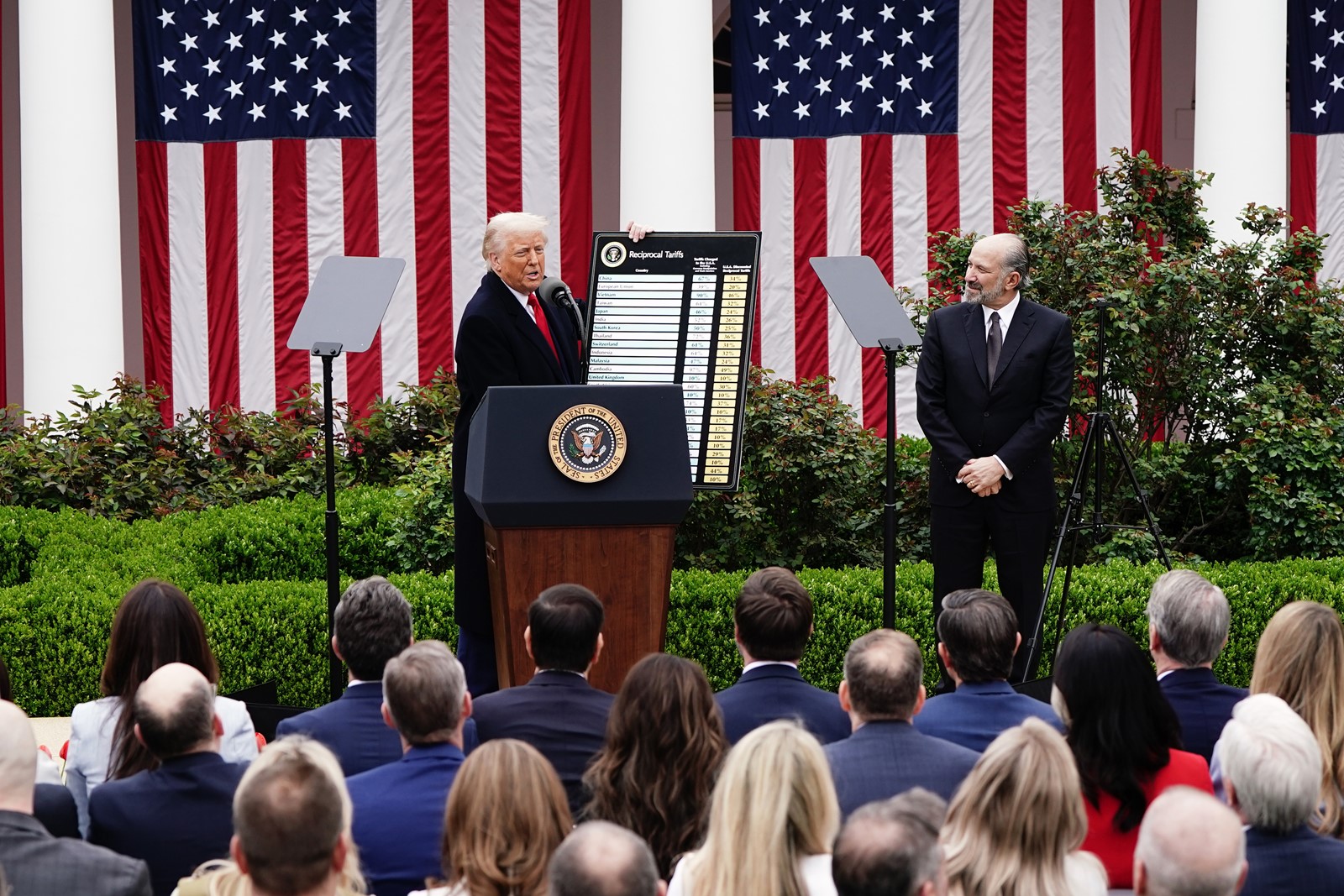
The Trump administration has taken ownership stakes in corporations, intervened in business deals and negotiated a cut of the revenue of American companies’ overseas sales. Trump has unilaterally deployed tariffs and other policy levers to help industries he favors, including artificial intelligence and cryptocurrencies, and to punish those he dislikes, such as wind power. He has wielded the powers of the federal bureaucracy to pressure executives, sometimes in ways that blur the lines between his policy objectives and his personal business interests.
Trump has often failed to offer a clear legal justification for his actions, and some of them may have been illegal. On Feb. 20, the Supreme Court struck down many of Trump’s most sweeping tariffs, finding he had exceeded presidential authority when he imposed them.
The sheer extent of his interventions — and the fact that they have often come with little explanation and few details — has left economists and other theorists struggling to describe them. Are they examples of “state capitalism,” “crony capitalism” or, perhaps, not capitalism at all? Sen. Rand Paul, R-Ky., last year called Trump’s move to take a stake in Intel, the chipmaker, “a step toward socialism.” Some political scientists have applied the term “neoroyalism,” likening Trump to European kings of the 16th century.
“When you start picking winners and losers like this, it’s like, where does it end?” said Vance Ginn, a conservative economist who served in the first Trump administration but has been critical of the second. “We’re far away from capitalism in my view.”
The drift from free-market policies didn’t begin with Trump. He represents, at least to a degree, the culmination of two decades of popular dissatisfaction with the economy that people like Romney — who built a fortune in private equity before he entered politics — helped to build.
So far, however, the public seems just as unhappy with Trump’s economy, which has not delivered the manufacturing jobs and lower prices that he promised on the campaign trail. It remains uncertain whether the Republican Party will continue down the path charted by Trump after he leaves office, or turn back toward the version of the party he left behind.
Democrats, in their own way, are engaged in a similar debate. President Joe Biden, too, embraced tools such as tariffs and industrial subsidies, and while some moderate Democrats were unhappy with that shift, many of the party’s rising stars come from a progressive wing of the party that has long called for more government involvement in the economy.
To critics of the old system, the shift in directions in both parties was long overdue — and unlikely to reverse quickly.
“What you see is a very important break with the past, a very effective break with the past,” said Oren Cass, who leads American Compass, a populist think tank. “It’s very hard at this point to envision a political leader of either party in 2028 running on a platform of, ‘Let’s get back to 2013-style globalization.’ ”
A New Direction
This much is clear: The economic policies of Trump’s second term represent a fundamental rupture with the Republican orthodoxy of an earlier era.
“We’re very far from the Republicans of George Bush,” said N. Gregory Mankiw, a Harvard economist who was a top adviser to Bush in the early 2000s.
Indeed, Trump’s recent policies represent a break even from his first term. Back then, Trump departed from the standard Republican line on trade, but otherwise hewed relatively closely to his party’s traditional free-market ethos, at least in his actions if not always in his rhetoric.
He shepherded through tax cuts for corporations and wealthy people, eliminated regulations and left in place many of the programs that allowed businesses to hire foreign-born workers.
Trump has cut taxes and reduced regulations in his second term, too. But he has been much more aggressive in his crackdown on immigration and has shown far more willingness to meddle in the operations of specific industries and even specific companies.
In August, for example, Trump publicly demanded the resignation of Lip-Bu Tan, CEO of the chipmaker Intel. He reversed course days later after Tan visited the Oval Office — and then, days after that, announced that the federal government would be taking a 10% stake in Intel, worth $8.9 billion, one of the largest government interventions in a private business since the 2008 financial crisis.
The episode fit an emerging pattern in the second Trump administration. The federal government in recent months has taken stakes in an array of private companies, many of them connected to the technology or defense industries.
Trump’s break with the free market didn’t come out of nowhere. It reflects, at least to some extent, a longer-run shift from free-market principles that were dominant in the 1990s and early 2000s.
The “neoliberal consensus,” as it has come to be known, was never a true consensus. Labor-aligned Democrats were worried that globalization would hurt workers; liberals were skeptical of efforts to cut taxes and weaken the safety net; right-wing populists such as Pat Buchanan broke from the Republican Party on issues of immigration and trade. But from Ronald Reagan through George W. Bush, presidents of both parties embraced the idea that the government’s role should be limited and that relatively unfettered markets were the best way to allocate resources in the economy.
A Valuable Tool?
Free-market conservatives and many economists from the center and center-left argue that Trump’s efforts to intervene in the private sector will ultimately leave the economy less productive and Americans worse off.
Their critique is similar to the one Romney made in 2012. If companies come to rely on the federal government as an investor, customer, regulator and even owner, they will stop focusing on how to make their products efficiently and serve their customers well. Instead, they will focus on how to preserve their government contracts and win favor with the politicians who control them — what economists call rent-seeking.
“When companies are more dependent on the government, on taxpayer money fueling them, they’re less interested in the profit and loss motive,” said Ginn, the former Trump administration economist. “That doesn’t work well throughout history.”
For progressives, the picture is less black and white. They have warned for years about the dangers of unfettered capitalism, and have argued the government should take a stronger role in many industries. Many progressives applauded Biden’s embrace of industrial policy and pushed him to go further, in some cases criticizing him for refusing to explore some of the policy levers, including taking part ownership of companies, that Trump is using.
But even economists who are sympathetic to some of Trump’s policies in theory tend to object to the way he is carrying them out. They argue that many of his actions appear to run counter to their stated aims, or have no clear justification at all.
Trump argues that tariffs will help restore U.S. manufacturing, for example, but has imposed them in too haphazard a manner for businesses to be comfortable making the kind of long-term investments that would be necessary to achieve that goal. He has warned about the rise of China, but has imposed tariffs on allies in ways that push them further into China’s orbit. He has demanded that the Federal Reserve lower interest rates, but has done so in a way that could backfire by pushing up the long-term borrowing costs that matter most to the economy.
Ultimately, many economists say, it is a mistake to try to understand Trump’s actions through the lens of state capitalism, industrial policy or other clearly defined economic philosophy. Trump’s approach to policymaking is transactional and personal, not ideological.
“It’s centralizing power in the Oval Office,” Mankiw said. “That’s the common thread.” That could also be among Trump’s most lasting economic legacies.
 PREVIOUS ARTICLE
