




In the 1950s and ’60s, a 24-hour doughnut shop at Second and Main streets in downtown Los Angeles was regarded as a haven for LGBTQ+ and gender nonconforming communities.
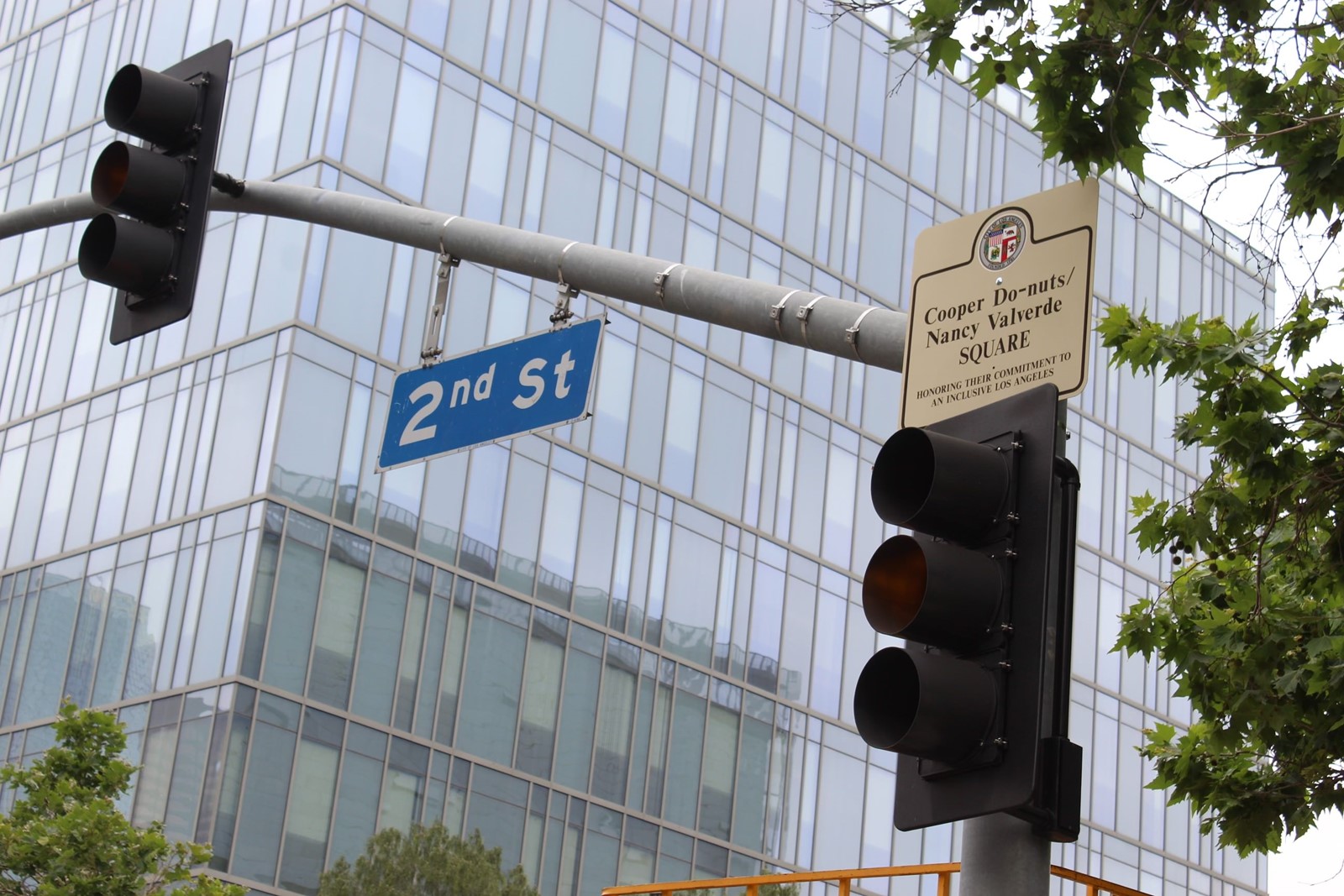
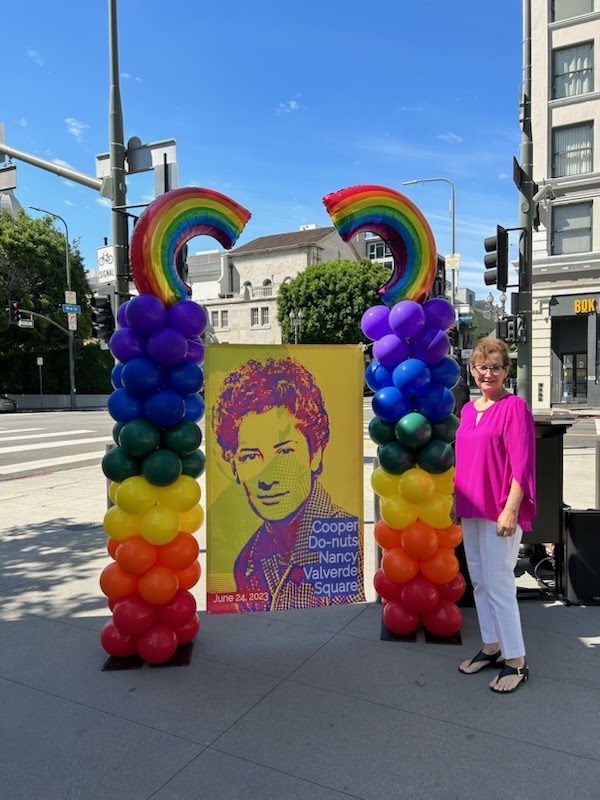
The now-shuttered Cooper Do-nuts and its intersection, in what was once known as The Run — a strip of gay bars and businesses — is now a historic landmark for LGBTQ+ communities. Officials designated the Cooper Do-nuts/Nancy Valverde Square in a small unveiling ceremony last week.
Valverde’s family members, community leaders, LGBTQ groups and allies gathered for an unveiling ceremony of the new Cooper Do-nuts/Nancy Valverde Square on Saturday.
“We came together in the heart of downtown L.A. to unveil the Cooper Do-Nuts/Nancy Valverde Square, a powerful symbol of resilience, defiance, and the relentless pursuit of equality,” said 14th District Councilmember Kevin de León in a statement posted Thursday to social media. “This unveiling pays tribute to Nancy Valverde, an activist who shattered barriers through her fearless pursuit of justice, significantly advancing the LGBTQIA+ community.”
Nancy Valverde, a Chicana and lesbian activist, frequented the doughnut shop with friends while attending school in the neighborhood. She was recognized for her efforts to end old “masquerading” laws in L.A. that targeted LGBTQ communities.
Valverde often wore men’s clothing and was repeatedly harassed by Los Angeles police like many of the queer and gender non-conforming patrons who hung out at Cooper Do-nuts, advocates said.
The event was put on by the Downtown Los Angeles Neighborhood Council, which proposed a motion for the new sign designation on Second and Main streets. It was unanimously approved by the Los Angeles City Council on June 7.
“I’m very humbled. I didn’t know I was making history,” said Valverde, now 91, in a statement before the unveiling. She was unable to make the ceremony.
Valverde was routinely harassed and arrested by police for violating a citywide cross-dressing ban, Ordinance No. 5022, according to the motion. She found legal rulings at a law library supporting her defense — that wearing masculine clothing was not a crime — which helped in the fight for ending such laws targeting LGBTQ individuals, the motion said.
Cooper Do-nuts was revered a safe space and also became the site of one of the earliest reported gay uprisings in the U.S. in the late 1950s — nearly a decade before the Black Cat Tavern protests in Silver Lake or the Stonewall Riots in New York. The incident involving protestors and L.A. police, known as the Cooper Do-nuts Riot, has not been confirmed.
LAPD Cmdr. Ruby Flores apologized on behalf of the department at Thursday’s unveiling.
“Sadly, rather than working to protect this community, the LAPD of that time was not always kind to our gay, lesbian, transgender, our non-conforming Angelenos,” Flores said at Thursday’s ceremony. “This mistreatment of our citizens was wrong and should never have happened.”
Leaders with the Downtown Los Angeles Neighborhood Council said the efforts to get public recognition for Valverde and the doughnut business took years. Working with city officials, they plan to commemorate other LGBTQ icons and historic spaces in the future.
The commemoration happened amid increasing tensions between conservatives and LGBTQ rights advocates during Pride Month — including the burning of a Pride flag at a school in North Hollywood; a heated debate on whether gender identity should be taught in Glendale schools; and the banning of a history textbook mentioning slain gay rights activist Harvey Milk in Temecula.
A few blocks down from the site, a large Progress Pride Flag waved in front of the L.A. County Kenneth Hanh Hall of Administration for the first time. County supervisors also voted to expand gender-affirming healthcare and services for LGBTQ communities.
Councilmember De León called Cooper Do-Nuts a “welcoming sanctuary to all.”
“Let their legacy ignite our hearts and remind us that change begins with the power of one.”
 PREVIOUS ARTICLE
