


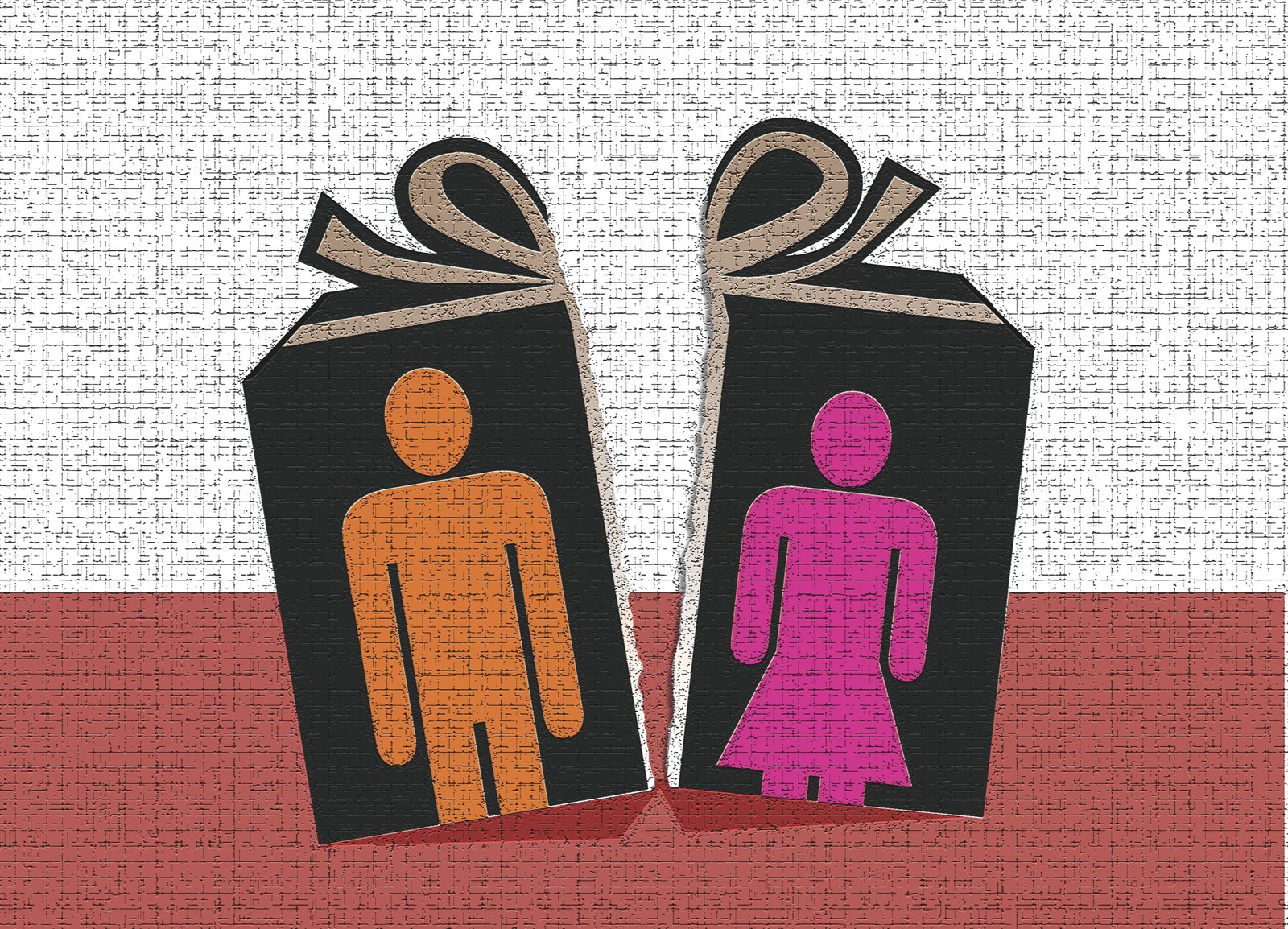


I wake up in my new apartment to unfamiliar sensations. Instead of my children emerging from their rooms, slamming open my bedroom door and breathing their hot morning breath straight into my face, I hear the footsteps and sneezes of a family that lives above me. When I look around, I don’t see a black-and-white photo of my daughter’s infant toes inside a silver frame on the bedside table, or stacks of books and mounting piles of laundry in the corner, but bare walls and a bare floor.
My husband and I are beginning to navigate our separation. It’s an enormously stressful time — trying to manage our own emotional needs, worrying about our children’s mental health and finding a new rhythm of life. But on top of splitting our life in two is another massive pressure: paying for all the stuff we need. In addition to maintaining our family home, which my husband and I will be swapping in and out of, I’m trying to furnish a one-bedroom basement apartment. It’s where we will each go on our nights as the off-duty parent. Aside from a bed and a couch we snagged on Craigslist, it’s empty. It needs throw pillows, a stocked kitchen and, more than likely, a hefty stack of self-help books. Oh, and liquor. Definitely liquor.
We’re adding items to the apartment, piece by piece. On my nights there, when my soon-to-be-ex arrives home from work, I take forks from my own kitchen, a roll of paper towels, toiletries and bath towels — the items that can be spared. But I still need a table and chairs, a toaster oven, blankets, a million things I use daily without a thought, until I don’t have them. I’ve never needed more stuff or been less able to procure it.
What a difference
It’s a stark contrast to other transitional times — engagement, marriage, pregnancy — when friends and family showered us with items.The end of a marriage is not exactly a transition to be celebrated. Which means it is not a time when we traditionally ask for gifts or talk about what we need. When our lives have been upended and we don’t even have a broom or a coffee pot, there are no gifts dropped on our doorsteps. No gift cards to Target for carpet cleaner or dish soap. When we’re sad, lonely, gutted and rebuilding our lives, we do the financial and material work alone.
When I got married, we asked guests not to bring gifts, but they came armed with checks and Pottery Barn salad bowls anyway. I got a beautiful wooden guitar-shaped cutting board, bottles of fancy wine, a video camera. My husband and I didn’t really need anything. We had been living together for a year and already had a daughter. But people wanted to share in our joy and offer their blessings in the form of material items and financial support.Even though we simply wanted our guests to share in the day and enjoy themselves, most of them probably would have felt strange showing up empty-handed. (And I won’t say the extra items and cash weren’t appreciated.)
Likewise, when I had a baby, and then another, I was bombarded by presents. Many were put to immediate use, like a Diaper Genie and a crib. But like most new mothers, I got more baby clothes than would ever be worn. For the first year of my daughter’s life, there was a rocking chair piled so high with baby clothes that I never once sat in it. It became “the clothes chair.” I gave much of it away at mom-swaps, sold it at yard sales, bagged it up for biweekly trips to Goodwill. It wasn’t that I didn’t appreciate the thoughtfulness behind the items. I understood the instinct to celebrate by giving gifts. But I was overwhelmed with stuff. Stuff that I often couldn’t use, or didn’t use, because there was far too much of it.
These occasions — engagements, wedding showers, weddings, baby showers, graduations — call for gift giving. We’re accustomed to sharing in joy with our hearts as well as our wallets.
The same isn’t true for the sad or difficult times. It doesn’t matter that financial support or material items are often far more needed — that after a divorce, one party might end up with mismatched spatulas and an old couch the dog peed on. You end up missing the simplest things, the ones you didn’t think of needing, like a sharp knife to cut a pineapple. So instead of eating it, you watch it rot on the counter of your empty apartment until the fruit flies come.
Oh, the irony
Of course, I wasn’t expecting money or presents once I separated. But the irony strikes me now, as I’m piecing together this new life, dragging someone’s old dirty futon into my apartment and buying dollar-store plates because I don’t have the money to go to Bed, Bath and Beyond, let alone the grocery store.
Next week I’m headed to a wedding shower and the following week, a baby shower. And I’ll gladly smother my friends with prizes from their registries. But at this stage in my life, as I celebrate in my friends’ joy, I know in the back of my mind that there may one day be a time of much greater need.
In the raw, early stages of the ending of my marriage, I’ll take emotional support over material items any day. I’m astounded by my good fortune: Women have showered me with kind, encouraging words the same way they showered me with gifts when I got married. I’ve been hugged and told that I am brave, even when I feel anything but. I’ve gotten emails and social media messages of love and offers of company on my lonely nights. I am grateful for the support of women who have been where I am and survived, and the women who have no idea what it feels like and still show up. I don’t have a furnished apartment, but I have a full, well-tended heart.
For now, I’ll continue searching yard sales and online marketplaces for a microwave oven, a bookshelf, a stand for the TV that has been sitting on the floor for three weeks. In some ways, I am happy to do it. It feels good to lay the groundwork for my new life.
But the next time I hear about a woman going through a separation, I’m sending her a bottle of booze and a bedside lamp. You know, something practical. Because I know just how much is needed. And I also know that while she might ask for my ear to bend, she probably won’t ask for much more.
The Washington Post
 PREVIOUS ARTICLE
