




Though bed bugs are not known to cause any serious health concerns, employees at the Pontiac office of the Michigan Department of Health and Human Services don’t believe the state has done enough to address the recent discovery of the insects.
Employees whose faces were obscured and voices altered told WDIV-TV in early October that the office should have been closed while the problem was addressed. Employees said several staffers were bitten.
Experts say bed bugs don’t carry disease, and that a bite usually causes only a small raised bump, similar to a mosquito bite. However, some people experience an allergic reaction that can include severe itching, blisters or hives, according to the Mayo Clinic’s website.
MDHHS said it was not aware of any employee in Pontiac who had an allergic reaction to a bite.
MDHHS employed a professional extermination company that is returning once a month for rechecks.
“The health and wellness of our staff and customers is among the Michigan Department of Health and Human Services’ highest priorities,” MDHHS said in a statement.
MDHHS said it has responded to “isolated bed bug reports” at the Pontiac office.
“MDHHS has followed normal protocol to address the situation, including investigating reports and treating areas if bedbugs are discovered. The likely source of the bedbugs has been identified, and the necessary steps have been taken to fully resolve the issue. The MDHHS office remains open,” the statement said.
The Oak Park Public Library closed for a weekend in late September after bed bugs were found in upholstered chairs. It closed for another weekend in early October for additional cleaning and other steps, which included removing upholstered chairs in a computer area and replacing them with hard surface chairs.
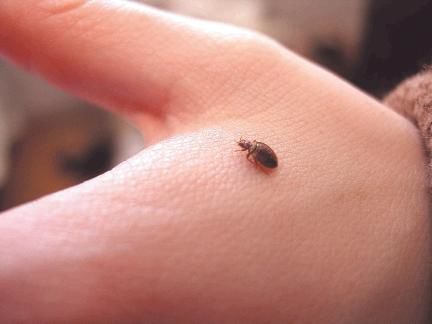
Bed bugs are flat, brown insects that are about the size of an apple seed. They feed on the blood of people and animals when they sleep, according to a post on the MDHHS website, unrelated to the discovery of the bugs at its Pontiac office.
“Bed bugs are experts at hiding. Their slim, flat bodies allow them to fit into the smallest of spaces and stay there for long periods of time, even without a blood meal,” MDHHS said on its website.
“Bed bugs are usually transported from place to place as people travel. Bed bugs are not a sign of a dirty home or poor personal hygiene. If you think you may have bed bugs, it’s very important to do a thorough inspection, and to begin treatment as soon as possible. Treating a bed bug infestation early will save much time and expense.”
Signs of bed bugs include seeing small blood spots or bed bug fecal matter on bedding, or finding bed bug eggs or cast skins, according to MDHHS.
Not all bugs that you find in your bedroom or home are bed bugs. If you find a bug that you suspect is a bed bug, save it and show it to a professional.
Bed bugs are often found in places where people come and go, such as dormitories and hospitals.
“For the past several decades Michigan, the United States, and most of North America were virtually bed bug free. Bed bug infestations had become so rare that many entomologists and pest management professionals had never seen a live specimen, and bed bugs were no longer considered a public health threat. This was due primarily to improved living standards and widespread use of insecticides like DDT,” MDHHS said.
“Recently, however, bed bugs have made a dramatic resurgence. Safety and environmental concerns have led to greater restriction of pesticides, and bed bugs have developed resistance to many widely used pesticides.”
 PREVIOUS ARTICLE
